




When you need dental work to repair or replace teeth, choosing between a porcelain crown and a bridge can be confusing. A porcelain crown covers a damaged tooth, while a porcelain bridge fills a gap where one or more teeth are missing.
Knowing the difference helps you pick the right option for your smile and dental health. Both options use porcelain for a natural look, but they serve different purposes.
Crowns protect and strengthen a single tooth, whereas bridges rely on neighboring teeth or implants to support the replacement. Understanding how each one works can save you time and money in treatment.
Your choice depends on what your teeth need and your personal goals, like improving appearance or restoring chewing ability. Learning about the benefits and care for each option will guide you to the best decision for your mouth.
Key Takeaways
- Porcelain crowns cover single damaged teeth for protection.
- Porcelain bridges replace missing teeth using support from nearby teeth.
- Both require good care to last and keep your smile looking natural.
Porcelain Crown vs Bridge: Key Differences
Porcelain crowns and bridges both use tooth-colored materials to restore your smile, but they serve different needs. Knowing how each works helps you pick the best option for your dental issue.
The choice depends on whether you need to protect a single tooth or replace one or more missing teeth.
Definition and Purpose
A porcelain crown is a custom-made cap that fits over one damaged or weakened tooth. It restores that tooth’s shape, size, and strength.
Crowns are often used when a tooth is cracked, worn down, or has large fillings that no longer protect it well. A dental bridge uses one or more prosthetic teeth to fill a gap where teeth are missing.
It is anchored in place by crowns on the teeth next to the gap. Bridges help prevent your nearby teeth from shifting out of place.
This keeps your bite stable and your smile complete.
When to Choose a Porcelain Crown
You should consider a porcelain crown if you have a tooth that is cracked, broken, or badly decayed. Crowns are also common after root canal treatment because they protect the treated tooth from breaking.
Crowns are made to look very natural and blend in with your other teeth. This makes them great for both front and back teeth.
They restore chewing ability and help keep your bite even. If your tooth shape or color bothers you, but the tooth is still healthy, a crown can also improve its look without removing it.

When a Bridge Is Recommended
A porcelain dental bridge is best when you have one or more missing teeth. Rather than leaving a gap, a bridge fills the space with artificial teeth.
These prosthetic teeth connect to crowns on nearby healthy teeth or dental implants. Bridges stop your other teeth from shifting, which can lead to bite problems or jaw pain.
They restore your ability to chew and speak properly. If your missing tooth damage is limited, or you want to avoid surgery, a traditional bridge is a good, non-surgical option to rebuild your smile.
Comparison of Applications
| Aspect | Porcelain Crown | Porcelain Bridge |
| Purpose | Protects and restores a single tooth | Replaces one or more missing teeth |
| Tooth Preparation | Only the damaged tooth is shaped | Adjacent teeth are shaped to anchor bridge |
| Number of Teeth Involved | One | Multiple: abutments plus pontic(s) |
| Maintenance | Clean like natural teeth | Needs special flossing under the bridge |
| Effect on Teeth | Strengthens a weak tooth | Maintains spacing and bite alignment |
Choosing between a crown and a bridge mainly depends on whether you need to fix or replace teeth. Both use durable porcelain materials that look natural and fit well with your bite.
How Porcelain Crowns Work
Porcelain crowns are custom-made caps designed to fit over your damaged or weakened teeth. They protect and strengthen your tooth while restoring its natural look.
In a retrospective study of 997 porcelain-fused-to-metal (PFM) crowns placed between 1984 and 2009, researchers used Kaplan–Meier analysis to estimate survival rates. They found that after 10 years, 92.3% of anterior PFM crowns and 95.9% of posterior PFM crowns were still in place.
You’ll learn how they’re placed, what materials they use, and when they are the best choice for your dental needs.
Procedure for Crown Placement
The process starts with your dentist numbing the area with local anesthesia, so you won’t feel pain. Next, they will gently shave down your damaged tooth to make space for the crown.
After shaping the tooth, your dentist takes an impression to create a model. This is sent to a dental lab where your permanent porcelain crown is custom-made.
In the meantime, you will get a temporary crown to protect your tooth. When the permanent crown is ready, you return to have it fitted and cemented in place.
Your new crown will feel natural and strong.
Materials Used in Porcelain Crowns
Porcelain crowns are made from high-quality ceramic material that looks like natural tooth enamel. This makes them ideal for front teeth or any spot where appearance matters.
Sometimes, porcelain is fused with a metal base to improve strength. Pure ceramic or resin crowns are also options but vary in durability.
Porcelain is popular because it resists staining and blends well with surrounding teeth. If you need a crown after a root canal, porcelain offers strong protection and a natural look.
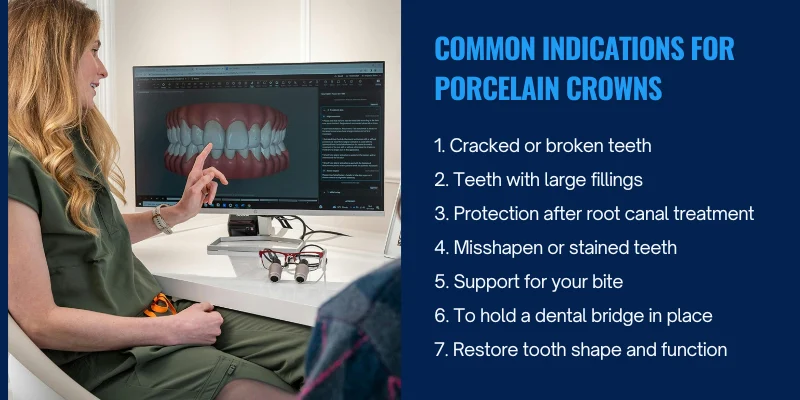
Common Indications for Crowns
You might need a porcelain crown if your tooth is cracked, broken, or has a large filling. Crowns protect weak teeth from further damage and restore their shape.
They’re also used after root canal treatments to cover and protect the treated tooth. If your tooth is misshapen or stained, a crown can improve its appearance.
Porcelain crowns support your bite and can even hold a dental bridge in place. They play a key role in restorative dentistry to maintain your smile and oral health.
Want to restore your smile with a durable, natural-looking solution? Learn more about porcelain dental bridges at Anna Dental in Anna, TX!
Bridge Treatment Explained
When you have missing teeth, a dental bridge can fill the gap and help restore how your mouth works and looks. It involves placing prosthetic teeth that attach securely to your natural teeth.
In a 2024–2023 study of all-ceramic bridges, 342 (fixed partial dentures) FPDs were followed over time. They found most units (87.3%) had no complications, but some failed due to fracture, chipping, or decementation.
Knowing the types, how the treatment works, and the key parts will help you understand what to expect.
Types of Dental Bridges
There are a few common types of dental bridges you might choose from, depending on your needs.
- Traditional Bridges use crowns on the teeth next to the gap, called abutment teeth, to hold one or more false teeth (pontics) in place.
- Porcelain Bridges mainly look like natural teeth and blend well with your smile because of their ceramic material.
- Other types include cantilever bridges and Maryland bridges, which use different ways to attach to your teeth but are less common.
Each type balances strength, appearance, and how much your natural teeth are involved.
The Process of Getting a Bridge
Getting a dental bridge usually takes two or more visits to your dentist.
First, your abutment teeth are prepared by shaping them to hold crowns. This may involve removing some enamel to make room.
Then, the dentist takes impressions of your teeth. These impressions help create a custom bridge that fits your mouth perfectly.
On a later visit, you get your bridge placed and adjusted. Your dentist checks how it fits and feels, making sure it works well when you bite or chew.
Components: Pontics and Abutment Teeth
A dental bridge mainly consists of two parts you should know about:
- Pontics are the false teeth that fill the gap where your natural teeth are missing. They look like real teeth and help you chew and speak normally.
- Abutment Teeth are the natural teeth on either side of the gap. They act as anchors by supporting the crowns that hold the pontics in place.
Both parts work together to restore your smile and dental function. Proper care of your abutment teeth is important, as they bear additional pressure after the bridge is placed.
Understanding these parts helps you care for your new bridge and keep it strong for years.

Durability and Aesthetics
Porcelain crowns and bridges offer a good balance of strength and a natural look. Their ability to blend with your teeth while lasting long depends on the material quality and how well you care for them.
Longevity of Porcelain Crowns and Bridges
Porcelain crowns usually last between 5 to 15 years. How long they stay strong depends on your oral hygiene and whether the crown is in a front or back tooth.
Back teeth face more chewing pressure, so metal crowns or porcelain-fused-to-metal crowns might last longer there. Porcelain bridges can last 5 to 10 years or more when you keep your mouth clean and avoid hard foods.
The metal alloys used in some bridges add strength but may affect appearance. Resin crowns and bridges are less durable than porcelain or metal crowns and bridges.
Caring for any crown or bridge means brushing, flossing, and regular dental check-ups to help prevent damage.
Aesthetic Outcomes and Smile Restoration
Porcelain crowns and bridges are popular because they match your natural tooth color better than metal options. Porcelain and ceramic give you a natural shine and can be shaped to blend in perfectly with your smile.
Metal crowns are very strong but often don’t look like real teeth. If you want a balance of durability and looks, porcelain-fused-to-metal crowns might work, they combine a metal base with a tooth-colored layer, but sometimes you can see a dark line near the gums.
Your dentist will help choose the right type based on the tooth’s location, your smile goals, and your budget, so you get both strength and beauty in your dental work.
Enhance your smile with durable, natural-looking porcelain crowns and bridges at Anna Dental, where your dental health and aesthetics come first.
Care and Maintenance
Taking good care of your porcelain crown or bridge helps keep it strong and your mouth healthy. Focusing on cleaning methods, protecting against decay and gum problems, and visiting your dentist regularly will make a big difference.
Oral Hygiene for Crowns and Bridges
You should brush your teeth twice a day using a soft-bristled toothbrush and nonabrasive toothpaste. Pay close attention to cleaning around the crown or bridge, especially near the gum line, to prevent buildup.
Flossing is very important. Using a floss threader or an interdental brush helps you clean under and around the bridge where regular floss can’t reach.
This prevents food and plaque from getting trapped. Avoid hard or sticky foods that could loosen or damage your dental work.
Keeping up with daily oral hygiene habits protects your investment and keeps your smile looking great.
Preventing Tooth Decay and Gum Disease
Even though crowns and bridges cover damaged or missing teeth, the surrounding natural teeth and gums still need care. If plaque builds up around the edges, it can cause tooth decay or gum disease.
To prevent these problems, be gentle but thorough when cleaning near your restoration. Check for sensitivity, swelling, or redness in your gums.
These can be early signs of gum disease and should not be ignored. Using an antibacterial mouthwash can also reduce harmful bacteria around your dental work.
Stay consistent with your oral care to stop decay and keep your gums healthy.
Regular Dental Check-Ups
You should visit your dentist at least every six months for professional cleanings and examinations. Your dentist will check the condition of your crown or bridge and make sure it fits well.
Regular check-ups help catch any issues early, like loosening or damage, before they cause bigger problems. Your dentist will also clean places you might miss, keeping your mouth fresh and healthy.
If you notice discomfort or changes with your crown or bridge, call your dentist. Timely visits help keep your dental work lasting longer and protect your overall oral health.
Factors to Consider Before Deciding
Choosing between a porcelain crown and a bridge depends on your specific dental needs, budget, and overall oral health. You’ll want to think about how each option fits your mouth’s condition, the cost involved, including insurance, and if other treatments, like implants, might be a better choice.
Suitability Based on Oral Health
If you have a damaged or weakened tooth but no missing teeth, a porcelain crown might be the best fit. Crowns cover and protect a single tooth that is cracked, decayed, or has had a root canal.
They help preserve your natural tooth structure. Bridges, however, are designed to replace one or more missing teeth.
To get a bridge, the teeth next to the gap must be healthy or strong enough to support the artificial teeth in the middle. This means those adjacent teeth are usually reshaped to fit crowns that hold the bridge in place.
If you have bruxism (teeth grinding), it’s important to discuss it with your dentist. Both crowns and bridges can be damaged by grinding, but crowns might handle the stress better when used alone.
Costs and Insurance Coverage
Porcelain crowns generally cost less than bridges because you only restore one tooth. Bridges can be more expensive since they replace multiple teeth and require the preparation of two or more healthy teeth or implants.
Insurance can cover part of either treatment, but coverage varies. Your insurance might prefer crowns if you have a single damaged tooth or cover bridges when replacing missing teeth.
Always check with your provider to understand your benefits. Bridges may mean additional costs over time because they usually need replacement sooner than crowns.
You should also consider costs for follow-up care and regular maintenance.
Alternatives: Dental Implants
Dental implants are another option worth considering. They replace missing teeth with a titanium post fixed into the jawbone, topped by a crown.
Unlike bridges, implants do not rely on neighboring teeth for support. Implants tend to be more expensive upfront but can last longer and prevent bone loss under the missing tooth.
They also avoid damaging healthy teeth like bridges sometimes do. Implants require surgery and a healthy jawbone, so your dentist will need to evaluate if you’re a candidate.
Explore the best solution for your smile with expert guidance from Anna Dental. Learn whether porcelain crowns, bridges, or implants are right for you.
Frequently Asked Questions
What are the differences between dental crowns and veneers?
Crowns cover the entire tooth to restore shape, size, and strength. Veneers are thin shells that only cover the front surface to improve appearance. Crowns are better for damaged teeth, while veneers focus mostly on cosmetic changes.
How do costs compare between a dental bridge and a crown?
Crowns usually cost less because they restore one tooth. Bridges replace one or more missing teeth and require crowns on neighboring teeth, making them more expensive. Material choice also affects prices.
Which is a better option for a missing tooth, a crown or an implant?
A crown alone can’t replace a missing tooth. Implants replace the root and hold a crown, making them a durable option for missing teeth. Bridges are also used but rely on nearby teeth for support.
Can you show me some before and after photos of crown and bridge work?
You can ask your dentist for examples of their previous patients’ treatments. Many dental websites also share galleries showing how crowns and bridges improve smiles with real photos.
What are the various types of dental crowns available and their associated costs?
Common crown types include porcelain, metal, porcelain-fused-to-metal, and resin. Porcelain offers a natural look but costs more. Metal crowns last longer but look less natural. Prices vary depending on the material and your location.
For front teeth, should I consider a crown or a bridge to improve my smile?
If a single front tooth is damaged, a crown is usually the best option because it restores the tooth. If a front tooth is missing, a bridge replaces it and maintains the space. Porcelain crowns and bridges provide a natural look for front teeth.

