




Getting dental implants is a big step toward restoring your smile and improving your oral health. The surgery itself is just the beginning of your journey.
What you do in the days and weeks after your procedure will determine how well your implants heal and how long they last.
Proper care after dental implant surgery includes managing swelling, eating soft foods, keeping the area clean, and following your dentist’s instructions to promote healing and prevent complications.
The good news is that caring for your new implants doesn’t have to be complicated. With the right approach, you can support proper recovery and ensure effective dental implant aftercare that protects your investment.
This guide walks you through everything you need to know about dental implant care after surgery. You will learn what to expect during recovery, how to keep your implants clean, which foods to eat and avoid, and how to spot potential problems early.
Key Takeaways
- Control swelling with ice packs and follow a soft food diet during the first few days after surgery
- Brush gently with a soft-bristled toothbrush and use special floss designed for implants to maintain daily oral hygiene
- Visit your dentist regularly for checkups to monitor healing and catch any issues before they become serious problems
Immediate Aftercare and First 48 Hours
The first two days after your procedure are the most critical for proper implant healing. You’ll need to manage bleeding and swelling, control discomfort, and limit physical activity to give your body the best chance to heal.
Managing Bleeding and Swelling
Some bleeding and swelling after dental implant surgery is completely normal. You might notice redness in your saliva for up to 72 hours after your procedure.
To control bleeding, bite down firmly on gauze for about an hour. You can repeat this every 6-10 hours as needed. If bleeding seems heavy, try biting down on a moistened black tea bag instead.
The tannic acid in black tea helps blood vessels constrict and makes it easier for clots to form.
Swelling often appears the day after your surgery and typically peaks around days 2-3. To minimize swelling, apply an ice pack to your face near the affected area for 15-20 minutes at a time.
Take breaks between applications and continue this pattern for the first 48 hours.
Additional tips to reduce swelling:
- Sleep with 2-3 pillows propped under your head
- Stay well hydrated throughout the day
- Avoid salty foods
- Keep your head elevated even when resting
Controlling Pain and Discomfort
Pain management is an important part of immediate aftercare for dental implants. Take pain medication before the anesthesia wears off to stay ahead of discomfort.
Important medication guidance: Take Tylenol (acetaminophen) rather than ibuprofen, Advil, or Aleve.
These common pain relievers are NSAIDs, and research shows they can interfere with osseointegration, which is the process by which your bone fuses to the implant.
Don’t take painkillers more often than every 6 hours. Follow the dosage instructions on the package carefully. Your pain and discomfort should start to ease around day 4. If it doesn’t improve or gets worse, contact your dentist right away.
Rest and Activity Restrictions
Your body needs energy to heal properly. Get 7-8 hours of sleep each night during your recovery period.
Avoid vigorous exercise and physical exertion for about a week after your surgery. Most people can return to work the next day, but if your job requires strenuous activity, take a few days off.
Don’t bend over or lift heavy objects during the first 24-48 hours following surgery.
Stay calm and sit upright as much as possible to reduce bleeding. Avoid forceful spitting, smoking, and drinking through straws, as these actions can disrupt blood clot formation at the implant site.
Just had dental implant surgery? Book a quick follow-up visit and get personalized care tips from your dentist.
Supporting Implant Healing and Osseointegration
The success of your dental implant depends on proper bone fusion and following specific care guidelines during the critical healing period. Your body needs time and the right conditions to integrate the implant into your jawbone.
Understanding the Healing Timeline
Your dental implant recovery happens in distinct phases over several months. The first 72 hours after surgery are when you’ll notice bleeding, swelling, and discomfort. Pain typically peaks within the first few days and should ease up around day four.
The initial healing of soft tissue takes about one to two weeks. During this time, your gums close around the implant site. You’ll likely return to your dentist around day 14 to have stitches removed if they don’t dissolve on their own.
The most important phase is osseointegration, when your jawbone fuses with the implant. This process typically takes three to six months. You won’t feel this happening, but it’s essential for long-term success.
Most patients return to normal eating after about a week, though you should still avoid putting pressure directly on the implant site until your dentist confirms complete healing.
Optimizing Osseointegration
Osseointegration is the process where your bone grows around and bonds with the implant. Avoiding NSAIDs like ibuprofen is critical because these medications can interfere with bone fusion. Stick to Tylenol for pain management instead.
Smoking is the biggest threat to successful osseointegration. You must avoid smoking for at least two months after surgery. Nicotine restricts blood flow, which prevents proper bone growth around your implant.
Consume soft and cool foods in the first few days to protect the surgical site. Avoid physical exercise for about a week so your body can focus energy on healing. Getting seven to eight hours of sleep each night supports the healing process.
Keep the area clean by rinsing with warm salt water after meals for the first week. Infections are the leading cause of implant failure, so proper oral hygiene protects your investment.
Oral Hygiene for Dental Implant Aftercare
Keeping your mouth clean after implant surgery protects against infection and helps your implants heal properly. The right brushing technique, mouth rinse selection, and infection prevention steps make a big difference in your recovery.
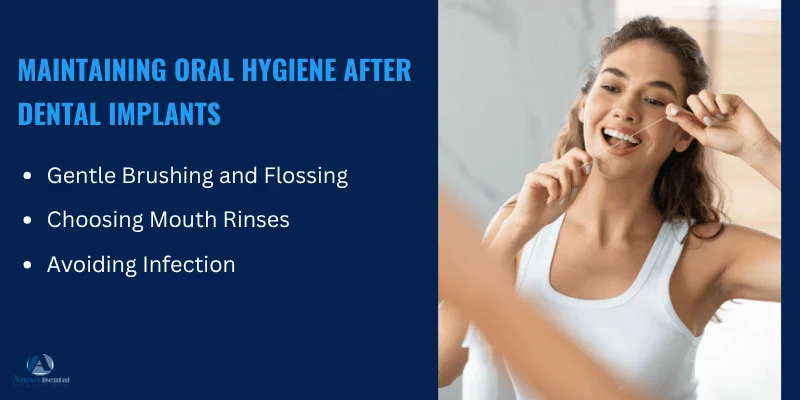
Gentle Brushing and Flossing
Start brushing your teeth the evening of your surgery, but stay away from the implant site. Use a soft-bristled toothbrush and gentle circular motions to clean your other teeth without disturbing the surgical area.
Avoid electric toothbrushes and water flossers for at least the first few days. These tools can be too aggressive for your healing gums. Your dentist may give you a special dental implant cleaning brush designed for sensitive areas.
After about a week, you can carefully begin cleaning around the implant area. Be very gentle and watch for any signs of bleeding or pain. If your mouth still feels tender, continue waiting before you brush near the implant.
Regular flossing becomes important once you fully heal. Proper dental implant care includes daily flossing to remove food particles and bacteria from hard-to-reach spots.
Choosing Mouth Rinses
Rinse your mouth with warm salt water after every meal for the first week. Mix one teaspoon of salt into a glass of warm water. This simple rinse removes food debris and keeps the area clean.
Do not swish vigorously or spit forcefully. Gentle rinsing protects the blood clots that form around your implant. After the first week, switch to a chlorhexidine rinse as recommended by your dentist.
Avoid alcohol-based mouthwashes during the early healing period. These can irritate your surgical site and slow down recovery. Stick with gentle, dentist-approved rinses until your mouth fully heals.
Avoiding Infection
Implant infections are the number one cause of implant failure. Your soft tissues need a clean environment to recover properly. Watch for warning signs like increased pain, swelling that gets worse after a few days, or discharge from the implant site.
Peri-implantitis develops when bacteria infect the tissues around your implant. This serious condition can lead to bone loss and implant failure if left untreated. Keeping your mouth clean prevents this problem.
Contact your dentist right away if you notice any signs of dental implant infection. Early treatment stops minor infections from becoming serious complications. Your dentist may prescribe antibiotics if an infection develops.
Want your dental implants to last decades? Talk with an implant specialist in Anna, TX, and learn the best aftercare routine for your smile.
Dietary Guidelines and Lifestyle Habits
What you eat and how you live during recovery directly affects how well your implant heals. The right foods support tissue repair, while certain habits can put your new implant at risk.

Recommended Diet After Surgery
For the first 24 to 72 hours after dental implant surgery, stick to a liquid diet. This means broths, smoothies, protein shakes, and blended soups. Don’t use straws because the suction can disturb healing tissue.
Between days 4 and 14, you can add soft foods like mashed potatoes, scrambled eggs, well-cooked pasta, yogurt, and bananas. These foods are easy to eat and won’t put pressure on the surgical site.
Your jawbone needs time to fuse with the implant through a process called osseointegration, which takes 3 to 6 months.
After two weeks, you can slowly add firmer foods back into your diet. Cut everything into small pieces and chew carefully. If something feels uncomfortable, go back to softer options.
Proper dental implant aftercare includes paying attention to texture and temperature during each phase of healing.
Foods and Habits to Avoid
Stay away from hard, crunchy, and sticky foods during implant healing. Nuts, chips, popcorn, and chewy candy can irritate the surgical site or damage the implant.
Spicy and acidic foods like hot peppers, citrus fruits, and vinegar can cause inflammation and slow down healing.
Sugary and sticky sweets promote bacterial growth around your implant. This increases infection risk and can lead to implant failure. Don’t eat foods that are too hot, as heat can irritate sensitive tissue.
Using straws creates suction that can disturb blood clots. Avoid this habit for at least the first week. Following these dietary restrictions helps protect your investment and supports proper healing.
Impact of Smoking and Alcohol
Smoking is one of the biggest threats to implant longevity. It reduces blood flow and oxygen to healing tissues, which slows recovery and increases the chance of implant failure.
Vaping carries similar risks and should also be avoided.
Alcohol interferes with healing and can interact badly with pain medications. It also dries out your mouth, which makes infection more likely. Skip alcoholic drinks for at least the first week after surgery.
Both smoking and drinking can prevent your jawbone from properly fusing with the implant. Maintaining healthy habits during recovery gives your implant the best chance of lasting for decades.
Monitoring Recovery and Recognizing Complications
Your implant needs careful attention during the healing period to catch any issues early. Knowing what’s normal and what requires immediate care can prevent minor problems from becoming serious complications.
Warning Signs of Problems
Some discomfort is normal after surgery, but certain symptoms need attention. Watch for excessive bleeding that doesn’t stop after applying pressure for an hour. Severe pain that gets worse instead of better after a few days may signal a problem.
Signs of dental implant infection include fever, pus around the implant site, and a bad taste in your mouth. Swelling should peak around day three and then go down.
If it keeps getting bigger or spreads to your neck, call your dentist right away.
Look out for implant movement when you touch it gently with your tongue. A stable implant shouldn’t wiggle. Red, tender gums that bleed easily might indicate peri-implantitis, which is an infection of the tissue around your implant.
Other warning signs include numbness lasting more than a few hours after surgery and unusual discharge from the surgical site.
When to Contact Your Dentist
Call your dentist immediately if you develop a fever over 101°F or experience severe pain that doesn’t respond to medication. Excessive bleeding that continues beyond 72 hours needs professional evaluation.
Contact your dental office if you notice pus, a foul smell, or increasing swelling after the first few days. Difficulty breathing or swallowing requires emergency care.
Schedule a check-up if your implant feels loose or you can see exposed metal. Early detection of issues like implant failure makes treatment easier and more successful. Don’t wait to see if symptoms improve on their own, as infections can spread quickly to the bone.
Long-Term Maintenance and Improving Implant Longevity
Your dental implants can last decades or even a lifetime with the right care approach. Regular professional visits combined with daily home care habits form the foundation for protecting your investment and maximizing implant longevity.
Routine Dental Visits and Professional Cleanings
You should schedule professional cleanings every six months to keep your implants healthy. These visits allow your dentist or hygienist to remove hardened plaque and tartar that regular brushing can’t eliminate.
Your dental team uses specialized instruments during these appointments. They’ll work with plastic or titanium scalers instead of traditional metal tools to avoid scratching your implant surface.
Some offices use air polishing systems with glycine powder for gentle yet effective cleaning.
During each checkup, your dentist will examine the tissue around your implants and check for signs of peri-implantitis.
This condition causes bone loss around implants and can lead to failure if left untreated. X-rays help detect problems early, before they become serious.
Typical maintenance costs include:
- Professional cleanings: $200-$300 annually
- Routine X-rays as needed
- Specialized cleaning if complications arise
These regular visits are essential for long-term implant maintenance success. Your dental team can catch small issues before they become major problems.
Oral Care for Lifelong Success
Your daily home routine directly impacts how long your implants last. Brush at least twice daily using a soft-bristled toothbrush and non-abrasive toothpaste.
Pay special attention to where the implant meets your gum line, as this area is prone to bacterial accumulation.
Flossing is just as important for implants as it is for natural teeth. A water flosser works particularly well for caring for dental implants because it cleans hard-to-reach spaces around abutments.
You can also use interdental brushes with nylon-coated wire to remove debris between teeth.
Key daily habits:
- Brush gently for two minutes, twice daily
- Use a water flosser or implant-specific floss once daily
- Avoid abrasive toothpastes that scratch implant surfaces
- Rinse with antimicrobial mouthwash if recommended
Don’t smoke, as tobacco significantly increases your risk of implant complications. Limit hard or sticky foods that could damage your crown or bridge. These simple habits protect your implants and keep the surrounding tissue healthy for years to come.
Don’t risk implant complications. Schedule your dental implant consultation today and keep your healing process on the right path.
Frequently Asked Questions
Proper care after dental implant surgery involves rest, gentle oral hygiene, eating soft foods, and attending follow-up appointments. Long-term success depends on daily cleaning habits and avoiding activities that could damage your implants.
What are the best practices for home care after dental implant surgery?
You should follow your dentist’s instructions closely since they know your specific case best. Following your dentist’s post-operative guidelines is the most important step for a smooth recovery.
Rest is essential during the first 24 to 48 hours after surgery. Avoid heavy exercise or activities that increase blood flow to the surgical area.
Apply ice packs to your cheeks for 20 minutes at a time during the first few days. This helps reduce swelling and keeps you more comfortable.
Brush your teeth gently and avoid the surgical site for the first few days. Use a soft-bristle toothbrush once you start cleaning around the implant area.
Rinse your mouth with warm salt water several times each day to keep the area clean. Don’t rinse vigorously, spit hard, or swish forcefully in the first few days since this can disturb healing.
What foods should be avoided following dental implant surgery, and why?
You need to stick with soft foods during the first week after surgery. Hard or crunchy foods put too much pressure on the implant site and can cause problems.
Avoid hot and spicy foods because they can irritate the surgical area. Acidic foods should also be avoided for the same reason.
Stay away from foods that require a lot of chewing. Your implant needs time to settle without extra stress or movement.
Drink plenty of water to stay hydrated and support healing. Proper hydration helps your body recover faster.
What are some tips to promote faster healing after receiving dental implants?
Getting enough rest during the first two days speeds up your recovery. Your body heals better when you’re not active.
Sleep with your head elevated to reduce swelling. Use extra pillows to keep your head higher than your heart.
Take pain medication as directed by your dentist. Don’t use aspirin since it increases bleeding risk.
Limit talking, laughing, and big facial expressions in the early days. These movements can strain the surgical area.
Don’t smoke or drink alcohol during recovery. Both hinder healing and increase the risk of complications.
Attend all your follow-up appointments. Regular checkups ensure proper healing and catch any issues early.
Could you provide a basic overview of post-operative care instructions for dental implants?
The recovery from dental implant surgery happens in phases. It starts with immediate care right after surgery and continues for several months until the bone fully integrates with the implant.
Rest for the first 24 to 48 hours and apply ice packs to manage swelling. Take your prescribed medications on schedule.
Keep the surgical area clean with gentle brushing and salt water rinses. Avoid touching the implant site with your fingers or tongue.
After the first week, you can slowly add back normal oral hygiene practices like gentle flossing. Use an antimicrobial mouthwash if your dentist recommends it.
Wait at least a week before doing light physical activities. Hold off on heavy exercise for a few more weeks.
Avoid bending over or straining since this increases blood flow to your mouth. Complete healing takes several months as the implant fuses with your jawbone.
What is the recommended diet after undergoing dental implant surgery?
Eat only soft foods during the first week after surgery. Good choices include mashed potatoes, yogurt, smoothies, and soup.
These foods don’t require much chewing and won’t put pressure on your new implant. They’re easy to eat and won’t irritate your mouth.
After the first week, you can slowly add more foods back into your diet. Be careful with hard or crunchy items that could stress the implant.
Avoid chewy foods like bagels or tough meats until your dentist says it’s safe. Listen to your body and don’t rush the process.
How should I maintain my dental implants for the long term to ensure their longevity?
Dental implants need regular care just like natural teeth. Without proper cleaning, they can develop problems over time.
Brush your implants twice daily with a soft-bristle toothbrush. Use gentle circular motions around the implant and crown.
Floss daily around your implants to remove food and bacteria. Special floss designed for implants works best.
Visit your dentist for regular checkups and professional cleanings. They can spot potential issues before they become serious.
Avoid chewing on hard objects, such as ice, pens, or hard candy. These can damage your implant crown or loosen the implant.
Don’t smoke, as it can weaken the bone around your implant. Smoking increases the risk of implant failure over time.

