




Missing teeth can make it harder for you to eat the foods you enjoy and need for good health. When teeth are missing, chewing becomes difficult, which often leads to avoiding certain healthy foods like fruits, vegetables, and nuts.
Dental implants offer a way to bring back full chewing power and help you return to a balanced diet without discomfort or limits. By restoring how you chew, implants help improve digestion and let you enjoy a wider variety of nutritious foods again.
Understanding how missing teeth affect your diet and how dental implants can help is key to making smart choices for your health. Knowing what to eat after getting implants and how they compare to other options can make a big difference in how well you recover and maintain good nutrition.
Key Takeaways
- Missing teeth can limit your food choices and affect nutrition.
- Dental implants restore chewing ability and support better digestion.
- Proper care and diet after implants enhance overall health and recovery.
How Missing Teeth Disrupt Diet and Nutrition
Missing teeth can make eating harder and change what you decide to eat. This affects how well you chew, what foods you choose, and how your body gets the nutrients it needs.
Chewing and Digestion Challenges
When you lose teeth, chewing becomes difficult. Your teeth are meant to break down food into small pieces so your stomach can digest it well.
Without enough teeth, you may not chew food properly. This can lead to larger, harder-to-digest pieces moving into your digestive system.
Poor chewing can result in stomach discomfort, slower digestion, and less nutrient absorption. You might also avoid certain foods that are tougher to chew, like raw vegetables, nuts, or meats.
This impacts how well your body absorbs vitamins and minerals because digestion begins in the mouth. If chewing is weak, the process gets disrupted, affecting your overall digestion and nutrition.
A 2025 meta-analysis reported that compromised chewing ability is associated with lower daily intakes of energy (107 kcal/day) and protein (5 g/day), both key nutrients for overall health, further highlighting how tooth loss can significantly affect your nutrition and well-being.
Impacts on Food Choices and Eating Habits
Missing teeth often lead you to pick softer, easier foods instead of healthier options. For example, you might avoid crunchy fruits and vegetables, nuts, or lean meats that require more chewing.
These foods are important because they give your body fiber, protein, and vitamins. Shifting to processed or softer foods can reduce your intake of key nutrients.
Over time, this creates a less balanced diet. You might also change how you eat, taking smaller bites or eating slower, which can influence how much food you consume.
It can be harder to enjoy meals, which might reduce your appetite or cause you to skip foods critical to your nutrition.
Immediate and Long-Term Effects on Nutritional Intake
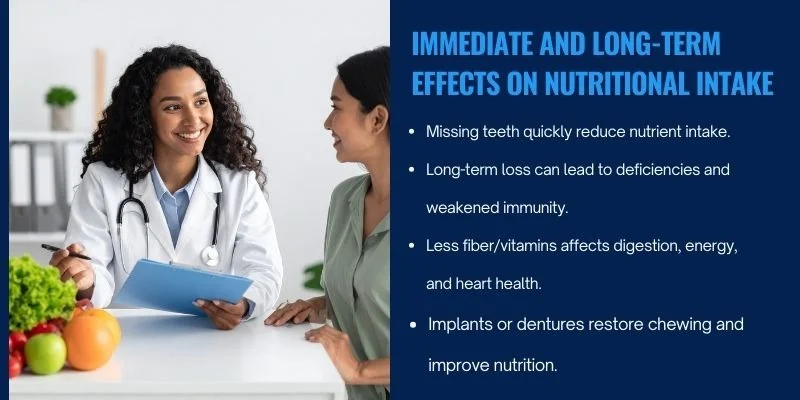
The loss of teeth can quickly lead to changes in your diet and nutrient intake. Right away, you might eat less of certain foods, leading to short-term nutrient gaps.
Over months or years, this may cause more serious issues like weight loss, deficiencies, or weakened immunity. If missing teeth are not replaced, these nutritional problems can worsen.
For example, low intake of fiber and vitamins from fruits and vegetables can impact your heart health, digestion, and energy. The risk of malnutrition is higher for adults with multiple missing teeth, especially if you rely on easy-to-chew but less healthy foods.
Addressing tooth loss with implants or dentures can help you regain proper chewing and improve your diet, supporting better nutrition and overall health.
Struggling with missing teeth? Discover how dental implants can help restore your ability to chew and improve your nutrition. Schedule a consultation todaywith Anna Dental in Anna, TX!
Nutritional Deficiencies and Health Implications
When you lose teeth, it can change what foods you eat and how well your body gets the nutrients it needs. This can lead to important gaps in your diet that affect not just your mouth, but your whole body.
Some key nutrients like protein, calcium, and vitamins may be lower, which can slow healing and weaken your bones. You might also see weight changes and other health problems from these dietary shifts.
A 2025 study found that adults with fewer than 10 teeth were 2.31 times more likely to be at risk of malnutrition compared to those with 21 or more teeth, showing how missing teeth directly impact overall nutritional health.
Protein, Calcium, and Fiber Shortfalls
Missing teeth often make it hard to chew meats, nuts, and raw vegetables. These foods are rich in protein, calcium, and fiber, essential for your body’s health.
- Protein helps your body repair tissues, including gums and the bone around teeth.
- Calcium supports strong bones and teeth.
- Fiber aids digestion and helps keep your blood sugar stable.
If you avoid these foods because they’re tough to eat, you might miss out on these crucial nutrients. Low protein intake can slow healing after dental treatments.
Calcium loss can weaken your jawbone, increasing the risk of tooth loss. Plus, low fiber can cause digestion issues and reduce overall health.
Making changes that help you chew better can improve your intake of these nutrients.
Reduced Vitamin C and Vitamin D Intake
Vitamin C and vitamin D are often lacking in people who struggle with chewing. These vitamins play important roles in keeping your gums and bones healthy.
- Vitamin C is vital for healing wounds and maintaining gum tissue. Without enough vitamin C, your gums become more prone to bleeding and infection.
- Vitamin D helps your body absorb calcium and keep bones strong. Deficiency in vitamin D can lead to weaker jaw bones and poor recovery after dental surgery.
If you avoid fresh fruits and vegetables, you might not get enough vitamin C. Limited exposure to sunlight and poor diet can lower vitamin D levels.
Both shortages can reduce your ability to recover from dental procedures and increase the risk of oral diseases.
Weight Gain and Systemic Health Effects
Changing your diet because of missing teeth can also lead to unintended weight gain. When chewing is difficult, you may choose softer, processed foods that are high in sugar and fat but low in nutrients.
This shift can cause:
- Increased calorie intake.
- Balanced nutrition loss, especially of fresh produce.
- Blood sugar spikes and poor digestion.
Weight gain from these choices raises your risk for health issues like diabetes, heart disease, and digestive problems. Poor oral function can start a cycle where health worsens because of diet, affecting your overall wellbeing.
Consequences for Bone Density and Tissue Repair
Your jawbone and oral tissues depend on good nutrition to stay strong and heal quickly. Lack of key nutrients like protein, calcium, and vitamins can cause:
- Reduced bone density, increasing the chance of bone loss around teeth or implants.
- Slower tissue repair, which can complicate healing after dental surgeries or implant placements.
Without enough nutrients, your body cannot rebuild the bone and soft tissue that support your teeth or implants. This loss weakens your oral structure and may lead to problems with dental implants failing or further tooth loss.
Dental Implants: Restoring Function and Nutrition
Getting dental implants can change how you eat and absorb nutrients. They help you chew better, which lets your body take in vitamins and minerals more efficiently.
Implants also support your jawbone, stopping bone loss and keeping your oral health strong.
How Dental Implants Improve Chewing Efficiency
When you lose teeth, chewing becomes harder, and you might avoid certain foods. Dental implants act like natural teeth by firmly anchoring in your jawbone, so you can bite and chew with more power and precision.
This means you can enjoy a wider range of foods, including tough vegetables, nuts, and meats. Better chewing breaks food into smaller pieces, which helps digestion.
Since implants don’t slip like dentures, you won’t have to worry about discomfort or switching foods to softer choices. This improvement lets you eat balanced meals, which is key for your overall health.
Role in Enhancing Nutrient Absorption
Good chewing helps your body absorb nutrients better. When food is properly chewed, enzymes in your saliva mix well with it, starting the digestion process early.
This prepares nutrients to be broken down and absorbed in your digestive system. If you avoid certain hard or fibrous foods due to missing teeth, you might miss out on fiber, vitamins, and minerals.
With dental implants, you can eat those foods again, supporting better nutrient intake. Proper nutrient absorption supports your immune system, bone repair, and energy levels, all important while your body heals after implant surgery or everyday life.
Prevention of Bone Loss and Support for Bone Health
When teeth are missing, the jawbone can slowly shrink because it no longer receives the stimulation it needs. This bone loss can change your face shape and weaken your oral health.
Dental implants act like natural roots, stimulating your jawbone when you chew. This keeps your bone strong and helps maintain the shape of your face.
Strong bone also supports your implants over time, making them last longer. Certain nutrients, like calcium and vitamin D, work together with your healthy bone to keep your mouth in good shape.
Ready to enjoy a wider variety of nutritious foods again? Learn more about dental implants and how they can transform your diet. Visit us in Anna, TX, for a personalized consultation!
Dietary Considerations After Dental Implant Surgery
After dental implant surgery, your diet plays a big role in how well and how fast you heal. Eating the right nutrients, staying hydrated, and choosing the right foods can help your body repair tissue and keep your immune system strong.
You’ll need to start with soft foods and slowly work your way back to a balanced diet without crunch or hard textures.
Nutrients for Optimal Healing and Recovery

You should focus on protein, as it helps rebuild tissue and bone by providing amino acids needed for repair. Foods like soft eggs, yogurt, and tender fish are good protein sources early on.
Calcium is also important because it supports bone strength, vital for your implant to fuse properly with your jaw. Dairy (if you tolerate it) or fortified plant milks can help here.
Don’t forget vitamins C and D, which improve gum healing and help your body absorb calcium. Adding antioxidant-rich foods like berries or leafy greens can reduce inflammation and speed up recovery.
Hydration and Immune System Support
Keeping hydrated is key after your surgery. Drinking plenty of water and non-acidic natural juices helps flush out bacteria and keeps tissues moist, aiding healing.
Avoid sugary or caffeinated drinks at first because they can dry your mouth or irritate your gums. Good hydration supports your immune system, which fights infection and helps your body handle the stress from surgery.
Herbal teas or broths are gentle options that also provide fluids.
Soft Food Options and Gradual Diet Transition
Right after surgery, stick to soft foods that don’t require much chewing. Think smooth soups, mashed potatoes, yogurt, and smoothies.
These foods are easy on your mouth and reduce the risk of hurting the implant site. After a few days, you can add slightly firmer foods like scrambled eggs, soft-cooked vegetables, and soft beans.
Avoid crunchy fruits and vegetables or sticky foods until your mouth feels fully healed. Over 3 to 6 weeks, gradually return to a balanced diet, including more solid foods while avoiding anything that could put stress on the implant.
This step-by-step approach protects your healing while letting you enjoy meals again.
Comparing Dental Implants, Dentures, and Other Solutions
Choosing the right tooth replacement affects more than just your smile. It impacts how you eat, what foods you enjoy, and even your overall health.
Each option comes with its own strengths and challenges in supporting your nutrition and daily life.
Nutritional Benefits of Dental Implants vs Dentures
Dental implants act like natural teeth because they are anchored into the jawbone. This gives you strong biting power, allowing you to eat a wide variety of foods without worry.
You can enjoy crunchy vegetables, nuts, and tough meats, which supply important nutrients for your body. Dentures, while helpful, often don’t fit as securely.
This can make chewing certain foods difficult or uncomfortable. As a result, you might avoid healthy but harder-to-chew items, leading to a less balanced diet.
Implants also help keep your jawbone healthy, which supports long-term oral function and digestion.
Here is a quick look at differences in nutrition support:
| Feature | Dental Implants | Dentures |
| Chewing efficiency | High – like natural teeth | Lower – can slip or move |
| Food variety flexibility | Wide variety | Limited, softer foods preferred |
| Jawbone preservation | Yes, prevents bone loss | No, bone loss can occur |
| Comfort during eating | Usually no discomfort | Possible sore spots or slipping |
Using dental implants often means fewer dietary restrictions and better overall nutrition compared to dentures.
Long-Term Dietary Outcomes and Quality of Life
With dental implants, many people report feeling more confident when eating and speaking. You’re less likely to think about your teeth, so you can focus on enjoying meals.
This comfort helps maintain a balanced diet over time, which supports your energy and health. Dentures may require adjustments and careful management to avoid discomfort or slipping during meals.
Some denture wearers may stick to soft or processed foods, which can lack essential nutrients. This might affect energy levels and increase the risk of weight loss or other health issues.
Ready to improve your diet and quality of life with dental implants? Schedule a consultationat Anna Dental, Anna, TX today!
Frequently Asked Questions
Good nutrition plays a big role in keeping your mouth healthy and strong. Eating the right foods and vitamins can protect your teeth and gums, while missing teeth can make it harder for your body to get important nutrients.
Are there specific vitamins or minerals that help maintain oral health?
Yes, vitamins like vitamin C and D are important. Vitamin C helps keep your gums healthy, and vitamin D supports strong teeth by helping your body absorb calcium.
Calcium is another key mineral for keeping your teeth and jawbone strong. Eating foods rich in these nutrients helps protect your mouth from problems.
How can tooth loss impact the absorption of essential nutrients?
When you lose teeth, chewing becomes harder. This can lead you to avoid certain healthy foods that are tougher to eat.
Chewing less can cause larger food pieces to be swallowed, making digestion less effective. This means your body may not absorb important nutrients as well as it should.
What soft or easy-to-chew nutritional foods are recommended for individuals with missing teeth?
Soft fruits like bananas and cooked vegetables are good choices. You can also eat yogurt, scrambled eggs, and smoothies that pack in nutrients without needing much chewing.
These foods let you get energy and vitamins while protecting your mouth from pain or discomfort.
What dietary adjustments should one consider after getting dental implants?
After implant surgery, focus on soft foods like soups, mashed potatoes, and applesauce during healing. Avoid hard, crunchy, or sticky foods that could harm the implant site.
Once healed, you can gradually add more solid foods back to your diet to support good nutrition.
Can dental implants help improve dietary and nutritional intake?
Yes, dental implants restore your ability to chew well, letting you enjoy a wider range of nutritious foods. This helps prevent nutrient deficiencies linked to missing teeth.
How should I modify my diet to prevent further tooth loss?
Limit sugary and acidic foods that can harm enamel and gums.
Eating plenty of fiber-rich fruits, vegetables, and lean proteins helps keep your mouth healthy.
Drinking water and avoiding tobacco also protect your teeth and gums from damage.

