




When you lose a tooth, you want a replacement that looks natural and feels comfortable. Two popular options are dental implants and dental bridges.
Dental bridges can be a quicker and less expensive way to fill gaps, especially if you’re missing multiple teeth in a row. However, they rely on your surrounding teeth for support, which may affect their long-term health.
Your overall health, budget, and the number of teeth you need to replace will help determine which option best fits you.
Choosing between implants and bridges can be confusing, but understanding the main differences will help you choose the right solution.
This article will help you understand how both options work, their benefits, and what to consider before making your choice.
Key Takeaways
- Dental implants offer a lasting, natural-looking tooth replacement.
- Dental bridges are usually faster and cost less up front.
- Your health and the number of missing teeth affect which option suits you.
Understanding Dental Implants
Dental implants are a popular way to replace missing teeth that look and feel natural. They involve placing a small post into your jawbone, which acts like a real tooth root, supporting an artificial tooth on top.
This setup helps keep your bones healthy and provides a long-lasting solution.
What Is a Dental Implant?
A dental implant is a small post, usually made from titanium, that is surgically placed into your jawbone. It acts as an artificial root for a missing tooth.
After the implant is secured, a crown is attached on top to look and function like a real tooth. The implant provides a stable, strong base for your new tooth.
Because it connects directly with your bone, it also prevents bone loss that can happen after you lose a tooth. Implants can replace single teeth or support bridges and dentures.
How Dental Implants Work
Once the titanium post is placed in your jawbone, it goes through a process called osseointegration. This means your bone slowly grows around the implant, making it part of your jaw.
This can take a few months, but creates a firm, natural base for the artificial tooth. After healing, the dentist attaches a crown on top that matches your other teeth in shape and color.
This crown works like a normal tooth for eating and speaking. Because of osseointegration, implants avoid putting pressure on nearby teeth, helping keep your mouth healthy.
Research shows that a 5-year prospective study of 30 zirconia implants showed a success rate of 93.3%, with low rates of peri-implantitis and mucositis; smoking was identified as a risk factor.

Types of Dental Implants
There are different types of dental implants depending on your needs and jawbone health. The most common are:
- Endosteal implants: These are placed directly into your jawbone and are usually shaped like small screws.
- Subperiosteal implants: These sit on top of the bone but under the gum, used when the jawbone isn’t thick enough.
- Zygomatic implants: These are longer and attach to the cheekbone, and are used in rare cases with severe bone loss.
Your dentist will help you choose the right type based on your health and which teeth need replacing.
Understanding Dental Bridges
Dental bridges are a common way to replace one or more missing teeth. They use nearby teeth for support and hold artificial teeth in place, helping restore your smile and ability to chew or speak clearly.
What Is a Dental Bridge?
A dental bridge is a fixed dental device that fills the gap left by missing teeth. It consists of one or more artificial teeth called pontics.
These pontics are held in place by crowns attached to your natural teeth on either side of the gap. The bridge literally “bridges” the space where your teeth are missing.
It is designed to look and feel like your original teeth. You will need healthy adjacent teeth since they serve as anchors for the bridge.
How Dental Bridges Work
To fit a dental bridge, your dentist will first prepare the adjacent teeth by shaping them to hold crowns. These crowns act like supports for the bridge and the artificial tooth or teeth between them.
Once the crowns are ready, the pontic is attached to them to fill the empty space. The bridge helps prevent your other teeth from shifting out of place.
You will be able to chew and speak better once the bridge is in place. Bridges do not require surgery, so the process is usually faster than getting implants.
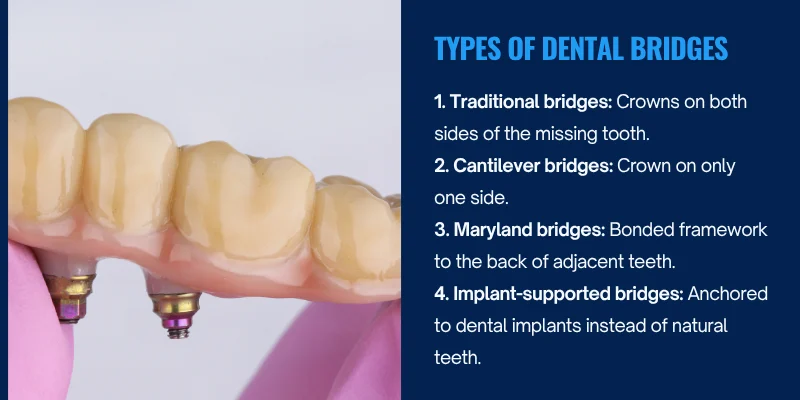
Types of Dental Bridges
There are several types of dental bridges, including:
- Traditional bridges: Use crowns on both sides of the pontic. This is the most common type.
- Cantilever bridges: Use a crown on only one side of the missing tooth.
- Maryland bridges: Use a metal or porcelain framework bonded to the back of the adjacent teeth.
- Implant-supported bridges: Attach to dental implants rather than natural teeth.
Your dentist will recommend the best type based on your oral health and how many teeth you need to replace.
Key Differences Between Dental Implants and Bridges
When replacing a missing tooth, the way the treatment is done and its effects on your mouth can vary a lot. Some options affect nearby teeth and bone health differently, and the time it takes to finish the process can vary.
Your choice will impact how natural your tooth looks and how well you can chew.
Procedure and Timeline
Dental implants involve a surgery where a metal post, usually titanium, is placed into your jawbone. This process requires weeks or months to heal because the bone needs to fuse to the implant, creating a strong foundation.
After healing, a crown is attached to the implant. The entire process can take 3 to 6 months or longer, depending on your healing.
Dental bridges are quicker to place. They involve shaping the nearby teeth to hold crowns that support the false tooth in the middle.
This usually takes two visits to your dentist spread over a few weeks. You don’t need surgery, so the timeline is much shorter than with implants.
Impact on Adjacent Teeth
With dental bridges, healthy teeth next to your missing tooth must be filed down to serve as anchors. This can weaken those teeth or increase the risk of decay over time.
The bridge relies on these teeth for support, which puts pressure on them while you chew. Implants, however, don’t affect your neighboring teeth.
Since implants are anchored in your jawbone, each replacement acts independently. This means your healthy teeth stay untouched, which helps keep your oral health in better condition overall.
Bone Health Considerations
One of the biggest advantages of dental implants is how they help protect your jawbone. The implant acts like a real tooth root, stimulating the bone and preventing bone loss or resorption.
This helps maintain your facial structure and keeps your jaw strong. Bridges don’t replace the root of the tooth, so they don’t provide this bone stimulation.
Over time, the bone underneath the bridge can shrink, which might change how your face looks and cause gaps.
Aesthetic and Functional Outcomes
Dental implants look and feel very natural because they are securely fixed in the jaw. They usually match your natural teeth well and can restore full chewing ability without slipping or discomfort.
Implants also tend to last longer with proper care. Dental bridges can create a good appearance too, especially when made with porcelain that matches your teeth.
However, they may feel less stable than implants. Because they rely on surrounding teeth, chewing might not feel as natural, and bridges may wear out faster, needing replacement after some years.
Pros and Cons of Dental Implants
Dental implants offer a strong and lasting solution for missing teeth. They connect directly to your jawbone and help keep your bone healthy.
But implants take time to heal and cost more than other options. You should know both their benefits and challenges before deciding.
Advantages of Dental Implants
Dental implants fuse with your jawbone through a process called osseointegration. This keeps your jawbone strong and prevents bone loss.
Unlike bridges, implants don’t need nearby teeth to be filed down or changed. This means your natural teeth stay safe and healthy.
Implants can last 20 years or more with good care. They work like real teeth, making it easier to chew and speak.
You won’t have to worry about slipping or discomfort like with dentures. Plus, implants help maintain your natural facial shape over time.
Taking care of implants is similar to caring for real teeth. Brushing, flossing, and regular dental checkups keep them healthy and reduce risk of infections.
Looking for expert dental care near Anna, TX? Visit Anna Dental today to explore your tooth replacement options and restore your smile with confidence.
Potential Drawbacks of Implants
Dental implants usually cost more upfront than bridges or dentures. Also, the process can take several months because your jawbone needs time to heal and grow around the implant.
Since implants require surgery, there is a small chance of complications like infection, bleeding, or nerve damage. If your bone isn’t dense enough, you might need a bone graft, which adds time and cost.
You will need to maintain excellent oral hygiene. Poor care can cause infections around the implant, called peri-implantitis, which might lead to implant failure.
Implants also require regular dental visits to check for any issues. Finally, implants aren’t ideal for everyone.
People with certain health problems or who smoke heavily may not be good candidates. Your dentist can help figure out if implants are right for you.
For more details on dental implants’ pros and cons, visit dental implant vs. bridge comparisons at Dentaly or D’Amico Dental Care.
Pros and Cons of Dental Bridges
Dental bridges can help you restore your smile and chewing ability after losing one or more teeth. They are made to look like natural teeth and rely on the teeth next to the gap for support.
But there are some things to think about before choosing a bridge.
Benefits of Dental Bridges
Bridges are usually faster to install than implants. You can get a dental bridge in about two visits over a couple of weeks.
They help you chew and speak better by filling the gap left by missing teeth. Since bridges are attached to your adjacent teeth, they keep those teeth in place and stop them from shifting.
They also help maintain your face’s shape by supporting the structure around your mouth. Another benefit is cost.
Bridges tend to cost less upfront than implants, and your dental insurance is more likely to cover part of the price. This can make bridges a practical choice if you need a quick and affordable fix.
Possible Limitations of Bridges
Because bridges rely on healthy teeth beside the missing tooth, those teeth need to be filed down to hold the bridge. This can weaken them and make cleaning harder.
Good oral hygiene is essential to avoid decay around these supporting teeth. Bridges don’t stop bone loss in the jaw where the tooth is missing.
Over time, this can change the fit of your bridge or affect your facial shape. You might need to replace the bridge every 5 to 15 years.
A study found that long-span bridges (5 units or more) were associated with higher rates of technical complications (e.g., framework fracture, chipping), likely due to excessive load on abutment teeth.
If you’re missing several teeth in a row, bridges might not be the best option because they put more pressure on the supporting teeth. In that case, your dentist may suggest other solutions, such as implants.
Learn which option suits you best, visit Anna Dental today.

Choosing the Right Option for You
When deciding between dental implants and bridges, several key factors come into play. Your oral health, budget, and personal goals all shape the best choice for your tooth replacement.
Getting the right treatment can protect your facial structure and improve how you eat and speak.
Oral Health and Lifestyle Considerations
Your overall oral health is a big part of what will work best. If your jawbone is healthy and strong, implants can fuse well and last a long time.
But if you have health issues like diabetes or slow healing, implants might not be ideal because they need surgery and healing time. Bridges don’t require surgery and can be placed faster, but they rely on your nearby teeth for support.
If those teeth are weak or damaged, a bridge might cause more problems. Think about your lifestyle too.
Implants are more stable and feel natural, while bridges may require extra care to avoid damage. Your daily habits and oral hygiene can affect the success of both options.
Budget and Treatment Goals
Cost is often a major factor. Bridges usually have lower upfront costs and are more likely to be covered by dental insurance.
Implants tend to be more expensive upfront, often between $3,000 and $4,500 per tooth. Insurance may cover less for implants.
If you want a solution that lasts many years with less chance of needing replacement, implants might be worth the investment. Bridges may need to be replaced every 5 to 15 years depending on wear and care.
Consider how many teeth you need replaced. If multiple teeth in a row are missing, a bridge can be simpler and less costly than multiple implants.
Your goals for comfort, durability, and long-term care will guide this decision.
Consulting With Your Dentist
Your dentist is the best person to help you pick the right option. They will check your mouth, jawbone density, and overall health to see what fits your needs.
They can also explain the full process, including healing time for implants. Implants can take several months from start to finish.
Bridges often require just a few visits over weeks. During this consultation, you can discuss your budget and ask about insurance coverage.
Your dentist can also suggest other options if implants or bridges aren’t right for you.
Want to explore the best tooth replacement option? Visit Anna Dental today and book your consultation to see if implants are right for you.
Frequently Asked Questions
What are the pros and cons of dental implants compared to bridges?
Dental implants protect your jawbone by acting like natural tooth roots. They don’t harm nearby teeth and can last a lifetime with good care. However, they need surgery and take several months to complete. Bridges are quicker to place and usually cost less upfront. They rely on nearby teeth for support, which means those healthy teeth have to be filed down. Bridges don’t prevent bone loss where the tooth is missing.
How do dental implants and bridges differ in cost?
Implants typically cost more when you first get them because of the surgery and materials. But they may save you money in the long run, since they often last longer without needing replacement. Bridges are less expensive upfront but might need to be replaced every 7-15 years. Over time, the cost of repairs or replacements can add up.
Can you explain the cost difference for replacing multiple teeth with implants or bridges?
Replacing several teeth with implants means placing multiple posts, which can be expensive. Sometimes, implant-supported bridges are used to reduce costs by anchoring the bridge to fewer implants. Traditional bridges span the gap without surgery and can replace multiple teeth in a row. This choice often costs less initially but may require more care for the supporting teeth.
What are the factors that might lead a dentist to recommend a bridge over an implant?
Your dentist might suggest a bridge if you have bone loss where the tooth is missing and can’t get an implant without extra surgery, like bone grafting. If your adjacent teeth already need crowns or fillings, a bridge might fix those problems while replacing the missing tooth. Also, if you want a faster treatment, bridges are quicker to install than implants.
For front teeth replacements, should I consider a bridge or an implant?
Implants look and feel closest to natural front teeth because the crown comes right out of the gum. They help maintain your jawbone and smile shape. Bridges can also look good but may show a visible line where they meet the gums as bone shrinks under the missing tooth. Implants usually require more skill and time to place in the front.
What are the potential downsides to choosing a dental bridge?
Bridges need healthy teeth next to the gap to hold them up. This means those teeth lose some enamel and become weaker. They do not stop bone loss in the area of the missing tooth. This can change your jaw shape over time.Cleaning under the false tooth can be tricky. It can lead to gum problems or bad breath if not done carefully.

