




Many dental patients worry about what happens after sedation dentistry procedures. The good news is that most people feel normal within a few hours, though you should plan to take it easy for the rest of the day.
Recovery from sedation dentistry typically takes anywhere from 30 minutes to several hours, depending on the type of sedation you received.
IV sedation has fewer risks and doesn’t require as long a recovery compared to general anesthesia, which means you can often go home sooner after your dental work.
Understanding what to expect during your recovery helps you prepare properly and feel more confident about your upcoming dental treatment.
From the immediate effects you might notice to the best ways to care for yourself at home, knowing the recovery process makes the whole experience much smoother.
Understanding Sedation Dentistry
Sedation dentistry uses special medications to help you feel calm and relaxed during dental work. Your sedation dentist can choose from different types of sedatives based on your needs and the dental procedure you’re having.
What Is Sedation Dentistry?
Sedation dentistry refers to medications that help you feel less stressed during dental procedures. You stay awake and can respond to your dentist, but you won’t feel pain or anxiety.
This type of dental sedation is sometimes called conscious sedation or twilight sleep. Your dentist gives you medicine before or during your treatment to keep you comfortable.
The sedatives work by slowing down your nervous system. This helps your body and mind relax while your dentist works on your teeth or gums.
You’ll be able to follow simple instructions like opening your mouth wider. But you won’t remember much about what happened during the procedure.
Common Reasons for Sedation During Dental Procedures
Many people need dental sedation for different reasons. Fear of dental treatment is one of the most common reasons patients ask for sedatives.
Some people have a fear of needles that makes them anxious about getting shots to numb their mouth. Others have a very sensitive gag reflex that makes dental work difficult.
Very sensitive teeth can make even simple cleanings uncomfortable. If you have claustrophobia, sitting in the dental chair might make you feel trapped or panicked.
People who have difficulty controlling their movements often benefit from sedation dentistry. This includes patients with conditions like Parkinson’s disease or cerebral palsy.
Physical, behavioral, or cognitive needs can also make it hard to relax during dental procedures. Your sedation dentist will talk with you about which option works best.
| Sedation Type | How It’s Given | Recovery Time | Can Drive After |
| Nitrous Oxide | Through mask | Immediate | Yes |
| Oral Pills | Swallowed | 24 hours | No |
| IV Sedation | Through vein | 24 hours | No |
Different Types of Sedation and Their Effects

Each type of sedation affects your body differently and has its own recovery timeline. Nitrous oxide works fastest and wears off within minutes, while general anesthesia requires hours of monitoring before you can go home.
Nitrous Oxide (Laughing Gas): What to Expect
Nitrous oxide starts working in 3-5 minutes and creates a calm, relaxed feeling. You might feel happy, giggly, or light-headed during your dental procedure.
Your arms and legs may feel heavy. Some people experience a tingling sensation in their hands and feet.
Recovery happens quickly:
- Effects wear off in 5-10 minutes after the mask is removed
- You can return to normal activities right away
- No need for someone to drive you home
The most common side effects are mild headaches and nausea. Only about 5% of patients experience these problems.
Children might feel agitated or vomit after the gas is turned off. Dentists often give kids 100% oxygen afterward to help them recover faster.
You stay awake and aware during treatment. You can still respond to your dentist’s questions and follow instructions.
Oral Sedation: Recovery Insights
Oral sedation uses pills like Valium taken before your appointment. These medications make you drowsy and relaxed but keep you conscious.
The effects last much longer than laughing gas. You’ll feel sleepy for several hours after your procedure ends.
Important recovery guidelines:
- No driving for 24 hours after treatment
- Arrange for someone to take you home
- Avoid alcohol and heavy meals
- Rest at home for the remainder of the day
Your memory of the procedure may be fuzzy. This is normal and expected with oral sedatives.
You might feel unsteady on your feet. Take your time when walking and avoid stairs if possible.
Some people experience mild nausea or dizziness. These symptoms usually go away within a few hours of rest.
Plan to take the day off work. Your reaction time and judgment will be slower than usual.
IV Sedation: Timeline and Symptoms
IV sedation delivers medication directly into your bloodstream through a small needle in your arm. This method works faster and more predictably than oral sedation.
You’ll feel very relaxed and may drift in and out of light sleep. Most patients don’t remember much about their procedure.
Recovery timeline:
- First 30 minutes: Still drowsy and unsteady
- 1-2 hours: More alert but still impaired
- 4-6 hours: Most effects have worn off
- 24 hours: Full recovery complete
Your healthcare provider will monitor you while the sedation wears off. You’ll stay in the office until you’re stable.
You must have someone drive you home. The medication affects your coordination and judgment for hours.
Avoid making important decisions or signing documents. Your thinking may still be cloudy even when you feel better.
General Anesthesia: Full Recovery Outlook
General anesthesia puts you completely to sleep during complex dental procedures. You won’t be aware of anything that happens.
Recovery takes the longest with this type of sedation. Healing times vary depending on your specific procedure.
What to expect during recovery:
- First few hours: Grogginess and confusion
- 6-8 hours: Nausea and dizziness may occur
- 24-48 hours: Energy levels return to normal
Nausea is common after anesthesia and usually lasts a few hours. Sip clear liquids slowly when you first wake up.
You’ll need someone to stay with you for at least the first day. Don’t be alone until the medication completely leaves your system.
Recovery restrictions:
- No driving for 24 hours minimum
- Avoid alcohol and sedating medications
- Take time off work and avoid heavy lifting
- Follow all post-procedure care instructions carefully
Your dentist will give you specific guidelines based on your procedure and how you respond to the anesthesia.
Wondering which sedation method suits your next procedure? Visit Anna Dental in Anna, TX to explore options designed for your comfort and quick recovery.
Typical Timeline for Dental Sedation recovery
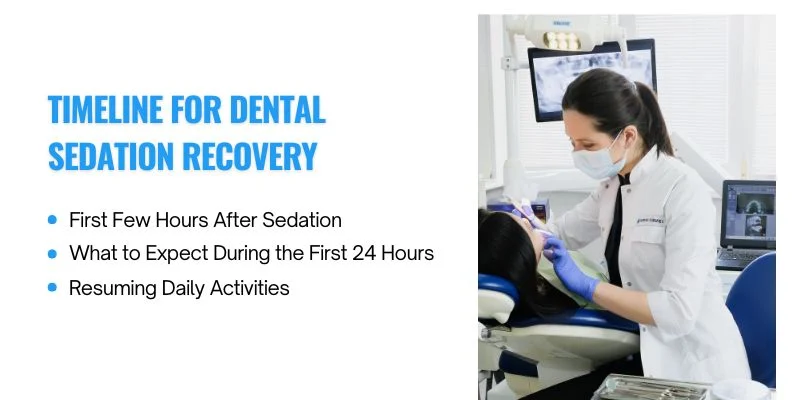
Recovery times vary based on the type of sedation you received. Most patients feel normal within a few hours to 24 hours after their dental procedure.
First Few Hours After Sedation
Your recovery depends on which type of sedation your dentist used during treatment.
Nitrous oxide wears off the fastest. You breathe pure oxygen through a mask when your procedure ends. The nitrous oxide flushes out quickly, and you won’t feel dizzy.
Most patients feel completely normal within 15 minutes. You can drive yourself home right away.
Oral sedation takes longer to leave your system. You might feel sleepy or groggy for several hours after your appointment.
The medication can make you unsteady on your feet. You’ll need someone to drive you home and stay with you.
IV sedation has the strongest effects that last the longest. You may not remember anything about your procedure when you wake up.
You’ll feel drowsy and confused for the first few hours. Your speech might sound slurred, and your movements may be slow.
What to Expect During the First 24 Hours
The first day after sedation requires extra rest and care. Your body needs time to process the medications completely.
You should avoid making important decisions for 24 hours. The sedation can affect your judgment and memory.
Physical symptoms you might notice include:
- Mild dizziness when standing up
- Feeling tired or sleepy
- Nausea or upset stomach
- Dry mouth
- Slight confusion
These feelings are normal and will go away. Drink plenty of water and eat light meals.
Oral sedation or IV sedation requires 24 hours for full recovery. You shouldn’t drive during this time period.
Stay close to home and avoid strenuous activities. Ask a friend or family member to check on you.
Resuming Daily Activities
Most people can return to normal activities the day after their sedation dentistry appointment.
Driving is safe once you feel completely alert and the medication has worn off. For nitrous oxide, this means the same day. For oral or IV sedation, wait until the next day.
Work or school can usually resume within 24 hours. Make sure you feel clear-headed and steady on your feet first.
Exercise and heavy lifting should wait 24-48 hours depending on your procedure. Listen to your body and don’t push too hard.
You might still feel slightly tired the day after IV sedation. This is normal and should improve quickly.
Plan light activities for your first day back. Avoid anything that requires quick reflexes or complex thinking until you feel completely normal.
At-Home Recovery and Managing Common Side Effects
Proper home care after your dental procedure helps you heal faster and feel better. Following simple steps for rest, nutrition, and oral care makes your recovery smoother.
Resting and Sleep Tips
Your body needs time to clear the sedatives from your system. Most people feel fine by the next day with maybe a little drowsiness left over.
Plan to rest for the remainder of the day after your appointment. Avoid driving, operating machinery, or making important decisions for 24 hours.
Sleep positioning matters during recovery. Keep your head elevated with extra pillows to reduce swelling. This position also helps prevent blood from pooling in the treatment area.
Create a calm sleep environment by dimming lights and avoiding screens before bed. Your body is already working to process the sedatives, so good sleep helps speed up this process.
If you feel dizzy or unsteady, sit or lie down right away. These feelings are normal but should go away within a few hours.
Staying Hydrated and Eating After Sedation
Start with small sips of water once you feel alert. Staying hydrated helps your body flush out the remaining sedatives faster.
Foods to choose:
- Soft foods like yogurt, soup, or smoothies
- Room temperature or cool items
- Easy-to-swallow options like pudding or applesauce
Foods to avoid:
- Hot liquids that could burn your numb mouth
- Hard, crunchy, or chewy foods
- Alcohol for at least 24 hours
Eat slowly and pay attention to how your mouth feels. The numbness from local anesthetic might still be present, making it easy to bite your tongue or cheek.
Common side effects may include nausea, so bland foods work best initially. If you feel sick, try crackers or ginger tea.
Gentle Oral Hygiene
Your mouth needs special care after a dental procedure. Follow your dentist’s specific instructions about when to start brushing and flossing again.
For the first 24 hours, avoid vigorous rinsing or spitting. These actions can disturb blood clots and slow healing.
Gentle care steps:
- Use a soft-bristled toothbrush
- Brush very lightly around the treatment area
- Rinse with warm salt water if recommended
- Avoid mouthwash with alcohol
If you had oral surgery, you might need to wait longer before normal brushing. Your dentist will tell you exactly when it’s safe to resume regular oral hygiene.
Don’t use straws for the first day. The sucking motion can cause problems with healing.
Managing Dental Anxiety Post-Procedure
Many people feel proud after completing their dental procedure with sedation. This positive experience often reduces future dental anxiety.
Write down what went well during your appointment. Remember how the sedatives helped you feel calm and comfortable throughout the treatment.
Anxiety management tips:
- Practice deep breathing exercises
- Use relaxation apps or music
- Talk to friends or family about your positive experience
- Schedule your next appointment while you feel confident
If you still feel worried about future dental visits, discuss this with your dentist. They can help you plan the best sedation approach for next time.
The success of your recent procedure shows that dental anxiety doesn’t have to prevent you from getting needed care. Each positive experience builds confidence for future treatments.
Pain Relief and Medications
Your dentist will prescribe specific pain medications after your procedure. These might include over-the-counter options like ibuprofen or stronger prescription drugs.
Take all medications exactly as your dentist directed. Don’t skip doses even if you feel better. This keeps pain levels manageable throughout your recovery.
Common pain relief options include:
- Ibuprofen (reduces swelling and pain)
- Acetaminophen (general pain relief)
- Prescription pain medications for complex procedures
Avoid aspirin for the first 24 hours after sedation. It can increase bleeding risk. Also avoid alcohol while taking any pain medications.
If you had oral sedation or IV sedation, your body needs time to process these sedatives. Pain medication works differently when combined with leftover sedation drugs.
Dealing with Nausea and Grogginess
Nausea and drowsiness are normal after sedation dentistry. These effects usually last 2-6 hours but can continue up to 24 hours with stronger sedatives.
To reduce nausea:
- Eat light foods like crackers or toast
- Sip clear liquids slowly
- Rest in a cool, quiet room
- Avoid sudden movements
Grogginess affects your thinking and balance. Don’t drive, operate machinery, or make important decisions for at least 24 hours. Have someone stay with you during this time.
If nausea becomes severe or you can’t keep liquids down, contact your dentist. Some patients need anti-nausea medication.
The type of sedation affects how long you’ll feel drowsy. Nitrous oxide clears quickly, while oral and IV sedatives take much longer to leave your system.
When to Call Your Dentist or Seek Medical Help
Most patients recover without issues, but contact your dentist or emergency care if you notice:
- Difficulty breathing or swallowing
- Severe dizziness or chest pain
- Swelling, rash, or hives
- Persistent vomiting or bleeding
Minor effects like drowsiness, dry mouth, or mild nausea are normal and should fade within 24 hours. Keep your dentist’s after-hours number handy for any unexpected symptoms.
Factors That Influence Recovery Time
Your recovery time after sedation dentistry depends on several key factors. Your age and health status play major roles, while the type of sedative used and length of your dental procedure also affect how quickly you bounce back.
Age and Health Considerations
Your age directly impacts how your body processes sedatives. Older adults typically need more time to recover because their metabolism works slower.
Young children often recover quickly from sedation dentistry. However, they may need closer watching during recovery.
Health conditions that can slow recovery include:
- Heart problems
- Kidney disease
- Liver issues
- Breathing disorders
- Sleep apnea
If you take daily medications, they might interact with dental sedatives. This can make your recovery longer or shorter than expected.
Your weight also matters. People who weigh more may need higher doses of sedatives. This can extend recovery time.
Type and Duration of Dental Procedure
The sedative you receive greatly affects your recovery timeline. Nitrous oxide lets you drive home immediately after your appointment.
Oral sedatives require someone to drive you home. You’ll feel drowsy for several hours after your procedure ends.
IV sedation needs the longest recovery time. You shouldn’t drive for 24 hours and should rest at home.
Simple dental procedures like cleanings need less sedative. Complex surgeries like wisdom teeth removal or osseous surgery require deeper sedation.
Longer procedures mean more sedative exposure. A 30-minute filling affects you differently than a 2-hour surgery.
Frequently Asked Questions
Patients often have similar concerns about their recovery after sedation dentistry. Most people want to know how they’ll feel when the medication wears off and what activities they should avoid.
How do you feel after dental sedation wears off?
Your feelings after sedation depend on which type you received. With nitrous oxide, you’ll feel normal right away since pure oxygen quickly removes the gas from your system.
Oral sedation can make you feel very tired for several hours. You might feel drowsy or groggy as the medication leaves your body.
IV sedation often causes the most lingering effects. You may feel confused or sleepy for the rest of the day. Some people don’t remember much about their procedure.
What are the do’s and don’ts following sedation dentistry?
Do rest at home for the remainder of the day. Drink plenty of water to help flush the medication from your system. Have a responsible adult stay with you for at least a few hours.
Don’t drive or operate machinery for 24 hours after oral or IV sedation. Avoid making important decisions while the medication affects your judgment.
Don’t drink alcohol for at least 24 hours. Alcohol can interact with sedation medications and slow your recovery.
Can you eat after being sedated for dental work?
You can usually eat light foods once you feel alert enough to chew safely. Start with soft foods like yogurt, soup, or smoothies.
Wait until any numbness from local anesthesia wears off before eating solid foods. This prevents you from accidentally biting your tongue or cheek.
Avoid hot foods and drinks until the numbness is completely gone. You might not feel the temperature and could burn your mouth.
Is it normal to sleep a lot after dental sedation?
Yes, feeling very sleepy after sedation is completely normal. Your body needs time to process and eliminate the medications.
Oral conscious sedation can make you feel very tired and you may even fall asleep during your procedure. This drowsiness can last for several hours afterward.
Plan to rest for the entire day after IV sedation. Most people sleep on and off throughout the afternoon and evening.
What should I watch for in the hours following sedation at the dentist?
Watch for any unusual breathing problems or extreme drowsiness that makes it hard to wake up. These could be signs of a reaction to the medication.
Look out for nausea or vomiting, which can happen as the sedation wears off. Sip clear liquids slowly if you feel sick.
Monitor for any allergic reactions like rash, swelling, or difficulty breathing. Call your dentist right away if you notice these symptoms.
Are there any activities I should avoid after receiving dental sedation?
Avoid driving for at least 24 hours after oral or IV sedation. The medications can slow your reaction time and make driving dangerous.
Don’t sign legal documents or make important decisions while the medication affects your thinking. Wait until you feel completely alert.
Skip exercise and heavy lifting for the rest of the day. Your balance and coordination may still be affected by the sedation.

