



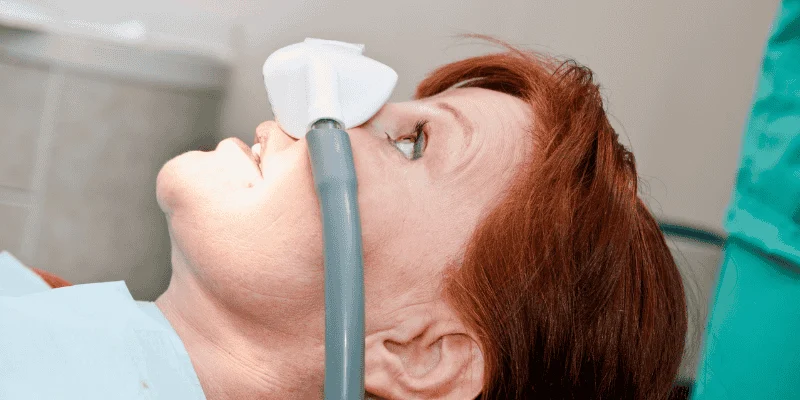
You may feel nervous when you sit in the dental chair. Laughing gas, also called nitrous oxide, helps you stay calm while your dentist works. You stay awake and aware, but your body feels more relaxed.
Laughing gas works by slowing your body’s response to pain and easing anxiety while you breathe a safe mix of nitrous oxide and oxygen through a small nose mask. It acts quickly, and the effects fade within minutes after the mask comes off.
Dentists have used this method for many years to help you handle cleanings, fillings, and other treatments with less stress. When you understand how laughing gas in dentistry works and why it’s safe, you can feel more confident about your next visit.
Key Takeaways
- You breathe a controlled mix of nitrous oxide and oxygen through a nose mask.
- The gas helps you relax and reduces your pain response during treatment.
- The effects wear off quickly, so you can return to normal soon after your visit.
What Is Laughing Gas (Nitrous Oxide)?
Dentists use nitrous oxide, often called laughing gas, to help you stay calm and comfortable during treatment. It works quickly, wears off fast, and has a long record of safe use in both adult and pediatric dentistry.
Nitrous Oxide Properties and Discovery
Nitrous oxide is a colorless, non-flammable gas with a slightly sweet smell and taste. At room temperature, it stays stable and is easy to store in pressurized tanks. You breathe it in through a small mask that fits over your nose.
In dental offices, the team mixes nitrous oxide with oxygen.
Modern systems limit delivery to safe levels and include built-in safety controls, as outlined by the American Dental Association’s guidance on nitrous oxide systems. These controls help ensure you always receive enough oxygen.
Scientists first identified nitrous oxide in the 1700s. Over time, doctors learned it could reduce pain and anxiety. Today, providers use it as a mild sedative that keeps you awake but relaxed.
You can respond to questions and follow instructions while under its effects.
History of Nitrous Oxide in Dentistry
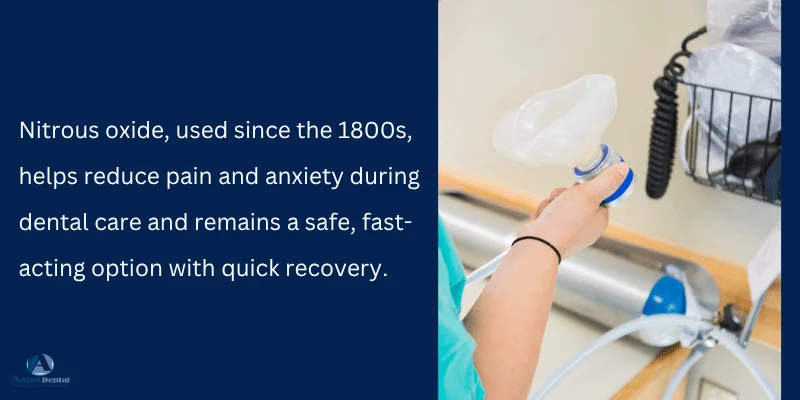
Dentists began using nitrous oxide in the mid-1800s. Early reports showed that it reduced pain during tooth removal. This discovery changed dental care, making treatment more manageable.
Over the years, equipment has improved. Dentists now use precise flow meters, oxygen fail-safe systems, and nasal masks designed for comfort. These changes increased safety and control.
Today, nitrous oxide remains common in general and children’s dentistry. Many children feel nervous about dental visits. Nitrous oxide helps them relax without putting them to sleep, as explained in this overview of nitrous oxide in dentistry.
Because the effects wear off within minutes after you stop breathing it, you can usually return to normal activities soon after your visit.
How Laughing Gas Works During Dental Procedures
When you breathe in nitrous oxide, it changes how your brain reacts to pain and stress. You stay awake, but you feel calm and more comfortable during treatment.
Mechanism of Action in the Body
Nitrous oxide works as both a sedative and analgesic. That means it helps you relax and also reduces how strongly you feel pain.
You inhale the gas through a small mask placed over your nose. The gas mixes with oxygen, which keeps your oxygen levels safe during the procedure. Dentists follow strict guidelines for the use of nitrous oxide in dentistry.
Once you breathe it in, nitrous oxide enters your lungs and quickly moves into your bloodstream. It then travels to your brain. There, it slows down signals linked to anxiety and pain.
You may feel:
- Light or floaty
- Warm or tingly
- Calm and less aware of discomfort
You stay conscious and can answer questions. This makes it useful for pain management during fillings, cleanings, or minor procedures.
Onset and Duration of Effects
Nitrous oxide works fast. Most people feel the effects within a few minutes of administering nitrous oxide through the nasal mask.
Your dentist can adjust the level during the procedure. If you feel nervous or uncomfortable, they can increase it slightly. If you feel too sleepy or uneasy, they can lower it just as quickly.
The effects wear off soon after the mask is removed. You will usually breathe pure oxygen for several minutes at the end. Most people feel normal within minutes. In many cases, you can drive yourself home and return to your normal routine the same day.
Feeling nervous about your next dental visit? Consult our experts about laughing gas and experience a calmer, more comfortable appointment.
How Nitrous Oxide Is Used in Dentistry
Dentists use nitrous oxide sedation to help you stay calm and comfortable during treatment. They control the dose carefully so you stay awake, relaxed, and able to respond.
Administration with Nasal Masks
Your dentist delivers nitrous oxide through a small nasal mask that rests over your nose. You breathe normally through your nose, and the mask sends a steady mix of nitrous oxide and oxygen.
The mask connects to a machine with tanks and a flow meter. This system lets the dental team adjust the amount of gas you receive at any time. They start with oxygen and slowly increase the nitrous oxide until you feel relaxed.
You remain awake and keep your natural reflexes. Because you only inhale through your nose, you can still talk during the procedure.
Step-by-Step Process
The process of administering nitrous oxide follows clear steps to protect your safety and comfort.
- Review your health history. Your dentist checks for breathing problems, pregnancy, or other conditions that may affect sedation.
- Place the nasal mask. The team fits it snugly to prevent leaks.
- Start with oxygen. You breathe pure oxygen for a short time.
- Adjust the mix. The dentist slowly adds nitrous oxide until you reach a calm state.
- Monitor you during treatment. The team watches your breathing and response.
- Return to oxygen. At the end, you breathe oxygen again to clear the gas.
Because the dentist can adjust the level at any time, they maintain steady control during nitrous oxide sedation.
What Patients Experience
When nitrous oxide sedation begins, you may feel light, warm, or slightly tingly in your arms and legs. Some people describe a mild floating feeling.
You stay awake and aware of your surroundings. You can answer questions and follow simple instructions. The gas reduces anxiety and lowers pain sensitivity, which helps during cleanings, fillings, or extractions.
Many patients choose it after learning about what to expect with nitrous oxide for dental work.
The effects start within minutes and wear off quickly once the dentist stops the gas. Most people feel normal soon after breathing oxygen at the end of the visit, which makes it a practical option in sedation dentistry.
Benefits of Nitrous Oxide for Patients
Nitrous oxide helps you stay calm, limits discomfort, and lets you recover quickly after dental procedures. Dentists often use it because it works fast and wears off just as quickly.
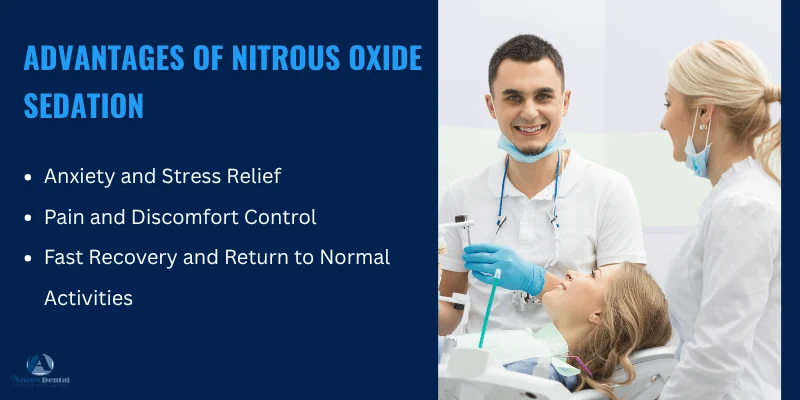
Anxiety and Stress Relief
If you feel nervous about dental visits, nitrous oxide can ease that tension within minutes. You breathe it in through a small mask, staying awake but relaxed.
Many dental offices call it laughing gas used to relax patients during procedures. It slows your stress response and helps you feel at ease in the chair.
This matters if you struggle with dental anxiety or even a strong dental phobia. You can still talk to your dentist and respond to instructions.
In pediatric dentistry, dentists often use nitrous oxide to help children stay calm and cooperative. Kids remain awake, but fear and restlessness decrease, which makes treatment smoother and safer.
Key anxiety relief benefits include:
- Fast calming effect
- You remain conscious and in control
- Adjustable levels during the visit
- Reduced fear linked to past dental experiences
Pain and Discomfort Control
Nitrous oxide also supports pain management. It does not replace local anesthesia, but it increases your comfort during dental procedures.
The gas has mild pain‑relieving effects and reduces your reaction to discomfort.
The American Dental Association explains that nitrous oxide and oxygen can provide safe and effective pain and anxiety control in dentistry when used properly, often called conscious sedation (nitrous oxide in dentistry).
You may still feel pressure, but you are less likely to feel sharp discomfort. Many patients also report that time passes more quickly.
This combination of anxiety relief and pain management makes common treatments like fillings, crowns, and cleanings easier to handle. It can help you complete needed care instead of delaying it due to fear.
Fast Recovery and Return to Normal Activities
One of the main benefits of nitrous oxide is its rapid elimination from your system. After your dentist stops the gas, you breathe pure oxygen for a few minutes.
The effects fade fast. The laughing gas uses, side effects, and safety, the gas wears off quickly once inhalation stops.
In most cases, you can:
- Drive yourself home
- Return to work or school
- Eat and drink normally
You do not need a full day of recovery like you would with deeper sedation. This makes nitrous oxide a practical option if you want comfort during treatment without interrupting your daily routine.
Don’t let dental anxiety stop you from getting care. Schedule a consultation today and learn if laughing gas sedation is right for you.
Safety and Considerations with Nitrous Oxide Sedation
Dentists have used nitrous oxide for many years, and they follow strict safety steps when they give it. You should understand how it works, its risks, and whether it fits your health needs before you choose this type of sedation dentistry.
Is Nitrous Oxide Safe?
You may ask, is nitrous oxide safe? In most dental offices, the answer is yes when trained staff use it correctly.
Dentists mix nitrous oxide with oxygen and control the flow through special equipment. Modern systems limit how much gas you receive and include built-in safety features.
The American Dental Association explains nitrous oxide safety systems, such as oxygen fail-safe controls and emergency air inlets. These features help prevent low oxygen levels.
You stay awake and can respond to your dentist. This level of sedation dentistry is often called conscious sedation. Unlike IV sedation, the effects of gas sedation wear off quickly once the dentist stops the gas, and most people can drive themselves home.
Side Effects and Risks
Most people tolerate nitrous oxide well, but mild side effects can occur. You might feel:
- Lightheaded
- Nauseated
- A mild headache
- Tired for a short time
These effects usually stop within minutes of breathing pure oxygen.
Serious problems are rare when healthy patients use it as directed. However, very high or repeated exposure outside medical settings can harm the body. In a dental office, trained providers monitor your breathing and comfort you the entire time.
Tell your dentist if you feel sick during treatment. They can adjust or stop the gas right away.
Candidates and Contraindications
Nitrous oxide is well tolerated by children and adults who feel nervous about dental care. It also helps if you have a strong gag reflex or if the procedure is short.
You may not be a good candidate if you:
- Have severe breathing problems
- Have a blocked nose or sinus infection
- Are in the first trimester of pregnancy
- Have certain vitamin B12 deficiencies
- Struggle to breathe through your nose
You must breathe through a nasal mask for the gas to work. If you cannot do that, your dentist may suggest another option, such as oral medication or IV sedation.
Always share your full medical history and any medications you take. Clear communication helps your dental team choose the safest plan for you.
Applications of Nitrous Oxide in Dentistry
You can use nitrous oxide sedation to stay calm and comfortable during many types of dental procedures. Dentists adjust the level to match your needs, which helps control dental anxiety while keeping you awake and able to respond.
Common Dental Procedures and Situations
Dentists often use nitrous oxide sedation during fillings, crowns, root canals, and tooth extractions. These treatments can cause stress, especially if you feel pain easily or worry about dental tools.
You breathe the gas through a small nose mask. Within minutes, you feel relaxed but still aware of what is happening.
According to the American Dental Association overview of nitrous oxide, dentists mix nitrous oxide with oxygen and limit how much they deliver. This system includes built‑in safety features and a minimum oxygen level, which helps protect you during treatment.
Dentists also use it for:
- Severe dental anxiety
- A strong gag reflex
- Long or complex dental procedures
- Difficulty getting numb with local anesthetic alone
You recover quickly once the dentist gives you pure oxygen at the end of the visit.
Use in Pediatric and Special Needs Dentistry
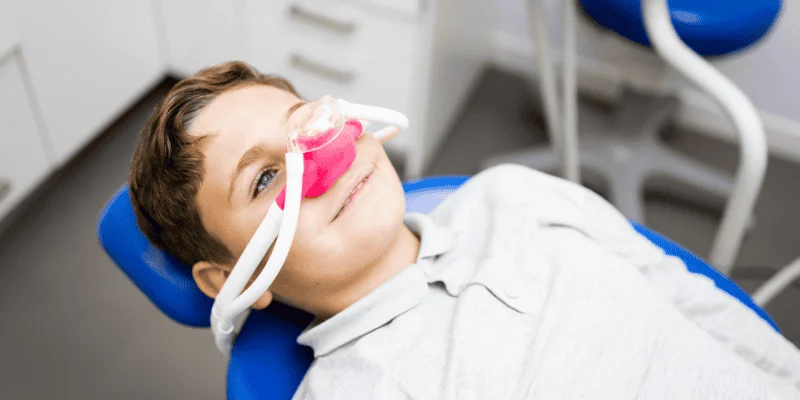
Nitrous oxide plays a key role in pediatric dentistry. Children often fear shots, sounds, or new places, and that fear can stop treatment.
When your child breathes nitrous oxide, they usually feel calm and less focused on what is happening around them. The gas works fast and wears off quickly, so most children return to normal within minutes.
Many providers consider it a safe and common option for children when used correctly, as explained in this guide on nitrous oxide in dentistry. Dentists adjust the dose based on your child’s size and response.
Dentists also use nitrous oxide for patients with special needs who may struggle to sit still or handle sensory stress. It helps:
- Reduce movement
- Lower anxiety
- Improve cooperation
You stay awake during treatment, which allows the dental team to give clear instructions and monitor your comfort throughout.
Ready for a stress-free dental experience? Fill our the new patient form and discover how laughing gas can make your treatment easier.
Frequently Asked Questions
Nitrous oxide helps you relax during dental care while keeping you awake and able to respond. It works fast, wears off quickly, and has a strong safety record when your dentist uses it correctly.
What are the benefits of using nitrous oxide for dental procedures?
Nitrous oxide helps you feel calmi within a few minutes. You stay awake and can answer your dentist’s questions during treatment.
Dentists often call it conscious sedation. Inhaled nitrous oxide with oxygen can provide safe and effective pain and anxiety control in dentistry through conscious sedation.
It also wears off fast. In most cases, you can return to normal activities soon after your visit.
How long does the effect of laughing gas last during dental treatments?
You usually feel the effects within 2 to 3 minutes of inhaling the gas. The relaxed feeling continues as long as you inhale it.
Once your dentist switches you to pure oxygen, the effects fade within minutes. Gas works quickly and wears off quickly after you breathe oxygen through the mask.
Many people can drive themselves home after the appointment.
Are there any side effects after using nitrous oxide in dental care?
Most people tolerate nitrous oxide well. Still, mild side effects can occur.
Common effects include dizziness, nausea, or a mild headache. These are typical reactions of nitrous oxide side effects for dental procedures.
These symptoms usually pass quickly once you stop breathing the gas. Serious problems are rare when trained staff monitor you.
How does nitrous oxide alleviate dental anxiety?
Nitrous oxide slows your body’s stress response. You feel calmer, and your muscles relax.
Healthcare providers use it to help patients relax during procedures, as discussed in their article on nitrous oxide’s uses, side effects, and safety.
You remain aware of your surroundings, but you feel less worried about sounds, smells, and sensations in the dental office.
What are the contraindications for using nitrous oxide in dentistry?
Certain health conditions make nitrous oxide unsafe for you. Severe breathing problems, recent ear or eye surgery with trapped air, and some vitamin B12 deficiencies may increase risk.
Also, laughing gas has specific risks and safety concerns, which you can review on its page on laughing gas uses, side effects, and safety.
You should always share your full medical history and any medications you take. This helps your dentist decide if nitrous oxide is appropriate for you.
In what situations might a dentist recommend against the use of laughing gas?
Your dentist may avoid nitrous oxide if you cannot breathe well through your nose. The gas works through a nasal mask, so nasal blockage can limit its effect.
They may also recommend another option if you have certain medical conditions or if you feel uncomfortable with the mask.
A careful review of your health history allows your dentist to choose the safest and most effective sedation method for you.

