



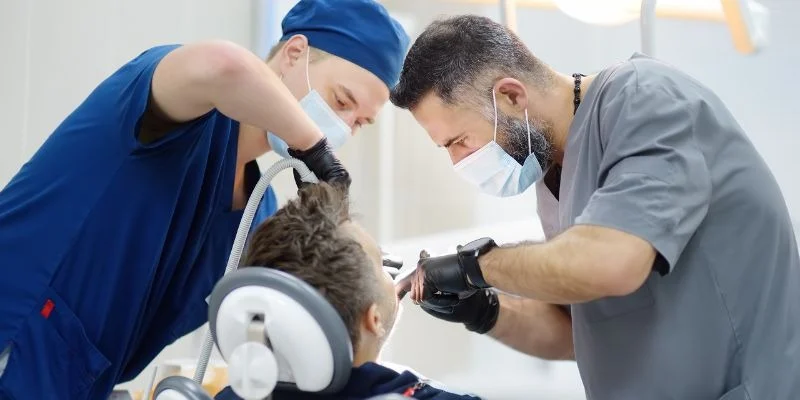
Going to the dentist can feel scary, especially when you need a big treatment like oral surgery or a root canal.
Many people put off important dental work because they worry about pain or feel anxious about the procedure. Dental sedation helps you feel calm and comfortable during your visit.
For complex dental treatments, IV sedation typically works better than oral sedation because it provides deeper relaxation and lets dentists adjust the sedation level during longer procedures.
IV sedation offers greater predictability and flexibility than oral sedation, making it the top choice when you need extensive work done. Oral sedation can work well for simpler treatments, but it may not give you enough comfort for major procedures.
Understanding the differences between these two sedation options will help you make the right choice for your dental needs. We’ll explore how each type works, what makes them different, and which situations call for stronger sedation.
You’ll also learn about costs, safety, and what to expect during recovery so you can feel confident about your upcoming dental treatment.
What Is Sedation Dentistry?
Sedation dentistry uses special medications to help you feel calm and relaxed during dental treatments. There are three main types of sedation available, and dentists can provide different levels of sedation depending on your needs and anxiety level.
Overview of Sedation in Dentistry
Sedation dentistry helps millions of people overcome their fear of dental visits and get the care they need. This approach uses safe medications to reduce anxiety and help you feel comfortable during treatment.
You stay conscious during sedation, but you feel deeply relaxed. Many patients describe feeling like they’re in a dream-like state. The level of awareness depends on the type and amount of medication used.
Sedation benefits include:
- Reduced anxiety and fear
- Less memory of the procedure
- Ability to complete multiple treatments in one visit
- Decreased pain and discomfort
Your dentist monitors you closely throughout the entire procedure. They check your breathing, heart rate, and blood pressure to ensure your safety.
Dental sedation works especially well for people with severe dental phobia. It also helps patients who need long or complex procedures like dental implants or oral surgery.
![[Anna Dental] Sedation Dentistry - NPG Magazine + Gift Card](https://www.annadental.com/wp-content/uploads/2025/04/Anna-Dental-Sedation-Dentistry-NPG-Magazine-Gift-Card.webp)
Types of Sedation Used in Dental Procedures
Dentists use three main types of sedation for dental procedures. Each type works differently and provides different levels of relaxation.
Nitrous oxide (laughing gas) is the mildest form. You breathe it through a mask during treatment. It helps you feel relaxed but you stay fully aware. The effects wear off quickly after removing the mask.
Oral sedation involves taking pills before your appointment. This type works well for routine dental work like fillings or cleanings. The medication takes 30-60 minutes to work and lasts several hours.
IV sedation delivers medication directly into your bloodstream through a small needle. This provides the deepest level of sedation and works within minutes. Your dentist can adjust the medication level during treatment.
The sedation levels range from minimal to deep:
| Sedation Level | Awareness | Memory | Best For |
| Minimal | Fully conscious | Complete memory | Mild anxiety |
| Moderate | Drowsy, responsive | Limited memory | Moderate anxiety |
| Deep | Limited response | Little to no memory | Severe anxiety, complex procedures |
Understanding Oral Sedation

Oral sedation involves taking sedative medication by mouth before your dental procedure to reduce dental anxiety and help you relax. This method provides conscious sedation that keeps you awake but deeply calm during treatment.
How Oral Sedation Works
Oral sedation involves taking a pill from the benzodiazepine family before your appointment. The sedative medication works by slowing down your central nervous system.
The medication affects your brain in specific ways. It blocks certain nerve signals that cause anxiety and fear. This creates a calming effect throughout your body.
You take the pill about 30 to 60 minutes before your procedure. The sedative effects build up slowly as your body absorbs the medication through your digestive system.
Your dentist will give you clear instructions about timing. Some medications work better on an empty stomach. Others need to be taken with food to prevent nausea.
The medication stays in your system for several hours. You will need someone to drive you home after your appointment. Most people feel drowsy for the rest of the day.
Common Medications and Dosages
Dentists use several types of sedative medication for oral sedation. Each has different strength levels and timing requirements.
Triazolam (Halcion) is the most common choice. Dentists typically prescribe 0.25mg to 0.5mg tablets. This medication works quickly and leaves your system faster than other options.
Diazepam (Valium) provides longer-lasting sedative effects. Standard doses range from 5mg to 10mg. Some patients need this medication the night before their appointment to help with sleep.
| Medication | Typical Dose | Time to Work | Duration |
| Triazolam | 0.25-0.5mg | 30-60 minutes | 4-6 hours |
| Diazepam | 5-10mg | 60-90 minutes | 6-8 hours |
| Lorazepam | 1-2mg | 60-90 minutes | 6-8 hours |
Lorazepam (Ativan) works well for patients with severe dental anxiety. Doses usually range from 1mg to 2mg. This medication provides steady conscious sedation throughout longer procedures.
Levels of Consciousness Achieved
Oral sedation creates different levels of relaxation depending on the dose and your individual response. You remain awake and can respond to questions during treatment.
Minimal sedation makes you feel relaxed but fully alert. You can follow instructions easily and remember most of the procedure. This level works well for routine cleanings and simple fillings.
Moderate conscious sedation creates deeper relaxation. You may feel drowsy and have trouble remembering details afterward. Your speech might sound slurred, but you can still communicate with your dental team.
Most patients experience moderate sedation with standard doses. The sedative effects make time pass quickly during your procedure. You feel calm and comfortable throughout the treatment.
Your dentist monitors you closely during the entire appointment. They check your breathing, heart rate, and response levels. This ensures your safety while maintaining the right level of conscious sedation.
Ready for a calmer dental experience? Schedule your visit with your trusted Anna, TX dentist to find out if oral sedation is the right choice for your next procedure.
Exploring IV Sedation in Dentistry
IV sedation delivers medication directly into your bloodstream through a small needle placed in your vein. This method provides precise control over sedation levels and works within minutes to help you feel deeply relaxed during complex dental procedures.
How IV Sedation Is Administered
IV sedation is delivered through a small needle placed in a vein in your arm or hand. Your dentist will first clean the injection site and insert a tiny catheter into your vein.
The sedative medication flows directly into your bloodstream through this IV line. This direct delivery method allows the sedative effects to begin working almost immediately.
You’ll remain conscious throughout the procedure but feel very relaxed. Most patients can still respond to simple instructions from their dentist.
The IV line stays in place during your entire treatment. This setup lets your dental team adjust your sedation level as needed without additional needle sticks.
Rapid Onset and Customization of Sedation
Intravenous sedation works much faster than oral medications. You’ll typically feel the calming effects within 2-3 minutes of administration.
Your dentist can increase or decrease your sedation level during the procedure. This real-time adjustment ensures you stay comfortable throughout complex treatments that may take several hours.
The predictable nature of IV sedation makes it ideal for lengthy procedures. More complex or lengthy procedures may warrant the use of IV sedation for better control and comfort.
Most patients remember very little about their procedure afterward. This amnesia effect helps reduce anxiety about future dental visits.
Benefits and Risks for Oral Sedation vs. IV Sedation
Both oral and IV sedation offer unique advantages for managing anxiety during dental procedures, but each comes with specific risks that patients should understand. Your comfort level and safety depend on proper monitoring and understanding potential complications.
Managing Dental Anxiety and Comfort
Oral sedation helps you feel calm and relaxed during routine dental work. You take a pill about an hour before your appointment, which reduces anxiety without putting you to sleep.
This type of sedation works well if you have mild to moderate dental anxiety. You stay awake and can respond to your dentist’s instructions throughout the procedure.
IV sedation provides deeper relaxation for patients with severe dental anxiety. The medication goes directly into your bloodstream, working within minutes to help you feel completely at ease.
Many patients who choose IV sedation for complex procedures remember very little about their treatment afterward. This makes it ideal if you have strong fears about dental work or need lengthy treatments.
Your dentist can adjust IV sedation levels during the procedure. This gives better control over your comfort compared to oral sedation, which cannot be changed once you take the pill.
Potential Side Effects and Complications
Oral sedation may cause drowsiness that lasts several hours after your appointment. You might also feel dizzy or nauseous, especially if you take the medication on an empty stomach.
Some patients experience headaches or feel confused after oral sedation wears off. These effects are usually mild and go away within a day.
IV sedation can cause bruising or soreness where the needle was placed in your arm. More serious but rare complications include breathing problems or allergic reactions to the medication.
Common side effects of IV sedation include:
- Temporary memory loss around the procedure
- Feeling groggy for several hours
- Nausea or vomiting
- Low blood pressure during treatment
Both types of sedation can interact with other medications you take. Always tell your dentist about all prescription drugs, supplements, and medical conditions before your appointment.
Safety and Monitoring During Sedation Dentistry
Every sedation procedure—whether oral sedation or IV sedation—is carefully planned, monitored, and supervised by trained professionals to ensure your comfort and protection.
Comprehensive Health Review Before Sedation
Before your procedure, the dental team reviews your complete medical history, medications, and any previous sedation experiences.
They carefully evaluate:
- Heart or breathing conditions that may affect sedation safety
- Allergies and potential drug interactions
- Current prescriptions, including anxiety medications or blood thinners
- Pregnancy or chronic health issues that require special precautions
If needed, they coordinate with your physician to ensure every safety measure is in place before treatment begins.
Continuous Monitoring During Treatment
Throughout your dental procedure, our trained team continuously tracks your vital signs using advanced equipment.
They monitor your:
- Heart rate and rhythm
- Oxygen levels
- Blood pressure
- Breathing pattern
This ensures your sedation level remains stable and comfortable from start to finish.
During IV sedation, an experienced dental professional or anesthesiologist stays by your side to adjust medication levels as needed and respond instantly to any changes.
Post-Sedation Recovery and Care
After your procedure, we monitor you until you’re fully alert and ready to leave safely.
Here’s what to expect:
- You’ll rest in a calm recovery area for 30–60 minutes.
- Our team checks your vitals before discharge.
- You’ll need someone to drive you home and stay with you for several hours.
Most patients feel completely normal within a few hours after IV sedation, while oral sedation may cause drowsiness for the rest of the day.
You’ll receive simple home-care instructions and a direct contact number in case you have any concerns after treatment.
Your comfort and safety matter every step of the way. Schedule a visit with Anna Dental in Anna, TX to learn more about our monitored, patient-first approach to sedation dentistry.
Cost, Accessibility, and Practical Considerations
When choosing between oral and IV sedation for complex dental treatments, practical factors like cost, provider availability, and recovery time play major roles in your decision. These considerations often determine which option works best for your specific situation and budget.
Cost Differences Between Sedation Methods
Oral sedation typically costs much less than IV sedation. You can expect to pay between $200-$400 for oral sedation pills.
IV sedation costs more because it requires specialized equipment and trained staff. The cost of IV sedation can vary significantly, especially in more complex procedures requiring greater monitoring. Most patients pay $500-$1,000 for IV sedation.
Key cost factors include:
- Length of your procedure
- Type of medication used
- Monitoring equipment needed
- Staff requirements
Your insurance may cover part of the sedation cost if it’s medically necessary. Complex procedures like oral surgery often qualify for partial coverage.
IV sedation requires more preparation time, which adds to the total cost. The dental team needs extra time to set up monitors and place the IV line.
Availability of Qualified Providers
Not all dental offices offer both sedation types. Oral sedation is widely available at most dental practices because it requires less specialized training.
IV sedation needs specially trained professionals. Your dentist must work with an anesthesiologist or certified registered nurse anesthetist to provide safe IV sedation. These specialists monitor your vital signs throughout the procedure.
Finding qualified IV sedation providers can be challenging in rural areas. Urban dental practices more commonly offer comprehensive dental sedation options.
Requirements for IV sedation providers:
- Advanced sedation training certification
- Emergency response equipment
- Continuous monitoring capabilities
- Resuscitation training
Many dental offices partner with mobile sedation services. These services bring trained anesthesiologists directly to your dentist’s office for complex treatments.
Aftercare and Recovery Time
Oral sedation has a longer recovery period. The effects can last 6-8 hours after your appointment ends.
You’ll feel groggy and drowsy for several hours with oral sedation. Plan to take the entire day off work or other activities.
IV sedation wears off much faster. Most patients feel alert within 1-2 hours after the procedure ends.
Recovery differences:
- Oral sedation: 6-8 hours of grogginess
- IV sedation: 1-2 hours until alertness returns
Both options require someone to drive you home. You cannot operate vehicles or make important decisions for at least 24 hours.
IV sedation allows for quicker return to normal activities. Many patients resume light activities the same evening after IV sedation.
Choosing the Right Sedation for Complex Dental Treatments
At Anna Dental, your comfort and safety come first—especially during complex dental procedures. Whether you’re preparing for oral surgery, multiple extractions, or dental implants, our team ensures you receive the right level of sedation for your needs.
Comparing Oral and IV Sedation for Complex Procedures
Both oral sedation and IV sedation reduce dental anxiety, but they differ in how quickly they work and how much control your dentist has during treatment.
Oral Sedation
- Best for mild to moderate anxiety.
- Ideal for short procedures like fillings or simple extractions.
- Taken by pill before your appointment; takes 30–60 minutes to work.
- Cannot be adjusted during treatment, and recovery can take 6–8 hours.
IV Sedation
- Works within minutes through a vein in your arm or hand.
- Allows real-time adjustments for longer or more complex treatments.
- Provides deeper relaxation, often with little to no memory of the procedure.
- Wears off faster — most patients feel alert within an hour or two.
Key Factors That Determine Sedation Choice
- Treatment Duration:
- Under 2 hours → Oral sedation often works well.
- Over 2 hours → IV sedation offers consistent comfort.
- Procedure Complexity:
Surgical treatments, bone grafts, and multiple extractions are better handled with IV sedation for optimal precision and comfort. - Anxiety Level:
Mild fear may only require oral sedation, but severe dental phobia or strong gag reflexes benefit from IV sedation. - Health and Safety:
Our team reviews your medical history, current medications, and any past sedation experiences to select the safest method for you.
When IV Sedation Is Most Effective
Procedures like wisdom tooth removal, bone grafting, and full-mouth restoration often require deeper relaxation and longer duration. IV sedation keeps you comfortable throughout, reduces stress, and allows our dental team to complete multiple treatments efficiently.
Ready to experience stress-free dental care? Schedule your consultation with Anna Dental in Anna, TX, and let our team guide you toward the safest and most comfortable sedation option for your treatment.
Frequently Asked Questions
1. Is oral or IV sedation safer for dental treatments?
Both are safe when performed by trained professionals. At Anna Dental, your medical history and current medications are reviewed before treatment. IV sedation allows closer monitoring and real-time adjustments, while oral sedation works safely for mild to moderate anxiety.
2. How quickly do oral and IV sedation take effect?
Oral sedation begins working within 30–60 minutes after taking the pill and lasts several hours.
IV sedation starts within minutes because the medication goes directly into your bloodstream and can be adjusted throughout your procedure.
3. What’s recovery like after sedation?
Most patients feel alert within 1–2 hours after IV sedation, while oral sedation may cause grogginess for 6–8 hours. In both cases, arrange a ride home and plan to rest for the remainder of the day.
4. Can sedation dentistry help with severe dental anxiety?
Yes. Sedation dentistry helps patients who experience intense fear, strong gag reflexes, or past traumatic dental experiences.
Mild cases may respond well to oral sedation, while severe phobia often requires IV sedation for deeper relaxation.
5. Who should avoid sedation dentistry?
Patients with sleep apnea, severe heart or lung disease, or certain medication interactions may not qualify for sedation.
Your dentist will discuss alternative comfort options such as local anesthesia or nitrous oxide during your consultation.

