



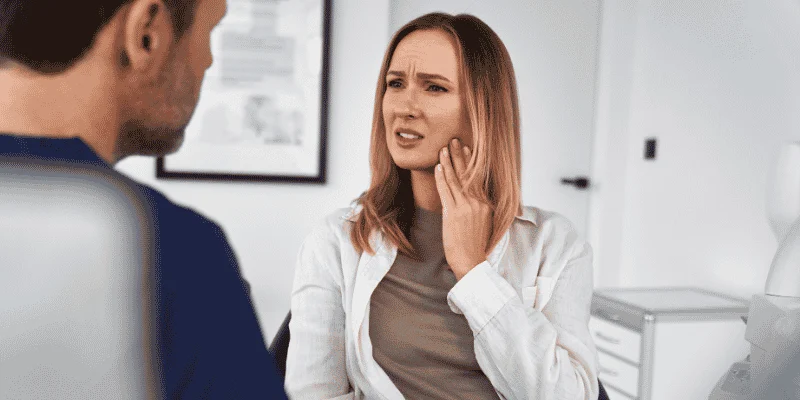
Waking up with a sore jaw or dull headache might seem minor, but these signs could point to teeth grinding at night, a condition called bruxism.
Many people grind or clench their teeth while sleeping without even knowing it happens. Your body is putting serious pressure on your teeth and jaw, and you’re completely unaware until the damage starts to show.
If you leave teeth grinding untreated, it can wear down your tooth enamel, cause chips or cracks, lead to chronic jaw pain, and even damage restorative dental work like fillings and crowns.
The constant grinding doesn’t just affect your teeth. It strains your jaw muscles and joints, leading to problems that can impact your daily comfort and sleep quality.
Understanding what happens when sleep bruxism goes untreated helps you take action before permanent damage occurs.
The good news is that once you recognize the signs, you can work with your dentist to find solutions that protect your teeth and improve your overall health.
Key Takeaways
- Untreated teeth grinding can cause permanent damage to your tooth enamel, jaw joints, and dental restorations over time
- Common signs include waking up with headaches, jaw soreness, tooth sensitivity, and worn or chipped teeth
- Treatment options range from wearing a night guard to managing stress and addressing underlying sleep disorders with your dentist’s help
Recognizing the Signs and Symptoms
Many people grind their teeth at night without realizing it until damage has already occurred. Knowing the warning signs can help you catch bruxism early and prevent serious problems down the road.

Morning Headaches and Tension
You might wake up with a dull headache that starts at your temples. This type of morning headache happens because your jaw muscles worked overtime while you slept.
The constant clenching creates tension that spreads from your jaw to your head. These headaches often feel different from regular headaches because they come with tightness around your face and temples.
If you notice this pattern happening regularly, it’s one of the clearest signs of teeth grinding at night. The pain usually improves as the day goes on because your jaw muscles finally get a chance to relax.
Jaw Pain, Soreness, and Facial Discomfort
A sore jaw in the morning is a telltale sign of nighttime teeth grinding. Your jaw might feel tired, tight, or even locked when you first wake up.
Some people find it hard to open their mouth fully or hear clicking and popping sounds when they eat. Facial pain can extend from your jaw to your cheeks and even feel like an earache, though nothing is wrong with your ears.
Your jaw muscles might also look larger than normal from all the extra work they’re doing. This facial discomfort can make simple activities like eating breakfast or yawning uncomfortable.
Tooth Sensitivity and Noticeable Wear
Your teeth can show clear signs of grinding damage. You might notice increased sensitivity to hot or cold foods and drinks.
When you look at your teeth, you may see:
- Flattened chewing surfaces
- Chipped or cracked edges
- Worn enamel that exposes inner tooth layers
- Loose teeth that feel different when you touch them
Tooth wear from grinding happens gradually but can become severe if left untreated. Your dentist might spot these signs during a regular checkup before you even realize you’re grinding your teeth.
Disturbed Sleep and Daytime Fatigue
Nighttime teeth grinding can disrupt your sleep quality even if you don’t fully wake up. You might feel tired during the day despite spending enough hours in bed.
Some people wake up multiple times during the night without knowing why. Your bed partner might hear grinding sounds loud enough to wake them up.
This poor sleep quality affects your energy levels and mood throughout the day. Sleep bruxism often occurs alongside other sleep issues like snoring or sleep apnea, which makes the fatigue even worse.
Short- and Long-Term Effects on Oral Health
Untreated nighttime teeth grinding progressively damages your teeth, jaw joints, and bite alignment. The constant pressure wears down enamel, cracks teeth, and puts stress on your jaw that can lead to chronic pain and dysfunction.
Enamel Erosion and Tooth Damage
When you grind your teeth at night, the repeated friction wears away your enamel layer by layer. This protective coating doesn’t grow back once it’s gone.
Worn tooth enamel exposes the inner layers of your teeth, making them more sensitive to hot and cold temperatures. You might notice sharp pain when drinking coffee or eating ice cream.
The constant pressure from grinding causes several types of dental damage:
- Flattened tooth surfaces
- Chipped or cracked teeth
- Fractured enamel
- Loose teeth
Enamel erosion can lead to irreversible tooth structure loss if you don’t address the problem. Once your teeth crack, bacteria can get inside and cause infections in your teeth and gums.
Risk of Dental Restorations and Complications
Teeth grinding puts extra stress on any existing dental work you have. The grinding force can crack fillings, loosen crowns, or damage bridges.
Your dental crowns are especially vulnerable because they sit on top of your natural teeth. The constant pressure can break the bond between the crown and your tooth. You might need expensive repairs or replacements.
If left untreated, bruxism can damage teeth, fillings, crowns, or other dental repairs. In severe cases, the damage goes so deep that you need a root canal to save the tooth.
The cost of fixing grinding-related damage adds up quickly. Multiple dental restorations can run into thousands of dollars, especially if you need crowns or implants.
Jaw Joint Disorders (TMJ)
The temporomandibular joint connects your jawbone to your skull. Grinding puts constant strain on these joints located just in front of your ears.
TMJ problems can cause pain and may sound like clicking when you open and close your mouth. Your jaw might feel tired or tight, especially in the morning.
Some people develop a locked jaw that won’t open or close all the way. The pain can spread to your neck and face. You might even feel discomfort that seems like an earache but isn’t actually an ear problem.
TMJ disorders from grinding can become chronic conditions. The joint damage makes everyday activities like eating and talking uncomfortable.
Changes in Bite and Tooth Alignment
Years of grinding gradually changes how your upper and lower teeth fit together. The tooth wear creates an uneven bite that affects your jaw position.
Your teeth might shift out of place as the grinding wears them down unevenly. This malocclusion means your teeth no longer line up correctly when you close your mouth.
Misaligned teeth from grinding can make chewing less efficient. You might develop pain on one side of your jaw because you’re compensating for the poor alignment.
The muscle imbalance can lead to chronic headaches that start at your temples and spread across your head.
Underlying Causes and Risk Factors
Teeth grinding doesn’t happen randomly. Your body responds to stress, sleep problems, daily habits, and even your family history in ways that can trigger nighttime clenching and grinding.

Stress, Anxiety, and Psychological Factors
Stress and anxiety are leading causes of teeth grinding during both day and night. When you experience high levels of stress, your body holds tension in various areas, including your jaw muscles.
Anxiety disorders can make bruxism worse. Your mind stays active even during sleep, causing your jaw to clench unconsciously. Emotions like anger and frustration also trigger grinding episodes.
If you’re someone who thinks deeply or concentrates hard during the day, you might develop awake bruxism as a coping habit. This daytime pattern can carry over into your sleep.
Managing your stress through relaxation techniques may help reduce grinding frequency.
Impacts of Sleep Disorders
Sleep disorders play a major role in nighttime teeth grinding. People with sleep bruxism are more likely to have other sleep-related problems like snoring and breathing pauses.
Obstructive sleep apnea creates brief sleep disturbances that can activate your jaw muscles repeatedly during light sleep phases. This connection means treating your sleep apnea might also reduce your grinding.
Poor sleep quality in general increases bruxism risk. When you don’t get enough deep, restful sleep, your body experiences more muscle activity during lighter sleep stages.
Night terrors and other sleep-related disorders can also contribute to grinding episodes throughout the night.
Lifestyle Influences: Caffeine, Alcohol, and Medications
Your daily choices directly affect your grinding habits. Drinking caffeinated beverages, especially late in the day, can increase your risk of bruxism by disrupting your sleep patterns.
Alcohol consumption also raises bruxism risk. While it might help you fall asleep initially, it leads to lighter, more disrupted sleep later in the night. Smoking tobacco compounds these effects and creates additional grinding triggers.
Certain medications can cause grinding as a side effect. Some antidepressants, seizure medications, and ADHD treatments may lead to bruxism.
If you recently started a new medication and notice grinding symptoms, talk to your doctor about alternatives. A balanced diet that avoids stimulants before bed helps promote better sleep quality.
Genetics and Other Contributing Elements
Sleep bruxism tends to run in families. If your parents or siblings grind their teeth, you have a higher chance of developing the condition yourself.
Genetic factors influence how your body responds to stress and how your nervous system functions during sleep. Your personality type matters too. If you have an aggressive, competitive, or hyperactive personality, you face increased bruxism risk.
Medical conditions like Parkinson’s disease, dementia, epilepsy, and ADHD show links to teeth grinding. GERD can also trigger grinding episodes when stomach acid irritates your throat during sleep.
Age plays a role as well, since bruxism is common in young children but usually decreases by adulthood.
Diagnosis and When to Seek Help
A dentist can spot teeth grinding damage during routine exams, while sleep studies measure nighttime activity, and people you live with may hear grinding sounds while you sleep.
Dental Checkups and Professional Assessments
Your dentist looks for specific signs during regular dental exams to check your oral health. They examine your teeth for flat, worn, or chipped areas that suggest grinding. Your jaw muscles get checked for tenderness or tightness.
The dentist also looks at your jaw joints to see if they’re painful or stiff when you move them. X-rays might be needed to check for damage to the bone underneath your teeth.
If changes appear, your dentist may watch them over several visits to see if they’re getting worse.
You should schedule a dental checkup if you notice tooth sensitivity, jaw pain when you wake up, or dull headaches around your temples.
Your dentist can tell the difference between sleep bruxism and awake bruxism based on the wear patterns on your teeth. They may ask about your daily habits, stress levels, and sleep patterns to find the cause.
Using Sleep Studies and Polysomnography
A sleep medicine specialist can perform tests if your dentist thinks sleep problems are causing your grinding. Polysomnography is a detailed sleep study done in a lab overnight.
It tracks your brain waves, breathing, and muscle movements while you sleep.
The test records jaw muscle activity to catch nighttime grinding episodes. It also checks for other sleep disorders like sleep apnea that often happen alongside teeth grinding.
Your doctor might suggest this test if you have loud grinding, severe tooth damage, or if a mouth guard hasn’t helped.
Some specialists use at-home sleep monitoring devices as a simpler option. These devices are less detailed than polysomnography but can still detect grinding patterns.
Partner or Family Member Observations
People who share your bed or home often notice grinding before you do. They may hear clicking or scraping sounds coming from your mouth at night. The noise can be loud enough to wake them up.
Ask your sleep partner to pay attention to any sounds you make while sleeping. They should note how often it happens and how loud it gets. This information helps your dentist understand how severe your bruxism might be.
Family members might also notice you clenching your jaw during the day. You may press your teeth together when you’re focused or stressed without realizing it.
These observations give your healthcare provider a complete picture of both sleep bruxism and daytime habits.
Treatment Options and Self-Care Strategies
Several effective treatments can protect your teeth from grinding damage, ranging from dental devices to lifestyle changes. Managing stress and adjusting your daily habits work together with professional care to reduce nighttime grinding.
Night Guards and Custom Mouth Guards

A custom mouth guard creates a protective barrier between your upper and lower teeth while you sleep. Your dentist takes impressions of your teeth to create a guard that fits snugly and comfortably in your mouth.
Night guards come in two main types: hard acrylic guards and soft material guards. Hard guards last longer and work better for severe grinding. Soft guards feel more comfortable but wear out faster.
Store-bought guards cost less than custom options but rarely fit properly. A poorly fitting guard can slip during sleep or cause jaw discomfort.
Dental treatments like splints and mouth guards keep your teeth separated and prevent the damage caused by clenching and grinding.
You should clean your night guard daily with a soft toothbrush and mild soap. Replace your guard when you notice cracks, holes, or a loose fit.
Relaxation and Stress Management Techniques
Stress management through meditation and yoga helps reduce the muscle tension that leads to teeth grinding. Deep breathing exercises calm your nervous system before bed.
Try this simple technique: breathe in slowly for four counts, hold for four counts, and exhale for six counts. Repeat this pattern for five minutes before sleeping.
Meditation apps guide you through relaxation exercises specifically designed for better sleep. Even 10 minutes of daily meditation can lower your stress levels.
Progressive muscle relaxation involves tensing and releasing each muscle group from your toes to your jaw.
A warm bath one hour before bed relaxes tense jaw muscles. Add Epsom salts to increase the calming effect on your muscles.
Lifestyle Adjustments: Reducing Caffeine and Alcohol
Your evening drink choices directly affect nighttime grinding. Avoiding caffeinated coffee and tea after dinner reduces muscle activity during sleep. Caffeine stays in your system for up to six hours.
Alcohol might make you feel sleepy but it disrupts your sleep quality. This disruption increases the likelihood of grinding episodes during the night. Stop drinking alcohol at least three hours before bedtime.
Good sleep hygiene supports your oral health. Keep your bedroom cool, dark, and quiet. Stick to the same sleep schedule every night, even on weekends. Remove screens from your bedroom since blue light interferes with natural sleep patterns.
Jaw Exercises and Physical Therapy
Gentle jaw exercises strengthen and relax the muscles that control chewing. Place your tongue on the roof of your mouth behind your front teeth. Keep it there while slowly opening and closing your mouth ten times.
Massage your jaw muscles by placing your fingers on your cheeks near your ears. Apply gentle pressure in circular motions for two minutes on each side. Do this exercise three times daily.
Physical therapists teach you proper jaw positioning during the day. Your teeth should never touch except when chewing food. Keep a small gap between your upper and lower teeth as your resting position.
Apply a warm compress to your jaw for 10 minutes before bed. The heat increases blood flow and releases muscle tension that builds up during the day.
Frequently Asked Questions
Night grinding can damage your teeth, cause jaw pain, and disrupt your sleep quality. Many people have questions about recognizing the signs and finding the right treatment options.
What damage can night-time teeth grinding cause to my teeth over time?
Untreated teeth grinding can cause serious damage to your teeth if it continues for months or years. Your teeth may become flattened, chipped, or cracked from the constant pressure.
The enamel on your teeth can wear down over time. This exposes the inner layers of your teeth and makes them more sensitive to hot and cold foods.
In severe cases, you might experience tooth pain, enamel cracks, and damage to dental work like fillings or crowns. Some people with long-term grinding may even need root canal treatment or dental crown restoration to fix the damage.
How can I tell if I’m grinding or clenching my teeth while I sleep?
Many people don’t know they grind their teeth at night because it happens while they’re asleep. Your bed partner might hear grinding sounds loud enough to wake them up.
You may wake up with a sore jaw, tired jaw muscles, or a headache around your temples. Signs of teeth grinding can go undetected for months until a dentist notices wear patterns during a dental exam.
Other signs include tooth sensitivity, face or neck pain, or jaw clicking and popping. Your jaw might feel tight or locked when you try to open or close your mouth fully.
Can untreated teeth grinding lead to jaw pain, headaches, or TMJ problems?
Yes, chronic teeth grinding can cause jaw pain, tension headaches, and problems with your temporomandibular joints. These joints sit just in front of your ears and help your jaw move.
You might experience dull headaches that start at your temples. Some people feel pain that seems like an earache but isn’t actually related to ear problems.
TMJ problems can make your jaw click or pop when you open and close your mouth. Severe bruxism may lead to chronic facial pain and reduced quality of life if left untreated.
What are some natural ways to reduce teeth grinding at night?
Reducing stress can help lower your risk of grinding your teeth at night. Try relaxation techniques before bed like deep breathing or meditation.
Avoid caffeine and alcohol late in the day since these substances can trigger grinding. Stop chewing gum during the day to give your jaw muscles a break.
Apply a warm washcloth to your jaw before bed to relax the muscles. Make sure you’re getting good quality sleep by keeping a regular bedtime schedule and creating a calm sleeping environment.
How can I stop grinding my teeth at night if I don’t want to use a mouth guard?
If you don’t want to use a mouth guard, focus on managing stress through exercise, therapy, or stress reduction techniques. Teeth grinding is often linked to anxiety and tension.
Address any sleep problems you might have like sleep apnea or nasal congestion. Treating these conditions can reduce grinding episodes during the night.
Practice being aware of jaw clenching during the day. When you notice yourself clenching, relax your jaw and keep your teeth slightly apart with your tongue resting on the roof of your mouth.
When should I see a dentist or doctor about teeth grinding, and what treatments are available?
See your dentist if you have symptoms like jaw pain, tooth sensitivity, or worn teeth. You should also schedule an appointment if your bed partner tells you they hear grinding sounds at night.
A custom mouth guard is the most common treatment dentists recommend. These guards protect your teeth from damage while you sleep.
Your dentist might also check if your bite is uneven or if you need dental work to fix damaged teeth. If stress or certain medications are causing your grinding, your doctor may suggest counseling or changing your prescription.

