




Losing a tooth does more than change your smile; it lets the jawbone weaken and shrink because the bone no longer gets the daily force it needs. Dental implants stop that bone loss by acting like real tooth roots, giving the jaw the stimulation it needs to stay strong.
If you want to keep your face shape, chewing power, and future dental options, understanding why missing teeth cause bone loss and how implants help will make your choices clearer. This article explains what causes bone loss, how to spot it, and why implants are the most reliable way to prevent further shrinkage.
Key Takeaways
- Missing teeth cause the jawbone to lose stimulation and shrink over time.
- Implants restore root-like support to preserve bone and facial structure.
- Treatment options can rebuild bone and make implants possible when loss has already occurred.
How Missing Teeth Lead to Bone Loss
When you lose a tooth, the jaw around that spot stops getting the normal chewing forces it needs. That lack of stimulation starts a chain of changes in bone, gum tissue, and nearby teeth that can affect your bite and smile.
The Science of Bone Resorption After Tooth Loss
Your jawbone stays healthy because chewing forces pass from tooth roots into the bone. Without a tooth root, the bone cells sense less mechanical load and begin to break down minerals in a process called bone resorption. This is a biological response; your body reclaims unused bone tissue.
After tooth extraction, horizontal ridge loss is rapid: human studies show ~29%–63% horizontal bone loss and ~11%–22% vertical bone loss at 6 months post-extraction.
Resorption affects the ridge where the tooth sat. The outer wall of the socket shrinks first, then the height of the jawbone decreases. You may also see receding gums over the empty space as soft tissue follows the bone. These changes reduce bone density and volume, which can make placing dental implants harder later on.
Timeline and Progression of Bone Deterioration
Bone loss begins soon after tooth loss. In the first few months, you may lose noticeable ridge width. Within six to twelve months the bone height can fall enough to change how adjacent teeth contact each other. Over several years, continuing resorption can lead to significant jawbone shrinkage.
Several factors speed this process: the number of missing teeth, how long the tooth has been gone, and whether you use the area for chewing. Smoking, gum disease, and poor overall oral health also worsen bone loss. Acting sooner gives you more options to restore your smile and jawbone health.
Effects on Facial Appearance and Oral Function
As bone volume drops, the support for your lips and cheeks weakens. This can cause a sunken look or earlier appearance of facial aging around the mouth. You may notice changes in how your lower face looks or how dentures fit.
Functionally, teeth next to the gap can shift toward the empty space. That movement leads to bite changes, harder-to-clean areas, and higher risk of decay or loose teeth. You might have trouble chewing on that side or feel uneven pressure when you bite. Restoring missing teeth can help prevent these issues and protect your jawbone for future dental work like implants.
Common Causes and Risk Factors for Dental Bone Loss

You can lose jawbone when the tissues that support teeth stop working or when the bone stops getting normal stimulation. Poor gum health, medical conditions that weaken bone, and habits or injuries that stress teeth are common triggers.
Gum Disease and Periodontal Conditions
When plaque builds up, bacteria cause inflammation of your gums. If you ignore bleeding or swollen gums, gingivitis can turn into periodontitis. Gum disease (periodontitis) is widespread and involves bone loss: roughly 42% of dentate U.S. adults (30+) have some form of periodontitis.
In periodontitis, your body’s immune response and bacterial toxins destroy the ligaments and bone that hold teeth in place.
Watch for deeper pockets between teeth and gums, loose teeth, or receding gums. Regular cleaning by a dentist and daily brushing and flossing remove plaque and slow or stop bone loss. If infection is advanced, treatments like scaling and root planing, antibiotics, or surgery may be needed to control it and protect bone.
Osteoporosis and Systemic Health Issues
Osteoporosis lowers overall bone density and can affect your jawbone, making it easier to lose bone around teeth. If you have osteoporosis, your bones rebuild more slowly. That raises your risk of dental bone loss after tooth extraction or during gum disease.
Tell your dentist about medications for osteoporosis or conditions like diabetes. These change how your bone and gums heal. Your dentist may suggest more frequent cleanings, bone-preserving treatments, or coordinating care with your doctor to lower risk.
Bruxism, Trauma, and Other Contributing Factors
Clenching and grinding (bruxism) creates extra force on teeth and their supporting bone. Over time this pressure can speed up bone loss and make teeth loose. Sudden injuries, like a knocked-out tooth, can also damage bone and raise the chance of infection.
Missing teeth cause bone to lose stimulation and shrink. Poorly fitting dentures or untreated infections at implants (peri-implantitis) can add to bone loss. Managing bruxism with a nightguard, replacing missing teeth promptly (for example with implants), and treating infections quickly help protect your jawbone.
Schedule an implant evaluation to stop bone loss and restore a strong bite.
Recognizing Signs and Consequences of Bone Loss
You may notice small changes that point to bone loss around a missing tooth. Pay attention to loose teeth, receding gums, and a shifting bite so you can act before treatment becomes more complex.
Early Symptoms and Warning Signals
You might first feel a tooth wiggle or notice a gap where your tooth once sat. Loose teeth and a sudden change in how your teeth meet when you bite are common early signs.
Gums may pull back from the tooth, showing more of the root. This receding gum line can make teeth look longer and expose sensitive areas.
You may also feel soreness or a dull ache in the jaw near the missing tooth. Food trapping and bad breath can develop if nearby teeth shift and create tight spaces that trap debris.
If you have a denture, it may fit worse or move when you speak or chew. These early signals often show before you see obvious bone loss on an X‑ray.
Consequences of Untreated Bone Loss
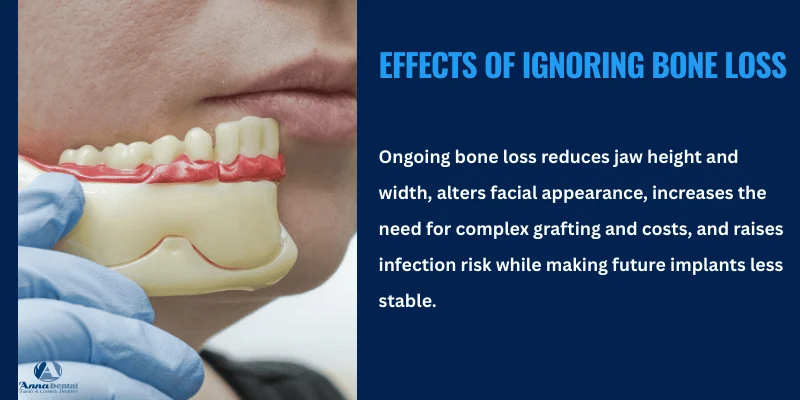
When bone loss continues, your jawbone loses height and width where the tooth is missing. The ridge can become too thin to support an implant later without grafting.
Facial appearance can change: lip support may drop and your lower third of the face can look sunken near the missing spot. This happens because bone no longer supports soft tissues.
You can also face higher costs and longer treatment times. Complex grafts, sinus lifts, or block grafts might be needed to rebuild bone before placing an implant.
Untreated bone loss raises the risk of infection and can make future restorations less stable and predictable.
Impact on Adjacent Teeth and Bite
Adjacent teeth often tilt or drift into the empty space within months. This shifting creates gaps and misalignment that change how your upper and lower teeth meet.
A changed bite can cause uneven wear on other teeth and lead to jaw joint pain from altered chewing forces. Teeth that move may become harder to clean, raising the chance of gum disease.
Loose or tilted teeth reduce chewing efficiency, and you may avoid certain foods. That can affect nutrition and comfort during eating.
Preventing bone loss helps keep neighboring teeth stable and preserves a functional bite for long-term oral health.
Why Dental Implants Prevent Bone Loss
Dental implants replace the missing tooth root with a metal post that bonds to your jaw. This lets you chew normally, keeps bone under regular load, and stops the shrinkage that follows an extraction.
Osseointegration and Artificial Tooth Roots
Osseointegration is when the titanium implant fuses directly to your jawbone. After implant placement, bone cells grow onto the implant surface during the healing phase. That creates a stable, root-like anchor for your replacement tooth.
The implant process usually includes imaging, surgical placement of the titanium post, and a healing period of weeks to months for osseointegration. When the implant integrates, it becomes part of your bone structure and provides lasting support for a crown, bridge, or full-arch prosthesis.
How Implants Stimulate Jawbone Health
Your jawbone needs mechanical stimulation from chewing to stay dense. An implant transmits bite forces into the bone just like a natural root does. That load signals bone cells to maintain or build bone tissue, which preserves volume and shape.
If you delay or skip tooth replacement, bone resorption begins and can change your facial profile and make future implant placement harder. Timely implant placement or socket preservation helps keep your jaw strong and reduces the need for more extensive grafting later.
Comparing Implants to Dentures and Bridges
Dentures sit on the gums and do not transfer chewing forces to the jawbone. Over time that allows bone loss under the denture base, which can make the fit worse and change your facial contours.
Bridges rely on neighboring teeth and also fail to replace the tooth root. They restore chewing function partly but leave the underlying bone unstimulated. Dental implants differ because they replace the root, preserve bone, and often give longer-term stability than bridges or dentures.
Implant Success, Maintenance, and Potential Complications
Good implant care keeps bone stable and your gums healthy. You’ll learn how to reduce bone loss, spot infection early, and keep a simple hygiene and check-up routine.
Preventing Bone Loss Around Implants
Keep forces on the implant balanced. Avoid hard or chewy foods right after surgery and follow your dentist’s timeline for loading the implant. Proper implant position and size matter; if your dentist places the implant in dense bone and matches the implant to the tooth you’re replacing, the risk of bone loss goes down.
Maintain healthy gums by brushing twice daily with a soft brush and using interdental brushes or floss around the implant. If you grind your teeth, ask about a night guard to stop overloading that causes bone remodeling. Good habits after surgery and correct prosthetic design together lower the chance of bone loss around implants.
Peri-Implantitis and Its Management
Peri-implantitis is an infection that causes inflammation and bone loss around the implant. Early signs include bleeding on probing, increased pocket depth, and pus or swelling. If you notice any of these, contact your dentist quickly.
Treatment often starts with non-surgical care: improved oral hygiene, antiseptic rinses, and professional cleaning. Your clinician may use scaling and root planing adapted for implants to remove plaque and calcified deposits.
If inflammation persists, they might recommend surgical cleaning, bone grafting, or antibiotics. Timely treatment can stop bone loss and save the implant in many cases.
Regular Dental Check-Ups and Oral Hygiene
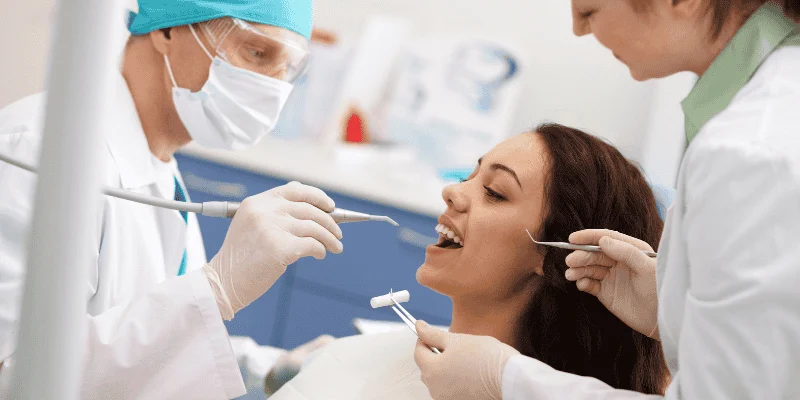
Visit your dentist every 3–6 months after implant placement, or as recommended. During visits, they will check pocket depths, look for bone loss on X-rays, and assess gum health. Regular professional checks catch problems before significant bone loss occurs.
Do daily tasks that protect your implant: brush twice daily, clean between teeth with interdental brushes, and use an antimicrobial rinse if advised. If your gums show redness, bleeding, or discomfort, increase cleaning frequency and schedule an appointment. Periodontal therapy, when needed, can restore gum health and protect the bone supporting your implant.
Treatment Options for Existing Bone Loss and Implant Preparation
You may need surgery or regenerative techniques to rebuild lost jawbone before implants. These treatments restore bone volume, create a stable base for implants, and reduce the risk of implant failure.
Bone Grafting and Ridge Augmentation
Bone grafting places bone material where your jaw has shrunk so an implant can be supported. Your dentist may use an autograft (your own bone), an allograft (donor bone), a xenograft (animal-derived), or a synthetic graft. Each type has trade-offs in healing time, cost, and how well it integrates with your body.
Ridge augmentation enlarges a narrow or flattened jaw ridge. The surgeon shapes the area, adds graft material, and often uses a guided tissue regeneration (GTR) membrane to hold the graft in place and keep soft tissue from filling the space. GTR membranes can be resorbable or non-resorbable.
Expect several months for grafts to integrate before implant placement. Your oral surgeon will check bone density with 3D imaging and may stage procedures (first grafting, then implant placement) depending on how much new bone you need.
Sinus Lift and Advanced Surgical Techniques
A sinus lift raises the sinus floor and places bone beneath it when your upper jaw lacks height for implants. Your surgeon opens the sinus membrane, inserts graft material, and closes the site. This is common for molars and premolars in the upper jaw.
For severe bone loss, options include block grafts (a solid piece of bone taken from your chin or hip) or zygomatic implants that anchor in the cheekbone. Laser decontamination and careful flap design reduce infection risk and speed healing. 3D planning and guided surgery improve implant position and reduce surprises during surgery.
Recovery often includes antibiotics, saline rinses, and soft-food diet for weeks. Your clinician will schedule follow-ups and imaging to confirm graft success before placing implants.
Emerging Therapies and Bone Regeneration
New techniques aim to speed bone growth and improve outcomes. Growth factors like BMPs and platelet-rich fibrin (PRF) concentrate your own healing proteins to boost bone formation when added to grafts. These can shorten healing time and improve graft quality.
Stem-cell approaches and synthetic scaffolds are in clinical use or trials to rebuild complex defects without large donor-site surgery. Some clinics combine PRF, bone graft material, and GTR membranes for a layered approach that supports both bone and soft-tissue healing.
Ask your dentist about evidence, costs, and recovery for each option. Not all clinics offer advanced biologics or stem-cell procedures, and insurance coverage varies.
Frequently Asked Questions
This section answers common concerns about jaw bone loss, how implants help, costs, and fixes when bone around an implant is lost. Read the short answers to know signs to watch for, what treatments exist, and when you need a dentist’s help.
What are the signs that I might be experiencing bone loss around my dental implants?
You may notice longer-looking teeth, gum recession, or a gap forming between the crown and gum. Loose or shifting teeth, pain when chewing, or pus and swelling are warning signs that need prompt care.
Can you reverse bone loss in your jaw naturally, or do you need intervention?
Mild bone loss from disuse is hard to reverse with diet or supplements alone. You can slow or limit further loss with good oral hygiene and nutrition, but a dentist often needs to place a bone graft or an implant to restore lost volume.
Is there a difference in treatment cost when there’s bone loss involved in dental implant procedures?
Yes. Bone grafts, sinus lifts, and extra surgery add materials, time, and clinic visits. Those added procedures can raise the total cost and lengthen treatment by months compared with a straightforward implant placed into healthy bone.
What are the treatment options for bone loss around an existing implant?
Your dentist may first treat any infection with cleaning and antibiotics. Options include bone grafting around the implant, guided tissue regeneration, or replacing a failed implant after healing. Sometimes removing the implant and rebuilding the site before re-implanting gives the best long-term result.
How can dental implants help in preventing further jaw bone loss due to missing teeth?
An implant replaces the tooth root and transfers chewing forces into the bone, which keeps bone cells active. This stimulation slows or stops the bone from shrinking, helping preserve your jaw shape and nearby teeth.
What can cause a dental implant to fail because of bone loss?
Infection around the implant (peri-implantitis), poor oral hygiene, or uncontrolled medical conditions like diabetes can trigger bone loss. Too little bone at placement, excessive bite forces, or smoking also raise the risk of implant failure.

