



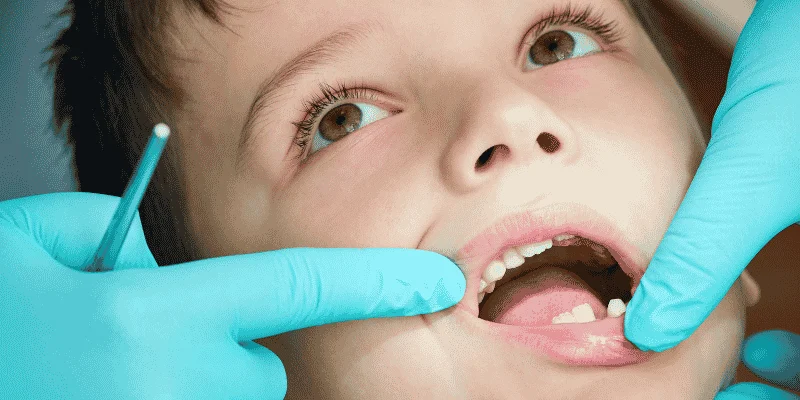
Most kids start losing baby teeth around age six, and the process usually happens naturally as permanent teeth push through.
But sometimes a baby tooth stays put even when it should have fallen out. This can worry parents who wonder if something is wrong.
If your child’s baby tooth won’t fall out on its own, the best approach is to wait and let it loosen naturally, but you should see a pediatric dentist if an adult tooth has already appeared behind it or if the tooth hasn’t budged after several months past the expected time.
Understanding why some baby teeth don’t fall out helps you know when to take action and when to simply give it more time.
The good news is that delayed tooth loss is common and usually fixable. Knowing what to watch for and when to get help keeps your child’s smile healthy as primary teeth make way for permanent ones.
Key Takeaways
- Baby teeth that don’t fall out on time often need a dentist visit if permanent teeth are already coming in or the tooth stays firm for months
- Most stubborn baby teeth loosen naturally with time and gentle wiggling, but forcing them out early can cause pain and infection
- Early dental care prevents crooked permanent teeth and bite problems that result from baby teeth staying in place too long
Understanding Normal and Delayed Tooth Loss
Most children start losing their baby teeth around age six, but the timeline varies from child to child. Knowing what’s typical and what might signal a problem helps you decide when to contact your dentist.
Typical Timeline for Losing Baby Teeth
Your child will usually lose their first baby tooth between ages five and seven. The lower front teeth typically fall out first, followed by the upper front teeth.
Most children lose their primary teeth in a specific order over several years. By age 12 or 13, all 20 baby teeth should be gone and replaced by permanent teeth.
The process happens gradually, with gaps of several months between losing different teeth.
Between ages eight and ten, you might notice a pause where no teeth fall out. This is completely normal. Parents need not worry about delayed tooth loss during this quiet period unless other issues appear.
What Causes Baby Teeth to Hang On?
Several factors can cause baby teeth not to fall out naturally. Understanding these reasons helps you know when to seek help.
Permanent teeth act as the push that loosens baby teeth. If the permanent tooth is late to erupt, the baby tooth stays in place longer. In some cases, the permanent tooth never develops at all, leaving the primary tooth with nothing to push it out.
Misalignment happens when the permanent tooth grows in the wrong position. It can’t apply enough pressure to loosen the baby tooth above it.
Dental ankylosis occurs when the root of a baby tooth fuses to the jawbone. This prevents the tooth from wiggling loose normally. Genetic factors also play a role, as delayed tooth loss sometimes runs in families.
Signs of Delayed Tooth Loss vs. Normal Variation
Your child’s teeth might just be following their own schedule. But certain signs indicate when you should pay closer attention.
Normal variation includes:
- Losing teeth a bit later than siblings or friends
- A pause in tooth loss between ages eight and ten
- Teeth that wiggle for several weeks before falling out
Concerning signs include:
- No teeth lost by age seven or eight
- Permanent teeth growing behind baby teeth that haven’t loosened
- Pain or discomfort around a tooth that won’t fall out
- Swelling or infection near the tooth
If your child shows any concerning signs, schedule a visit with your dentist. They can check whether intervention is needed.
Common Reasons for a Stubborn Baby Tooth
Several factors can prevent primary teeth from falling out when they should. Understanding why baby teeth stay in place helps you know when to wait and when to seek help from a dentist.
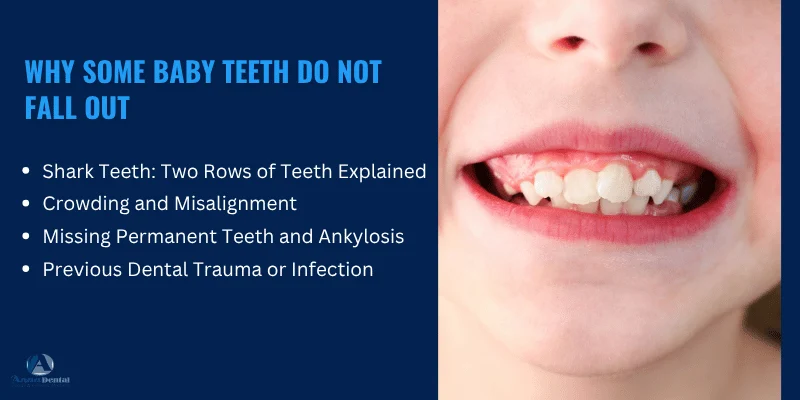
Shark Teeth: Two Rows of Teeth Explained
Shark teeth happen when your child’s permanent teeth grow in behind the baby teeth instead of pushing them out from underneath. This creates two rows of teeth at the same time, similar to how a shark’s mouth looks.
The condition occurs because the adult tooth doesn’t follow the normal path of eruption. Instead of dissolving the roots of the baby tooth and taking its place, the permanent tooth finds another path through the gums.
You’ll typically notice shark teeth in the lower front teeth first, though they can happen anywhere in your child’s mouth.
The baby tooth remains firmly in place while the new tooth grows behind it. In most cases, the baby tooth will fall out on its own within a few weeks as your child wiggles it with their tongue.
Crowding and Misalignment
Crowding issues represent one of the most common reasons for delayed tooth loss. When there isn’t enough space in your child’s mouth for adult teeth to come in properly, the baby tooth can get stuck in place.
Limited jaw space prevents the permanent tooth from putting pressure on the baby tooth’s roots. Without this pressure, the roots don’t dissolve as they should.
The adult tooth might grow in behind or on top of the stubborn baby tooth when crowding occurs. This creates alignment problems that can affect your child’s bite and smile.
Early intervention helps prevent more serious orthodontic issues down the road.
Missing Permanent Teeth and Ankylosis
Sometimes a permanent tooth that should replace a baby tooth never develops, leaving the primary tooth in place indefinitely. Your dentist can confirm this through X-rays.
Dental ankylosis presents a different challenge. This condition occurs when the root of a baby tooth fuses directly to the jawbone. The tooth becomes stuck and cannot loosen or fall out naturally.
An ankylosed tooth often appears shorter than surrounding teeth because it doesn’t grow with the jaw. The tooth looks like it’s sinking into the gums as your child’s jaw continues to develop.
Both missing permanent teeth and ankylosis require professional evaluation to determine the best treatment plan.
Previous Dental Trauma or Infection
Injuries to your child’s mouth can disrupt the normal tooth loss process. A fall, sports accident, or other trauma may damage the permanent tooth bud before it fully develops.
Dental infections from untreated cavities can also affect how baby teeth fall out. The infection may damage surrounding bone and tissue, preventing the natural progression of tooth loss.
Previous trauma sometimes causes the baby tooth to fuse to the bone or changes how the permanent tooth grows in. Your dentist needs to examine the affected area to assess any damage and plan appropriate treatment.
Safe At-Home Care for Loose Baby Teeth
Most loose baby teeth need very little help to come out on their own.
You can support the natural process with gentle wiggling, soft foods that apply pressure, and simple comfort measures that keep your child calm and excited about this milestone.
How to Encourage Gentle Tooth Wiggles
Let your child do most of the wiggling work with their clean tongue or a clean finger. This self-wiggling approach is the safest method because your child controls the pressure and stops if something hurts.
Wash your hands before touching the loose baby tooth. You can show your child how to gently push the tooth forward and backward, then side to side. The tooth should move easily in all directions without causing sharp pain.
If you need to help, wrap a piece of clean gauze or tissue around the tooth for better grip. Use a quick, gentle twist and pull motion. Think of removing a bandage rather than yanking hard.
If the tooth doesn’t come out easily on the first try, stop immediately and wait another day or two.
Never use pliers, tweezers, or any household tools on a loose tooth. These can break the tooth, damage the gum tissue, or cause unnecessary pain.
Foods That Help Loosen Teeth

Crunchy foods can apply just enough natural pressure to help a loose baby tooth fall out without any pulling. Apple slices work particularly well because they require firm biting and chewing motions.
Other good options include:
- Raw carrot sticks
- Celery pieces
- Whole grain toast
- Fresh pears
- Corn on the cob
Make sure your child sits upright while eating these foods and chews slowly. This prevents them from accidentally swallowing or choking on a tooth that comes out suddenly. Healthy snacks like fruits, vegetables, and dairy products also support your child’s growing permanent teeth.
Avoid sticky or very hard foods that might yank the tooth out before it’s ready or cause discomfort.
Warm Saltwater Rinse for Comfort
A warm saltwater rinse can soothe sore gums around a loose tooth and keep the area clean. Mix one-quarter teaspoon of salt into eight ounces of warm water until the salt dissolves completely.
Have your child swish the mixture gently in their mouth for 30 seconds, then spit it out. You can repeat this rinse two to three times per day, especially after meals. The salt helps reduce minor swelling and keeps bacteria levels low.
Make sure the water is comfortably warm, not hot. Young children may need help measuring and mixing the solution correctly. This rinse is safe and has no side effects when used as directed.
Tooth Fairy Tips and Motivation
The tooth fairy tradition can turn dealing with a loose baby tooth into something exciting rather than scary. Talk about the tooth fairy’s visit before the tooth comes out so your child looks forward to the milestone.
Keep a special small box or container ready for storing the tooth under the pillow. Some families use tooth fairy pillows with built-in pockets to make sure the tooth doesn’t get lost during the night.
Consider these creative approaches:
- Leave a note from the tooth fairy along with the reward
- Use glitter or “fairy dust” around the pillow
- Take a photo of your child’s new smile gap
- Create a tooth chart to track which baby teeth have fallen out
The excitement about the tooth fairy’s visit often helps anxious children feel braver about letting a stubborn tooth come out naturally. You can adjust the tradition to fit your family’s values and budget.
When to See a Pediatric Dentist or Orthodontist
Most baby teeth fall out without help, but some situations need a professional look. Knowing when to call your pediatric dentist or orthodontist can prevent bigger problems with your child’s tooth development.
Warning Signs That Need Professional Attention
You should schedule a dental visit if a baby tooth stays loose for more than two weeks without falling out. If the tooth is extremely loose and refuses to budge after two weeks of wiggling, your pediatric dentist can check the situation.
Watch for these signs that need attention:
- A permanent tooth growing in behind or beside a baby tooth that won’t loosen
- Pain, swelling, or redness around the loose tooth
- A baby tooth that broke but the roots won’t come out
- Your child has trouble eating or speaking because of the tooth
If the permanent tooth continues to grow in and the baby tooth stays firmly in place, this could cause crowding, misalignment, or bite issues.
Early loss or late loss of baby teeth can both signal problems and cause trouble with chewing, biting, or speaking.
The Role of Pediatric Dentistry in Tooth Loss
A pediatric dentist specializes in children’s dental health and understands how baby teeth should fall out. They can tell if stubborn baby teeth need help or just more time.
Your dentist will take X-rays to see what’s happening below the gums. These images show if permanent teeth are ready to come in and if anything blocks them.
Sometimes a baby tooth has curved or extra-long roots that make it harder to fall out naturally.
In many cases, the baby tooth will fall out on its own within a few weeks. But if intervention is needed, your pediatric dentist can safely remove the tooth. This prevents the permanent tooth from coming in crooked or getting stuck.
Orthodontic Evaluation for Stubborn Baby Teeth
The American Association of Orthodontists recommends that children first visit an orthodontist no later than age 7. You don’t need a referral from your dentist to schedule this appointment.
An orthodontic evaluation checks more than just stubborn baby teeth. The orthodontist looks at jaw growth, bite alignment, and how permanent teeth are developing.
If the baby tooth doesn’t loosen after a few weeks of the permanent tooth erupting, you should schedule an orthodontic consultation.
Some children benefit from early orthodontic treatment even with baby teeth still present. This phase 1 treatment guides jaw growth and creates space for permanent teeth.
Your orthodontist will tell you if your child needs treatment now or if waiting is better.
Dental Treatments and Early Orthodontic Solutions
Sometimes a baby tooth needs professional help to make way for permanent teeth. Dentists and orthodontists offer several treatment options to prevent crowding and alignment problems.
Extraction of Retained Baby Teeth
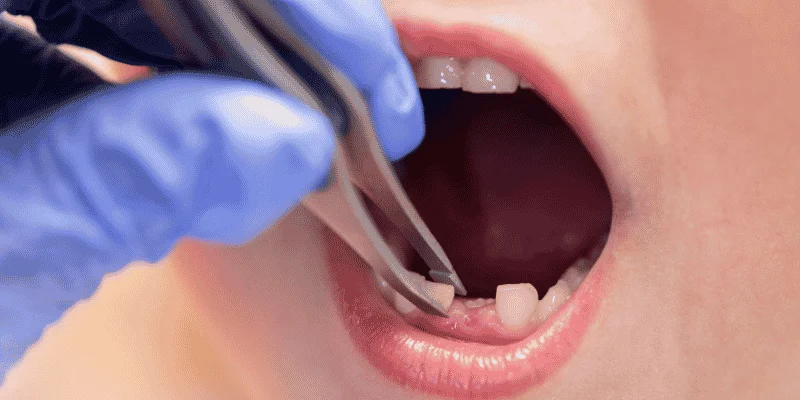
Your pediatric dentist may recommend removing a stubborn baby tooth if it doesn’t loosen on its own. This procedure is quick and straightforward in most cases.
Removing a baby tooth at the right time helps prevent several problems. It stops permanent teeth from becoming crowded or growing in the wrong position.
The extraction also reduces your child’s risk of tooth decay and infection in the area.
Dentists use local anesthesia to numb the area before the extraction. Your child won’t feel pain during the procedure, though they may feel pressure. The gap left behind gives the permanent tooth room to come in properly.
Benefits of Early Orthodontic Treatment
An orthodontic evaluation by age 7 catches problems while your child still has baby teeth. At this age, orthodontists can see issues before they get worse.
Early treatment can address problems like a narrow palate or misalignment. Palate expansion gradually widens the upper jaw to create enough space for adult teeth. This prevents crowding and bite issues later.
Starting treatment early often makes later orthodontic work simpler. It can even eliminate the need for more complex procedures in the future. Your orthodontist will tell you if early treatment benefits your child’s specific situation.
Space Management and Invisalign First
Space maintainers keep gaps open when baby teeth are lost too early. These devices stop nearby teeth from shifting into spaces meant for permanent teeth.
Invisalign First offers clear aligners designed specifically for growing children. These aligners work on both baby and permanent teeth at the same time. They’re removable, which makes eating and brushing easier than traditional braces.
Your orthodontist will create a custom treatment plan based on your child’s needs. Some children need simple space management, while others benefit from active tooth movement.
Treatment length varies depending on the specific issues being addressed.
Frequently Asked Questions
Parents often wonder about timing, safety, and when professional help is needed. Here’s what you should know about the most common concerns with loose baby teeth.
How long does it usually take for a loose baby tooth to fall out?
A loose baby tooth typically falls out within two weeks of daily wiggling. Most teeth detach naturally during this time as the permanent tooth continues pushing up from below.
If your child wiggles the tooth regularly with their tongue and it still hasn’t come out after two weeks, you should call your pediatric dentist.
The tooth may have a stubborn root fragment holding it in place that needs professional assessment.
Some teeth take longer if they’re not truly ready yet. If the tooth barely moves when touched, it’s still attached and needs more time.
What should I do if my child’s baby tooth is very loose but still hanging on?
Encourage your child to wiggle it gently with their tongue throughout the day. This natural movement helps loosen the remaining connections without forcing anything.
Offer crunchy foods like apples or carrots. The chewing motion puts gentle pressure on the tooth and often speeds up the process naturally.
Don’t pull or yank the tooth yourself. Even very loose teeth can have root material still attached, and pulling too early risks damaging the area or leaving fragments behind.
Can a loose baby tooth tighten back up or “reattach” after it starts wiggling?
No, a baby tooth cannot reattach or tighten back up once it has genuinely started to loosen. The permanent tooth below dissolves the baby tooth’s root, and this process doesn’t reverse.
Sometimes a tooth might feel less wiggly from day to day. This usually happens because the tooth shifts position slightly, not because it’s reattaching.
If your child’s tooth was loose after an injury but then seems firm again, it may not have been truly ready to come out yet. The trauma might have loosened it temporarily without the permanent tooth being ready to push through.
What does it mean if a baby tooth falls out but it looks like part of the root is still there?
Baby teeth normally fall out without any root visible at all. The permanent tooth dissolves the entire root before the tooth detaches.
If you see what looks like root material still attached, it’s usually just jagged edges of the tooth itself. True roots are very thin and dissolve completely during the natural shedding process.
In rare cases where actual root fragments remain in the gum, your dentist needs to evaluate it. These fragments can cause infection or interfere with the permanent tooth’s growth.
What are safe, gentle ways to help a stubborn baby tooth come out with less pain?
Let your child wiggle it with their tongue as much as they want throughout the day. This is the safest method and gives them control over the process.
Have them bite into crunchy foods during meals. This puts natural pressure on the tooth without forcing it out before it’s ready.
If the tooth is hanging by a thread and causing discomfort when eating, your child can grasp it with clean gauze and twist gently. Make sure they wash their hands first and only do this if the tooth is extremely loose.
Never use string, pliers, or the doorknob method. These techniques can fracture the root or damage the permanent tooth developing underneath.
When should I call a dentist if my child’s loose tooth started after an injury?
Call your dentist right away if the tooth is pushed into the gum, knocked sideways, or bleeding heavily. These injuries need immediate professional care to prevent damage to the permanent tooth.
You should also call if the tooth becomes loose after a fall or hit but wasn’t ready to come out naturally yet. Your dentist can take an X-ray to check for damage to the tooth root or the permanent tooth below.
If your child’s tooth falls out earlier than age 5 without obvious trauma, bring this up at your next dental visit. Very early tooth loss can signal developmental issues worth investigating.

