




Jaw pain from TMJ disorders can make everyday activities like eating, talking, and even sleeping uncomfortable.
Many people struggle with chronic jaw tension, teeth grinding, and facial pain without finding lasting relief from traditional treatments.
Botox treatment works by blocking nerve signals to overactive jaw muscles, reducing involuntary clenching force and relieving muscle-driven TMJ pain, though they don’t address structural joint problems.
You might have heard about Botox being used for wrinkles and cosmetic purposes, but dentists are now using it to treat jaw pain and TMJ disorders with promising results.
Dental Botox for TMJ targets the specific muscles that cause clenching and grinding, offering relief that typically lasts three to four months.
Understanding what Botox can and cannot treat for jaw pain helps you make informed decisions about your treatment options.
This guide explains how dental Botox differs from dermal fillers, what conditions it treats effectively, and what to expect from the procedure.
You’ll learn about the benefits, limitations, and costs so you can decide if this treatment approach is right for your jaw pain.
Key Takeaways
- Botox treats muscle-related TMJ pain by relaxing overactive jaw muscles but doesn’t fix structural joint problems
- Results from Botox injections for jaw pain typically appear within one to two weeks and last three to four months
- Botox injections for TMJ are different from dermal fillers because they relax muscles rather than add volume to tissue
Understanding TMJ Disorders and Jaw Pain
TMJ disorders affect the joint connecting your jawbone to your skull and can cause pain in your jaw muscles, face, and neck.
These conditions often result from jaw clenching, teeth grinding, or joint problems that make everyday activities like eating and talking uncomfortable.
What Is the Temporomandibular Joint?
The temporomandibular joint acts as a sliding hinge on each side of your head. It connects your lower jawbone to your skull just in front of your ears.
This joint is one of the most complex in your body because it moves in multiple directions. You use it every time you chew, speak, yawn, or swallow.
The joint includes muscles, ligaments, a disc, and bone that work together to create smooth jaw movement.
When something goes wrong with any part of this system, you develop what doctors call temporomandibular joint disorder or TMD.
Some people refer to these problems as TMJ, though that’s actually the name of the joint itself rather than the disorder.
Common TMJ Symptoms and Causes
TMJ disorder symptoms include pain in and around your jaw that gets worse when you move it, restricted jaw movements, and clicking or popping sounds.
You might experience:
- Jaw pain or tenderness
- Facial pain that spreads to your cheeks or temples
- Chronic headaches or migraines
- Jaw stiffness or jaw locking
- Difficulty chewing
- Neck pain or shoulder tension
Bruxism, or teeth grinding, is a major cause of TMJ problems. Many people clench their jaw or grind their teeth at night without knowing it.
Stress, bite misalignment, arthritis, and jaw injuries can also trigger TMD, leading to restorative dentistry treatments. Some connective tissue disorders weaken your joint stability and lead to orofacial pain.
How TMJ Disorders Impact Daily Life
TMJ disorders affect more than just your oral health. The constant jaw clenching and facial pain can make it hard to eat your favorite foods or get through a meal without discomfort.
You might avoid certain foods that require a lot of chewing. Simple acts like laughing or yawning can trigger sharp pain. Many people with TMD wake up with headaches because they grind their teeth all night.
The pain can affect your sleep quality and mood. Your jaw might feel tired even after rest, and the clicking sounds can be embarrassing in quiet settings.
How Dental Botox Treats TMJ and Jaw Pain
Botox works by interrupting nerve signals to overactive jaw muscles, which reduces involuntary clenching and grinding that causes TMJ pain.
The treatment targets specific muscles in your jaw through precise injections, delivered during a quick in-office procedure.
Mechanism of Action: Blocking Acetylcholine and Muscle Relaxation
Botulinum toxin blocks the release of acetylcholine at the neuromuscular junction. Acetylcholine is a chemical messenger that tells your muscles to contract.
When this signal gets blocked, your jaw muscles can’t tighten up as forcefully as before.
This process leads to muscle relaxation without causing complete paralysis. Your jaw muscles still work, but they can’t overwork themselves anymore. The result is less involuntary clenching and grinding throughout the day and night.
OnabotulinumtoxinA (the medical name for therapeutic Botox) provides temporary relief that typically lasts three to four months.
After a Botox injection, it takes anywhere from one day to two weeks for you to feel the full effects. The toxin needs time to bind to nerve endings and stop acetylcholine release.
Primary Injection Sites and Targeted Muscles
Your provider will inject Botox into your masticatory muscles, which are the muscles you use to chew.
The masseter muscle is the primary target for Botox for TMJ because it’s the strongest muscle in your jaw and often becomes overactive.
The temporalis muscle is another common injection site. This muscle sits on the side of your head above your ear. When it stays tight, it can cause headaches and jaw pain.
Some providers also target the lateral pterygoid muscle, which sits deeper inside your jaw. This muscle controls jaw movement and positioning. Your specific injection sites depend on which muscles are causing your symptoms.
Each muscle receives multiple small injections of Botox. The exact number and location of injection sites vary based on your muscle size and pain pattern.
What to Expect During a Botox TMJ Procedure
A Botox TMJ treatment is an in-office procedure that takes about 15 to 30 minutes. You don’t need anesthesia because the needles are very thin. Most people describe the feeling as a small pinch or pressure.
Your provider will mark the injection sites on your face first. They may ask you to clench your jaw so they can feel which muscles are most active. This helps them place the Botox injections exactly where you need them.
You can return to normal activities right after the procedure. Some people experience mild bruising, swelling, or redness at the injection sites. These side effects usually go away within a few days.
Your provider will likely schedule a follow-up appointment to check your results. You may need repeat treatments every three to four months to maintain relief from jaw pain.
Botox Versus Other Jaw Pain Treatments
Botox works differently than traditional TMJ treatments by targeting the muscles themselves rather than protecting teeth or addressing structural issues.
Understanding how it compares to night guards, physical therapy, medications, and surgery helps you make informed decisions about your jaw pain management.
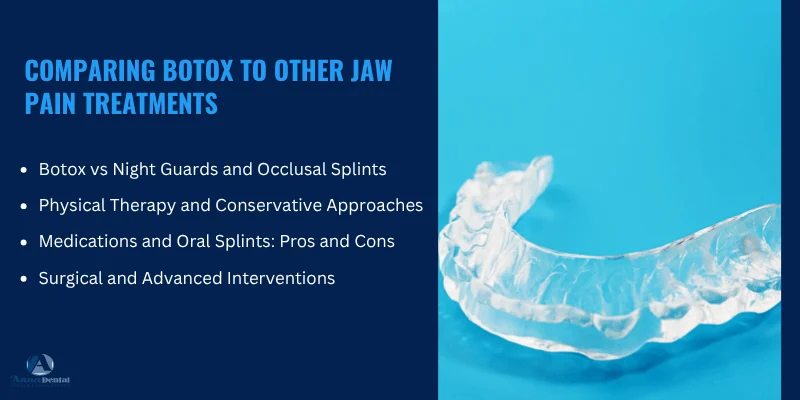
Botox vs Night Guards and Occlusal Splints
Night guards and occlusal splints protect your teeth from grinding but don’t stop the muscle contractions that cause jaw pain. You wear these devices in your mouth while sleeping to create a barrier between your upper and lower teeth.
An oral splint repositions your jaw to reduce strain on the joint. It can help with alignment issues but requires consistent wear to be effective.
Botox for jaw pain takes a different approach by relaxing overactive jaw muscles directly. You don’t need to wear anything or remember to use a device each night.
Key differences:
- Night guards are passive protection devices
- Botox actively reduces muscle tension
- Splints work immediately when worn
- Botox takes effect within days to weeks
Many people use both treatments together. The night guard protects your teeth while Botox addresses the underlying muscle tension causing your pain.
Physical Therapy and Conservative Approaches
Physical therapy for TMJ focuses on stretching tight muscles, strengthening weak areas, and improving jaw mobility. Your therapist may use manual techniques, exercises, and heat or cold therapy.
These conservative approaches require regular appointments and daily home exercises. You might see improvement in 6-8 weeks with consistent effort.
Botox provides muscle relaxation without the time commitment of therapy sessions. However, it doesn’t teach you new movement patterns or address postural issues that physical therapy can fix.
TMJ treatment options often combine both methods. Physical therapy helps with long-term jaw function while Botox offers faster pain relief. Your results depend on what’s causing your jaw problems in the first place.
Medications and Oral Splints: Pros and Cons
Pain relievers and anti-inflammatory drugs manage TMJ symptoms but don’t address muscle tension. Muscle relaxants can help but often cause drowsiness and aren’t safe for long-term use.
Prescription medications for chronic jaw pain may include:
- NSAIDs – reduce inflammation and pain
- Muscle relaxants – decrease tension temporarily
- Tricyclic antidepressants – help with chronic pain at low doses
- Anti-anxiety medications – reduce stress-related clenching
Botox treatment for TMJ-related symptoms lasts 3-6 months per treatment without daily medication side effects.
Oral splints combined with medications give you symptom management but may not provide the targeted muscle relief that Botox offers.
The main advantage of medications is quick availability and lower upfront cost. The disadvantage is potential side effects and the need for daily use.
Surgical and Advanced Interventions
Surgery becomes an option when conservative treatments fail and your jaw pain severely impacts your oral health and daily life. Procedures range from arthrocentesis (flushing the joint) to total joint replacement.
TMJ surgery carries risks including infection, nerve damage, and prolonged recovery time. Most dentists recommend trying all other options first.
Botox serves as a middle ground between conservative care and surgery. It’s minimally invasive with little downtime compared to surgical procedures.
You might consider surgery if you have:
- Structural damage to the joint
- Severe arthritis
- Locked jaw that won’t open
- Failed response to all other treatments
Botox won’t fix structural problems or repair damaged cartilage. It treats muscle-related jaw pain specifically, making it effective for bruxism and tension but not for joint deterioration requiring surgical repair.
Effectiveness, Benefits, and Risks of Botox for TMJ
Botox injections can provide meaningful relief for TMJ-related muscle tension and pain, though results vary by individual and the specific cause of your jaw problems.
While it offers both therapeutic and aesthetic advantages, you should understand the potential side effects and whether you’re a suitable candidate before pursuing treatment.
Pain Relief, Jaw Function, and Cosmetic Benefits
Botox works for jaw pain by blocking nerve signals to overactive muscles, which reduces involuntary clenching and muscle tension.
This muscle relaxation can significantly decrease your jaw stiffness and improve your overall jaw function. Many patients report less facial pain, fewer earaches, and reduced chronic headaches or migraines after treatment.
The injections target specific muscles responsible for clenching and grinding. When these muscles relax, you may notice less clicking or popping in your jaw joint. Your ability to open and close your mouth often improves as well.
Beyond pain management, Botox offers cosmetic benefits too. The same injections that ease your TMJ symptoms can slim your jawline by reducing masseter muscle bulk.
This differs from cosmetic Botox used for wrinkles, though the product itself is the same.
It’s important to know that Botox is not FDA-approved specifically for TMJ treatment.
The FDA-approved indications include chronic migraines, muscle spasms, and cosmetic uses, but dentists use it off-label for jaw disorders based on clinical evidence.
Potential Side Effects and Contraindications
Most side effects from Botox for TMJ pain are mild and temporary. You might experience soreness at injection sites, bruising, or slight weakness in nearby muscles.
Some patients report difficulty chewing tough foods for a few days after treatment.
More serious risks are rare but can include headaches, drooping facial muscles, or trouble swallowing if the toxin spreads beyond the target area. Allergic reactions occasionally occur in sensitive individuals.
You should avoid Botox if you’re pregnant, breastfeeding, or have certain neurological conditions. People with allergies to botulinum toxin or anyone taking specific antibiotics may not be good candidates.
Always tell your provider about all medications and supplements you take.
Who Is a Good Candidate for Botox Injections?
You’re likely a good candidate if you have muscle-related TMJ disorder that hasn’t responded well to other treatments.
Botox addresses the muscular component of TMJ disorders rather than structural causes like disc displacement or joint degeneration.
Ideal candidates experience frequent jaw clenching, teeth grinding, or tension-type headaches related to their TMJ issues.
If night guards, physical therapy, or anti-inflammatory medications haven’t provided enough relief, Botox might help.
Your dentist or healthcare provider will evaluate your specific condition before recommending treatment.
They may use pain scales like the VAS (Visual Analog Scale) to measure your discomfort levels before and after injections. This helps track whether the treatment is working for you.
People with purely structural jaw problems, such as severe arthritis or significant disc displacement, may not benefit as much from Botox alone. These conditions often require different interventions.
Cost, Insurance, and Professional Considerations
Botox treatment for TMJ typically costs between $500 and $1,500 per session, and while some insurance plans may cover it as a medical necessity, you’ll need specific documentation and pre-authorization from your provider.
Typical Pricing and Payment Options
The cost of Botox for TMJ treatment usually ranges from $500 to $1,500 per session. Your final price depends on how many units you need, which typically falls between 25 and 50 units per side of your jaw.
Most providers charge by the unit, with prices ranging from $10 to $20 per unit. Geographic location also affects pricing, with urban areas generally charging more than rural clinics.
Since Botox effects last three to four months, you’ll need multiple treatments per year to maintain relief. Many dental offices offer payment plans or financing options to make the ongoing costs more manageable.
Some practices also provide package pricing if you commit to multiple sessions upfront.
Insurance Coverage for TMJ Botox Treatment

Insurance coverage for Botox and TMJ is possible but not guaranteed. Your plan may cover the treatment if your provider can demonstrate medical necessity through proper documentation.
You’ll need a letter of medical necessity from your dentist or physician that outlines your diagnosis and lists all previous treatments you’ve tried.
Most insurers require proof that conservative treatments like physical therapy, splints, or medications haven’t worked for you.
Pre-authorization is often required before your insurance will approve coverage. Submit your claim before getting treatment to avoid paying out of pocket.
Even with approval, your plan may only cover a portion of the cost since the FDA hasn’t officially approved Botox for TMJ disorders.
Choosing the Right Provider and Continuing Education
You should only receive TMJ Botox from qualified professionals like oral surgeons, ENT specialists, or experienced plastic surgeons.
Getting Botox for TMD requires more precision than cosmetic injections because the provider must understand jaw anatomy and muscle function.
Ask potential providers about their training and experience specifically with TMJ Botox. Look for practitioners who have completed continuing education courses focused on orofacial pain and therapeutic Botox applications.
Avoid unlicensed providers or non-medical settings, as counterfeit products and improper injection techniques can cause serious complications.
Your provider should discuss all risks, benefits, and alternatives with you during a detailed consultation before proceeding with treatment.
Frequently Asked Questions
Botox injections target overactive jaw muscles to reduce clenching force and pain, typically lasting three to four months.
Insurance coverage varies since the FDA hasn’t approved Botox specifically for TMJ disorders, though some plans may cover it as a medical treatment.
How does Botox help with TMJ symptoms and jaw pain?
Botox works by blocking nerve signals to overactive jaw muscles. This reduces involuntary clenching force and the muscle tension that contributes to your pain.
When you get Botox injections, the treatment temporarily stops your jaw muscles from contracting as forcefully. This gives your muscles a chance to relax and helps break the chronic pain cycle.
Relief typically appears within one to two weeks after your injection. Most people find that the effects last for about three to four months before they need another treatment.
What TMJ problems can Botox improve, and what won’t it treat?
Botox can help reduce jaw muscle pain and the effects of teeth grinding. It may also improve limited jaw opening due to pain and reduce facial discomfort.
However, Botox addresses the muscular component of TMJ disorders rather than structural causes. It won’t fix problems like disc displacement or joint degeneration.
You should know that Botox likely won’t solve the root problem or completely eliminate your chronic pain. That’s why doctors use it as a supplemental therapy alongside other treatments like physical therapy, splint therapy, and medications.
Where are the Botox injections placed for TMJ, and how many units are typically used?
Doctors inject small amounts of Botox into key muscles, such as the masseter. These are the large muscles on the sides of your jaw that you use for chewing.
The number of units varies based on your muscle size and pain severity. Your provider will determine the right dosage for your specific situation during your consultation.
Getting Botox for TMJ requires more precision than cosmetic Botox. It should be given by an oral surgeon, ENT specialist, or experienced plastic surgeon who understands jaw anatomy.
Do Botox injections for TMJ hurt, and what side effects should I watch for?
You may experience injection site pain, bruising, swelling, and redness. These are common side effects that usually go away on their own.
Some people report headaches and neck pain after treatment. You might also experience flu-like symptoms, nausea, or indigestion.
More serious but less common side effects include unwanted facial paralysis or cosmetic changes. Examples include drooping eyelids or an uneven smile. Muscle weakness, infection, and allergic reactions are also possible.
It’s extremely rare for a therapeutic injection of legitimate Botox to cause botulism. The last recorded case was in 2017, but this underscores why you should only get injections from a licensed healthcare provider in a medical setting.
Can Botox for TMJ change my face shape or make my jaw look slimmer?
Botox relaxes your jaw muscles, which can make strong masseter muscles smaller over time. This may lead to a slimmer appearance in your lower face.
Some people notice their face shape becomes slightly more oval or heart-shaped. This happens because the bulky jaw muscles reduce in size when they’re not overworking.
You should discuss cosmetic changes with your provider before treatment. They can adjust the injection sites and dosage based on whether you want to minimize or embrace these changes.
Is Botox for TMJ covered by insurance, and what can I do to improve my chances of coverage?
Coverage varies by plan. Because Botox for TMJ is considered medical rather than cosmetic, you may qualify under your insurance benefits.
The FDA has not yet approved Botox specifically for treating temporomandibular disorders. This can make insurance coverage more challenging to obtain.
Your best chance of getting coverage is to document your symptoms and show that conservative treatments haven’t worked. Ask your provider to submit detailed notes explaining why Botox is medically necessary for your condition.
Some people need to try physical therapy, medications, and splint therapy first before insurance will consider covering Botox injections.

