


If you have missing teeth, you may worry about gum disease and how it affects your oral health. You might also wonder if dental implants can actually protect your gums or make problems worse.
Knowing how implants and gum health connect helps you make smart choices about your smile.
Dental implants can help prevent gum disease by replacing missing teeth, supporting healthy bone, and making it easier for you to keep your gums clean.
When you fill gaps with implants, you reduce spaces where plaque can collect and irritate your gums. Implants also help keep your jawbone strong, which supports long-term implant success and overall gum health.
You still need good oral hygiene and regular dental visits to protect your gums. With the right care, dental implants can support a stable, healthy mouth and lower your risk of future gum problems.
Key Takeaways
- Dental implants support healthy gums by replacing missing teeth and protecting bone.
- Good oral hygiene plays a major role in preventing gum disease around implants.
- Regular dental care helps maintain long-term implant success and gum health.
Discover how dental implants and gum disease are connected; explore solutions for healthier gums
The Link Between Dental Implants and Gum Health
Healthy gums and strong bone support your implant from day one. When you protect your gums and jawbone, you protect your implant stability and long-term comfort.
Why Healthy Gums Are Crucial for Implant Stability
You need healthy gums to hold an implant in place. Your gums form a tight seal around the implant post. This seal blocks bacteria and lowers your risk of infection.
If your gums are swollen or infected, the tissue cannot attach well to the implant.
This can lead to peri‑implant problems that may affect long-term success. In fact, gum infections remain a common complication over time, even though implants often succeed at high rates.
You also need healthy gums before surgery. Dentists often treat gum disease first because you must have healthy gums to place an implant safely.
When you brush, floss, and attend cleanings, you protect the tissue that supports your implant. That daily care plays a direct role in implant stability.
Jawbone, Bone Loss, and Implant Integration
Your jawbone anchors the implant post. After placement, the implant bonds with the bone in a process called osseointegration.
This bond creates a stable base for chewing. But if you have bone loss from missing teeth or untreated gum disease, the implant may not have enough support.
Gum health and bone health work together. Strong gums help protect the bone underneath. Healthy bone then supports the implant and keeps it steady during normal use.
Research and clinical guidance highlight the strong link between gum condition and implant success.
When you replace missing teeth early, you reduce ongoing bone loss. That helps preserve your jawbone and improve your chances of long-term implant stability.
Dental Implants Versus Other Tooth Replacement Options
Not all tooth replacement options affect your gums and jawbone in the same way.
Removable dentures sit on top of your gums. They do not connect to your jawbone, so they cannot stop bone loss in the area of missing teeth. Over time, your bone may shrink, which can change the fit of the denture.
Dental implants act differently. The implant post sits inside your jawbone, where it supports bone through regular biting forces. This helps maintain bone structure and supports healthy gums when you care for them properly.
Many dental professionals stress the importance of maintaining gum health after treatment to protect your results.
When you compare options, implants offer one key advantage: they support both your jawbone and your gum tissue, not just the visible tooth.
How Dental Implants Support Gum Disease Prevention
Dental implants help you control plaque, protect your jawbone, and keep your gums stable. When you care for them the right way, they lower your risk of gum disease and long-term bone loss.
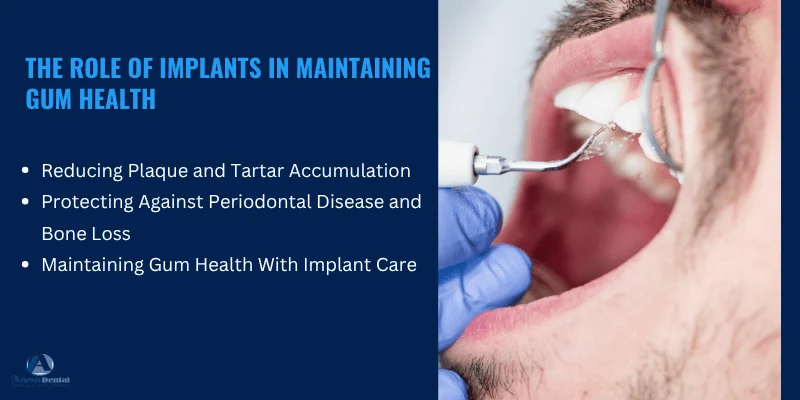
Reducing Plaque and Tartar Accumulation
Plaque builds up on every surface in your mouth, including dental implants. If you do not remove it each day, it hardens into tartar, which can irritate your gums and lead to infection.
Unlike a dental bridge, an implant stands on its own. You can brush and floss around it without cleaning under a false tooth that connects to nearby teeth. This design makes daily cleaning more direct and more effective.
You should brush twice a day and floss once a day to remove plaque before it turns into tartar. Many dentists also suggest small interdental brushes to clean around the implant post.
The prevention of peri-implant disease depends on strong daily habits. The prevention of peri-implant diseases follows the same basic rules as preventing gingivitis and periodontal disease: remove plaque every day and get regular professional cleanings.
When you stay consistent, you lower your risk of swollen gums, bleeding, and peri-implantitis.
Protecting Against Periodontal Disease and Bone Loss
Healthy gums create a tight seal around your implant. This seal blocks bacteria from reaching the bone underneath.
When gum disease develops, it can destroy the tissue and bone that support your teeth. The same risk applies to implants. If bacteria reach the bone, you may develop peri-implantitis, which can lead to bone loss.
Dental implants also replace the tooth root. This helps stimulate your jawbone when you chew. That stimulation supports bone health and reduces the shrinkage that often follows tooth loss.
You can see how healthy gums support implant stability by forming a protective barrier around the implant. When you protect your gums, you also protect the bone that holds the implant in place.
Strong gum health and stable bone work together. If you manage plaque and treat gum problems early, you reduce the risk of long-term damage.
Maintaining Gum Health With Implant Care
Implant care requires daily effort and regular dental visits. You play the main role in keeping your gums healthy.
Follow this simple routine:
- Brush twice daily with a soft toothbrush
- Floss once daily around the implant
- Use interdental brushes if your dentist recommends them
- Visit your dentist every six months for exams and cleanings
Professional cleanings remove tartar that brushing cannot reach. Your dentist may also take X-rays to check for early bone loss around the implant.
If you have a history of periodontal disease, you may need more frequent checkups. You should also avoid smoking, since it increases your risk of peri-implantitis.
With steady implant care and close monitoring, you protect your gum health and support long-term gum disease prevention.
Contact our Anna, TX team today to discuss dental implants and gum disease prevention options.
Oral Hygiene Strategies for Implant Patients
Daily care keeps bacteria from building up around your implant and along the gumline. When you brush, floss, and use the right tools the right way, you lower your risk of gum inflammation and peri-implantitis.
Establishing an Effective Oral Hygiene Routine
You need a consistent oral hygiene routine to protect both your implant and nearby teeth. Brush at least twice a day and floss once a day without skipping.
Use a soft-bristled toothbrush. Hold it at a 45-degree angle to your gumline and use small, gentle strokes. This helps remove plaque without scratching the implant crown or irritating your gums.
Focus on the area where the implant meets the gum. Plaque often collects there first. Spend a few extra seconds cleaning that edge.
When brushing and flossing, follow the same order each time. A simple pattern (top right to top left, then bottom right to bottom left) helps you avoid missing spots.
Consistency matters more than pressure. Gentle, thorough cleaning works better than aggressive scrubbing.
Choosing the Right Tools: Brushes, Floss, and Water Flossers
The tools you use can make daily care easier and more effective. Start with a soft-bristled toothbrush or an electric brush with a sensitive setting.
For flossing, choose implant-safe floss. Options include:
- Implant-specific floss
- Floss threaders for hard-to-reach areas
- Thick, spongy floss designed for wider spaces
Slide floss gently under and around the implant crown. Move it in a C-shape against the side of the implant to remove plaque.
A water flosser can help clean around the implant and below the gumline. Aim the tip along the gum edge and move slowly from tooth to tooth. This tool works well if you have limited hand movement or multiple implants.
Role of Mouthwash and Interdental Brushes
Interdental brushes clean spaces that regular floss may miss. Choose a size that fits snugly but does not forcefully stretch your gums. Insert the brush gently and move it back and forth a few times.
These small brushes work well around implant posts and under bridges. They help remove plaque before it hardens into tartar.
Add a mouthwash to your routine once or twice a day. An antimicrobial mouthwash can lower bacteria levels and reduce gum inflammation.
Rinse for the full time listed on the label, usually 30 seconds. Do not eat or drink right away so the ingredients can work.
Professional Dental Care and Maintenance
Regular dental visits protect your implants and your gums. Professional cleanings, careful exams, and early treatment stop small problems from turning into serious gum disease.
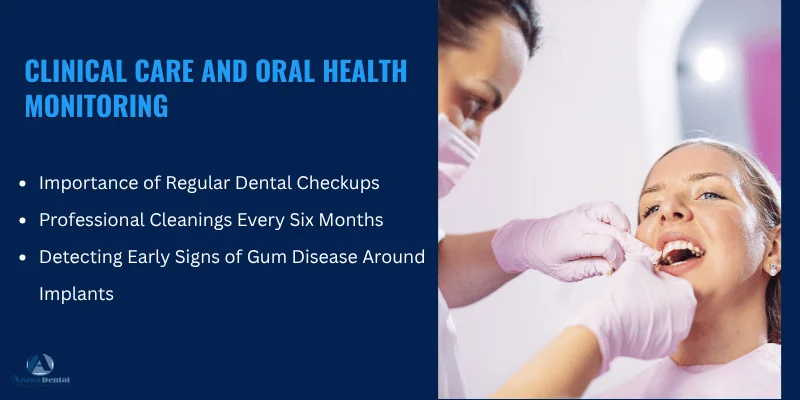
Importance of Regular Dental Checkups
You need regular dental checkups to keep your implants healthy. Your dentist checks the gum tissue, measures pocket depths, and looks for swelling or bleeding. These steps help spot early changes before you feel pain.
During a visit, your provider reviews your brushing and flossing habits. They may suggest special brushes or floss made for implant care. Small changes at home can lower your risk of infection.
Research shows that patients who receive supportive implant care have fewer problems with peri‑implant disease. Without routine maintenance, the risk of peri‑implantitis can rise sharply.
Regular dental checkups also allow your dentist to adjust your care plan. If you grind your teeth, smoke, or have diabetes, you may need more frequent visits.
Professional Cleanings Every Six Months
You should schedule professional cleanings every six months, or more often if your dentist advises it. Even with good brushing, plaque builds up around implants and under the gumline.
During professional cleanings, your dental team removes plaque and tartar with special tools designed for implants.
These tools help prevent damage to the implant surface. In some cases, they use low‑abrasive air polishing to gently disrupt biofilm.
If gum pockets deepen, your provider may recommend deep cleaning, also called scaling and root planing. This type of periodontal therapy removes bacteria below the gumline and smooths root surfaces on nearby teeth.
Professional plaque removal plays a key role in long‑term implant success. Skipping cleanings allows bacteria to grow and increases your risk of infection.
Detecting Early Signs of Gum Disease Around Implants
You should know the signs of gum disease around implants so you can act quickly. Early symptoms of gum disease often include redness, swelling, bleeding when brushing, and bad breath.
Your dentist checks for these signs during every dental checkup. They measure gum pockets and look for bone loss on X‑rays. Early inflammation around an implant, called peri‑mucositis, can often be reversed with proper care.
If the infection spreads deeper, it can lead to peri‑implantitis. This condition may cause bone loss and, in severe cases, implant failure.
Proper cleaning and regular visits reduce this risk, as explained by the American Society of Implant and Restorative Dentistry on dental implant maintenance.
When you report symptoms early, your dental team can start periodontal therapy right away. Quick treatment protects both your implant and the bone that supports it.
Managing and Treating Gum Disease Before and After Implant Placement
Healthy gums and strong bone give your implant the support it needs. You improve implant eligibility and lower the risk of implant failure when you treat infection early, rebuild lost bone, and control daily risk factors.
Treating Gum Disease Before Implant Surgery
You should complete treating gum disease before implant placement. Active infection can damage the bone and soft tissue that hold the implant in place.
Your dentist will check pocket depth, gum bleeding, and bone levels with X-rays or 3D scans. If you have periodontitis, you must control it before dental implant surgery.
Treating gum disease before implant placement helps protect long-term stability. Infection around the implant site can interrupt healing and increase implant failure.
You may need several weeks or months of treatment before you qualify for surgery. Healing time depends on how much tissue damage has occurred.
Once your gums become stable and inflammation decreases, your dentist can safely plan implant placement.
Gum Disease Treatments: Scaling, Root Planing, and More
Scaling and root planing is often the first step in treating gum disease. Your dental team removes plaque and tartar below the gumline and smooths the root surfaces.
This deep cleaning reduces bacteria and helps your gums reattach to your teeth. Many patients notice less bleeding and swelling within a few weeks.
If pockets remain deep, your periodontist may recommend flap surgery. During this procedure, they gently lift the gum tissue to clean deeper areas and reduce pocket depth.
Some offices use laser therapy to remove infected tissue with less bleeding. In moderate to severe cases, your dentist may also prescribe antibiotic therapy to control bacteria during healing.
The goal stays simple: remove infection, reduce inflammation, and create a stable foundation for implant surgery.
Bone Grafting and Regenerative Therapies for Implant Success
Gum disease often causes bone loss. Without enough bone, your implant cannot anchor securely.
If scans show weak or thin bone, you may need a bone graft before implant placement. Bone grafting adds natural or synthetic material to rebuild your jaw.
You will need several months of healing time after a bone graft. During this period, your body forms new bone around the graft material.
Some regenerative therapies use special membranes or growth factors to guide bone healing. These treatments improve implant eligibility when bone levels are low.
Clinicians explain that bone loss from periodontal disease can reduce implant stability and increase complications.
Strong bone support gives your implant a better chance to fuse properly with your jaw.
Risk Factors for Implant Failure
You lower your risk of implant failure when you manage key health factors. The most common risks include:
- Untreated or recurring gum disease
- Poor oral hygiene
- Smoking or tobacco use
- Uncontrolled diabetes
- Inadequate bone support
Inflammation around an implant can lead to peri-implantitis. This condition damages both gum tissue and bone.
Regular cleanings and home care reduce bacterial buildup. Healthy gums and bone directly affect long-term implant stability.
You protect your investment when you brush twice daily, floss carefully around the implant, and attend follow-up visits. Early action prevents small problems from turning into implant failure.
Recognizing and Responding to Warning Signs
Healthy gums should look pink and feel firm around your implants. When you notice changes like bleeding, swelling, bad breath, or movement, you need to act quickly to protect your gum tissue and implant stability.
Bleeding, Swollen, or Tender Gums
Your gums should not bleed when you brush or floss around an implant. Bleeding gums often signal plaque buildup or early inflammation around the implant.
You may also notice swollen gums that look puffy or darker than usual. Healthy tissue should sit snugly around the implant, not appear raised or irritated.
Tender gums can make brushing uncomfortable. Even mild soreness matters. Early inflammation around implants can lead to a condition called peri-implant mucositis, which can progress if you ignore it.
If you see bleeding more than once, schedule a dental visit. Your dentist can measure gum pockets and check for early bone changes.
Persistent Bad Breath and Gum Recession

Ongoing bad breath that does not improve with brushing may signal infection. Persistent bad breath often comes from bacteria trapped around the implant or under the gum line.
You might also notice a bad taste in your mouth. This can point to infection or trapped debris near the implant crown.
Gum recession is another serious sign. When your gums pull away, they expose more of the implant or metal post. This change can make cleaning harder and raise your risk for bone loss.
Watch for these changes:
- Gums that look shorter than before
- Dark spaces near the implant
- Food getting stuck more often
Early care can stop damage before it spreads deeper into the bone.
Loose Teeth and Implant Stability Concerns
Dental implants should feel solid when you chew. They should not move.
If you feel slight shifting or pressure when biting, take it seriously. Loose teeth next to an implant can also affect your bite and place stress on the implant.
Implant movement may point to bone loss or infection. In advanced cases, it can lead to implant failure.
You might notice:
- Pain when chewing
- A change in how your teeth fit together
- A clicking or shifting feeling
Contact your dentist right away if your implant feels unstable. Fast action improves your chances of saving it.
Importance of Early Intervention
You protect your implants best when you act early. Small signs like bleeding gums or mild swelling often respond well to professional cleaning and improved home care.
Your dentist may take X-rays to check bone levels and measure pocket depths around the implant. These steps help detect problems before they cause major bone loss.
At home, focus on:
- Brushing twice a day
- Cleaning around implants with floss or a water flosser
- Keeping regular dental checkups
Early treatment can restore healthy gum tissue and protect long-term implant stability. Ignoring warning signs gives bacteria more time to damage the bone that supports your implant.
Frequently Asked Questions
Dental implants fill gaps that trap food, support your jawbone, and make daily cleaning easier. Clear habits and early treatment lower your risk of gum and implant problems.
Can missing teeth increase the risk of gum disease over time?
Yes. When you lose a tooth, the empty space can trap food and plaque.
Nearby teeth may shift into the gap. This shift creates tight or hard‑to‑clean spots, which raise your risk for inflamed gums and infection.
How do dental implants affect plaque buildup and oral hygiene compared to bridges or dentures?
An implant stands on its own and does not rely on nearby teeth. You can brush and floss around it much like a natural tooth.
A traditional bridge connects to adjacent teeth, which can make flossing under the false tooth harder. Dentures sit on the gums and may hold plaque against the tissue if you do not remove and clean them well.
Do implants help prevent bone loss that can contribute to periodontal problems?
Yes. Implants sit in your jawbone and act like tooth roots.
They stimulate the bone when you chew. This stimulation helps slow bone loss, which supports stable gums and lowers your risk of advanced periodontal problems.
What is peri-implantitis, and how can I reduce my risk after getting an implant?
Peri‑implantitis is an infection of the gum and bone around an implant. It can lead to bone loss and implant failure if you ignore it.
You can lower your risk with daily plaque control and regular dental visits. Brushing twice a day, flossing once a day, and getting cleanings every six months help prevent gum disease around implants.
How soon can you get dental implants if you already have periodontal disease?
You must treat gum disease before placing an implant. Active infection can weaken the bone and cause implant failure.
Dentists often clean the gums deeply and control inflammation first. Many experts note that dental implants are possible for patients with gum disease, but treatment must come first, and some people may need bone grafting.
What daily cleaning routine is best for keeping gums healthy around dental implants?
Brush your teeth after meals and before bed. Floss at least once each day.
Dental groups such as the American Academy of Periodontology also advise regular dental exams twice a year. These steps remove plaque before it hardens and protect both your gums and your implant.

