


Losing a tooth affects more than just your smile. When a tooth goes missing, the surrounding teeth can shift into the space, leading to misalignment and bite problems.
Dental implants are the only tooth replacement option that actively prevents further tooth loss by preserving your jawbone and keeping neighboring teeth stable.
Your natural teeth rely on the jawbone for support, and they also provide support to each other. When one tooth is lost, the bone underneath begins to deteriorate because it no longer receives the stimulation from chewing.
This bone loss weakens the foundation for your other teeth, putting them at risk of becoming loose or falling out.
Dental implants work like artificial tooth roots that are placed directly into your jawbone.
They stimulate the bone just like your natural teeth do, which stops bone loss and protects your remaining teeth from shifting or becoming unstable.
Preventing tooth loss with dental implants can safeguard your oral health and help you make the best choice for your smile.
Key Takeaways
- Dental implants prevent neighboring teeth from shifting by filling gaps and maintaining proper tooth alignment
- Implants stimulate your jawbone through chewing pressure, which preserves bone density and protects remaining teeth
- Unlike dentures or bridges, implants provide a permanent solution that supports long-term jaw health and stability
The Connection Between Tooth Loss and Jawbone Health
When you lose a tooth, the jawbone beneath it starts to break down because it no longer gets the pressure and stimulation it needs to stay healthy.
This bone loss happens quickly and can lead to serious problems like facial changes, shifting teeth, and even more tooth loss if left untreated.
Understanding the Impact of Tooth Loss on Bone Density

Your teeth do more than help you chew food. They also keep your jawbone strong and healthy through constant stimulation.
Every time you bite or chew, pressure from your teeth sends signals to the bone underneath. This triggers a natural process called bone remodeling, which keeps your jawbone dense and functional.
When you lose a tooth and don’t replace it, that stimulation stops. Your body thinks the bone isn’t needed anymore and starts breaking it down.
Bone loss can begin within the first six months of tooth loss and can result in up to 25% bone loss in that area within the first year.
The longer you wait to address tooth loss, the more bone density you’ll lose. This makes future tooth replacement options more complicated and may require additional procedures like bone grafting.
Consequences of Untreated Bone Loss
Losing jawbone density affects more than just the empty space where your tooth used to be. It can change your entire face and mouth.
As your jawbone shrinks, your facial structure changes. Your cheeks may sink in, and your face may look collapsed or aged.
This facial sagging and premature aging happens because the bone that once supported your facial tissues is no longer there.
You might also have trouble eating and speaking. The bone loss can make it hard to chew certain foods or speak clearly, especially if you’ve lost multiple teeth.
Traditional dentures become harder to wear comfortably when you’ve lost significant bone. They may slip or cause sore spots because there isn’t enough bone structure to support them properly.
How Jawbone Loss Contributes to Additional Tooth Loss
When bone deteriorates in one area of your jaw, it doesn’t stay isolated. The effects spread to neighboring teeth.
The teeth next to the gap start to shift into the empty space because they’ve lost their support. This shifting teeth problem changes your bite alignment and creates gaps where food and bacteria can get trapped.
These new spaces increase your risk of decay and gum disease.
As the bone continues to shrink, it affects the roots of nearby teeth. They lose the strong foundation they need to stay stable. Your healthy teeth may become loose over time, even if they have no cavities or damage.
Understanding how dental implants preserve jawbone health shows why early treatment matters.
The sooner you replace a missing tooth, the better you can protect your remaining teeth from this domino effect of bone loss and tooth loss.
How Dental Implants Prevent Further Tooth Loss
Dental implants work like natural tooth roots to keep your remaining teeth stable and your jawbone strong.
They fuse directly with your jaw through a process called osseointegration, which maintains bone density and prevents the shifting that often leads to more tooth loss.
Dental Implants as Artificial Tooth Roots
When you get a dental implant, a titanium post is placed into your jawbone where your missing tooth used to be. This post acts as an artificial tooth root that replaces what you lost.
Unlike dentures or bridges that sit on top of your gums, dental implants go beneath the surface. They provide the same kind of pressure and stimulation your natural tooth roots gave your jaw.
This stimulation is critical because it tells your body to keep maintaining the bone in that area.
Without this signal, your jawbone starts to shrink away. That’s when problems start to multiply, because the bone loss can affect the teeth next to the gap too.
The Role of Osseointegration
Osseointegration is the process by which your jawbone actually grows around and fuses with the titanium implant. This typically takes several months after the implant is placed.
During this time, bone cells attach directly to the implant surface. The implant becomes part of your jaw structure, creating a stable foundation that works just like your original tooth root did.
This biological bond is what makes dental implants so effective at maintaining bone health.
Because the implant is integrated into your jawbone, every time you chew or bite, pressure travels through the implant into the bone.
This constant stimulation prevents bone resorption and keeps your jaw strong enough to support your other teeth.
Stabilizing Surrounding Teeth
When you lose a tooth and don’t replace it, the teeth on either side start to drift into the empty space. This shifting can create gaps, bite problems, and even cause you to lose more teeth over time.
Dental implants fill that gap and act as an anchor. They keep your neighboring teeth in their proper positions. Unlike traditional bridges, implants don’t require grinding down healthy teeth for support.
By maintaining the bone structure underneath, implants also prevent the domino effect of bone loss spreading to adjacent teeth.
When the bone stays healthy, the roots of your natural teeth remain secure and less likely to loosen or fail.
Preserving Jawbone Structure and Bone Density
Dental implants work like natural tooth roots to keep your jawbone strong and healthy. They provide the physical stimulation your jaw needs to maintain its shape and prevent the breakdown that normally happens after tooth loss.
Stimulation of Bone Regeneration
Your jawbone needs regular activity to stay healthy. When you chew food with natural teeth, the roots press into your jawbone and signal your body to keep sending nutrients and building new bone cells.
Dental implants mimic natural tooth roots by stimulating your jawbone during everyday activities like chewing and speaking.
The titanium posts transfer force into the bone tissue, which triggers your body to maintain bone density in that area.
This process happens through osseointegration. Your bone cells actually grow around the implant and fuse with it over a period of 2-6 months.
This biological bonding creates a stable foundation that functions just like a natural tooth root.
Without this stimulation, your body thinks the bone is no longer needed and stops maintaining it.
How dental implants prevent bone loss is through this continuous mechanical pressure that tells your jaw to keep regenerating healthy bone tissue.
Prevention of Jawbone Shrinkage and Resorption
When you lose a tooth and don’t replace it with an implant, your jawbone begins to shrink. This breakdown is called bone resorption, and it can lead to serious problems with your facial structure and oral health.
The bone loss starts quickly after tooth extraction. Without intervention, the bone volume in that area gradually diminishes and can make it difficult or impossible to place implants later.
Dental implants prevent bone loss by acting as artificial tooth roots that preserve your jawbone structure.
Unlike dentures or bridges that sit on top of your gums, implants integrate directly into the bone to stop the resorption process.
This preservation protects you from several complications:
- Facial sagging and a sunken appearance
- Difficulty wearing dentures due to lack of bone support
- Further tooth loss as the surrounding teeth lose support
- Problems with chewing and speaking properly
The sooner you address missing teeth with implants, the better your chances of maintaining healthy bone density and avoiding these complications.
Candidate Considerations and Treatment Solutions
Not everyone qualifies for dental implants right away, but advances in dental technology mean most people can become candidates with the right preparation.
Bone density plays a major role in implant success, and several solutions exist for patients who lack adequate bone support.
Who Is a Good Candidate for Dental Implants?
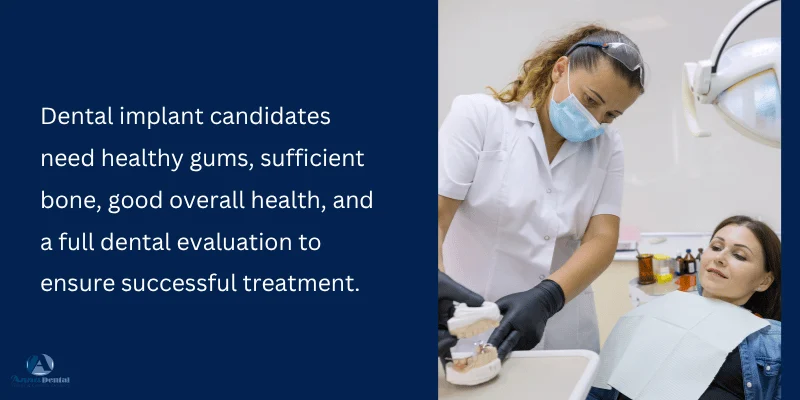
You’re likely a good candidate for dental implants if you have healthy gums and enough jawbone to support the implant posts.
Your overall health matters too, since conditions like uncontrolled diabetes or active gum disease can affect healing.
You’ll need to commit to good oral hygiene habits and regular teeth cleaning. Smoking can reduce implant success rates, so your dentist may ask you to quit before treatment.
Age isn’t usually a barrier as long as your jaw has finished growing. Most adults with missing teeth can explore implant options.
Your dentist will examine your mouth, take X-rays, and review your medical history. They’ll check for infections, evaluate your bone structure, and discuss any medications you take.
Addressing Insufficient Bone Density
When you lose teeth, your jawbone starts to shrink because it no longer receives stimulation from tooth roots. This bone loss can leave you without sufficient bone density for implant placement.
Your dentist can measure bone density through CT scans or X-rays. If you have mild to moderate bone loss, you may still qualify for implants with some preparation.
Common factors affecting bone density include:
- Length of time since tooth loss
- Gum disease history
- Natural aging process
- Certain medical conditions
The good news is that bone density issues don’t automatically disqualify you. Several treatment options can build up your jawbone to support implants successfully.
Options for Severe Bone Loss: Bone Grafting and Zygomatic Implants
Bone grafting adds material to your jaw to create a stronger foundation for implants. Your dentist uses bone from your own body, a donor, or synthetic materials.
The graft needs several months to heal and fuse with your existing bone before implant placement.
For severe upper jaw bone loss, zygomatic implants offer an alternative. These longer implants anchor into your cheekbone instead of your jawbone. You can avoid bone grafting and lengthy healing times with this approach.
Comparison of bone loss solutions:
| Treatment | Healing Time | Best For |
| Bone grafting | 3-6 months | Mild to moderate bone loss |
| Zygomatic implants | Immediate to same-day | Severe upper jaw bone loss |
Your dentist will recommend the best option based on your specific bone structure and treatment goals.
Long-Term Oral Health Benefits of Dental Implants
Dental implants provide lasting advantages that extend far beyond replacing missing teeth.
They actively preserve your jawbone, maintain your natural facial contours, and support the health of your remaining teeth for years to come.

Maintaining Facial Structure and Appearance
When you lose a tooth, your jawbone begins to deteriorate because it no longer receives stimulation from chewing. This bone loss can change your facial structure over time, making your features appear sunken or aged.
Dental implants prevent jawbone loss by acting like natural tooth roots. They integrate directly into your jawbone and provide the necessary stimulation to keep it strong and healthy.
This process helps maintain the natural shape of your face.
Without this stimulation, your jawbone can shrink significantly. The bone loss affects not just the area where you lost a tooth but can also impact your entire jaw structure.
Implants stop this deterioration before it starts, protecting your facial appearance for the long term.
Supporting Ongoing Oral Health
Your dental implants work to protect your remaining natural teeth from damage and shifting. When you have a gap from a missing tooth, the neighboring teeth tend to move out of their proper positions.
This movement can lead to bite problems, uneven wear, and an increased risk of tooth decay.
Unlike dental bridges that require grinding down healthy adjacent teeth, implants are a standalone tooth replacement option. They fill the gap without compromising your other teeth.
This approach preserves more of your natural tooth structure.
Implants also help prevent oral infections that could spread to other areas of your mouth. They’re easier to clean than bridges or dentures because you can brush and floss around them just like natural teeth.
Enhancing Quality of Life
Your dental implants allow you to eat your favorite foods without worry or discomfort. They don’t slip or click like removable dentures, giving you confidence when speaking and smiling.
You can bite into crunchy vegetables, chew tough meats, and enjoy meals without restrictions.
The stability of implants means you don’t need special adhesives or removal for cleaning at night. You care for them exactly like your natural teeth with regular brushing and flossing. This simplicity makes daily oral hygiene routines straightforward.
Implants also support your overall health by improving chewing function, which aids in proper digestion. When you can chew food thoroughly, your body absorbs nutrients more effectively.
The confidence that comes with a complete smile can improve your social interactions and mental well-being, too.
Frequently Asked Questions
Missing teeth creates a chain reaction that affects your whole mouth. Dental implants stop this process by replacing both the root and crown, protecting your remaining teeth and jawbone from damage.
How do dental implants keep nearby teeth from shifting out of place?
When you lose a tooth, the teeth on either side start to drift into the empty space. This happens because teeth need pressure from their neighbors to stay in position.
A dental implant fills the gap and provides the needed pressure. The implant acts like a natural tooth root, keeping your other teeth from moving. This prevents your bite from becoming misaligned.
Without something holding the space, your teeth can shift within months. Once teeth move out of place, you might need braces or other treatments to fix the problem.
Can dental implants help stop jawbone loss after a tooth is missing?
Your jawbone needs stimulation from tooth roots to stay healthy. When you lose a tooth, the bone in that area starts to break down because it’s not being used.
Dental implants stimulate the jawbone just like natural tooth roots do. The titanium post transfers chewing pressure directly into the bone, which keeps it strong and dense.
Without this stimulation, you can lose up to 25% of your jawbone width in the first year after tooth loss. This bone loss can make your face look sunken and age you prematurely.
It also makes it harder to place implants later if you wait too long.
What happens to your bite and chewing when you don’t replace a missing tooth?
Your bite becomes uneven when you have a missing tooth. You start favoring one side of your mouth when you chew, which puts extra stress on certain teeth.
This uneven pressure can wear down your remaining teeth faster. It can also lead to jaw pain and problems with your temporomandibular joint (TMJ).
Your teeth work together as a system, and losing even one tooth throws off the balance.
Dental implants restore your ability to chew normally. You can eat your favorite foods without worrying about damaging other teeth or experiencing discomfort.
How soon should you consider an implant after tooth extraction to avoid problems later?
The best time to consider an implant is right after your tooth extraction. Some dentists can place an implant immediately during the same appointment as your extraction.
Waiting too long allows bone loss to begin. After three to six months without a tooth, your jawbone starts to shrink noticeably. This can make implant placement more difficult and may require bone grafting later.
Talk to your dentist about your options before having a tooth pulled. Planning ahead gives you the best chance for a successful implant without needing extra procedures.
Who is a good candidate for dental implants, and what can affect eligibility?
Most healthy adults with adequate jawbone are good candidates for dental implants. Your dentist will evaluate your bone density and overall health before recommending treatment.
Certain conditions can affect your eligibility. Uncontrolled diabetes can slow healing and increase infection risk. Heavy smoking reduces blood flow to your gums, which can cause implant failure.
Some medications like bisphosphonates for osteoporosis may require special consideration. Your dentist needs to know about all medications and health conditions you have.
Even if you have challenges, many can be managed with proper planning and care.
What is the 3/2 rule for dental implants, and when is it used?
The 3/2 rule refers to spacing requirements when placing multiple implants next to each other. You need at least 3mm of space between an implant and a natural tooth, and at least 2mm between two implants.
This spacing ensures proper blood flow to the bone and gums between implants. Without enough space, the bone can’t stay healthy and the implants may fail.
Your dentist uses this rule when planning treatment for multiple missing teeth. It helps determine how many implants you need and where to place them for the best long-term results.

