


You whitened your teeth and expected a noticeable change. Instead, your smile looks about the same, only one side got lighter, or the brightness faded within a few weeks.
This is one of the most common frustrations dental patients bring up, and it almost always has a specific, findable cause.
If you’re wondering why teeth whitening isn’t working, the product itself may not be the problem. The discoloration may sit too deep for whitening gel to reach, or buildup, existing dental work, or other factors may be limiting your results.
Your natural tooth color, the health of your enamel, and even old dental work all play a role in whether whitening results show up the way you expect.
Anna Dental sees this concern often, and the fix depends on figuring out what kind of discoloration you are actually dealing with before trying another round of professional teeth whitening.
Key Takeaways
- Whitening results depend on the type of stain, and some discoloration sits too deep in the tooth for gel to reach.
- Plaque, tartar, old dental work, and daily habits can all limit or undo whitening progress.
- A dental exam can pinpoint the cause and point you toward cleaning, a customized whitening plan, or another cosmetic option.
What Your Whitening Result May Be Telling You
A weak, uneven, or short-lived whitening result usually points to something specific about your teeth, not a failed product.
Whitening gel, whether it is professional-grade whitening used in-office or an at-home teeth whitening kit, works by using hydrogen peroxide or carbamide peroxide to break down stain particles inside the tooth.
When results fall short, it is worth looking at what your teeth are telling you before reaching for a stronger product.
Why Teeth Whitening Has a Natural Limit
Every tooth has a natural shade limit, and whitening cannot push color past that point. Your natural tooth color is set by the thickness of your enamel and the shade of the dentin underneath it.
Once whitening reaches that limit, more gel or longer wear time will not make teeth whiter, it may just increase sensitivity.
Why Teeth May Whiten Unevenly
Uneven whitening usually happens when gel does not contact every tooth surface the same way. Trays that fit loosely, strips that shift during wear, or naturally thicker enamel on certain teeth can all lead to a patchy result.
The front teeth often lighten faster than teeth further back simply because they get better gel coverage.
When a Whitening Plateau Is Not Treatment Failure
Reaching a plateau after some improvement does not necessarily mean the treatment failed. Your diet and home dental care habits can also influence how your smile looks after whitening, especially if staining foods, drinks, or tobacco remain part of your routine.
Is the Discoloration on the Surface or Inside the Tooth?
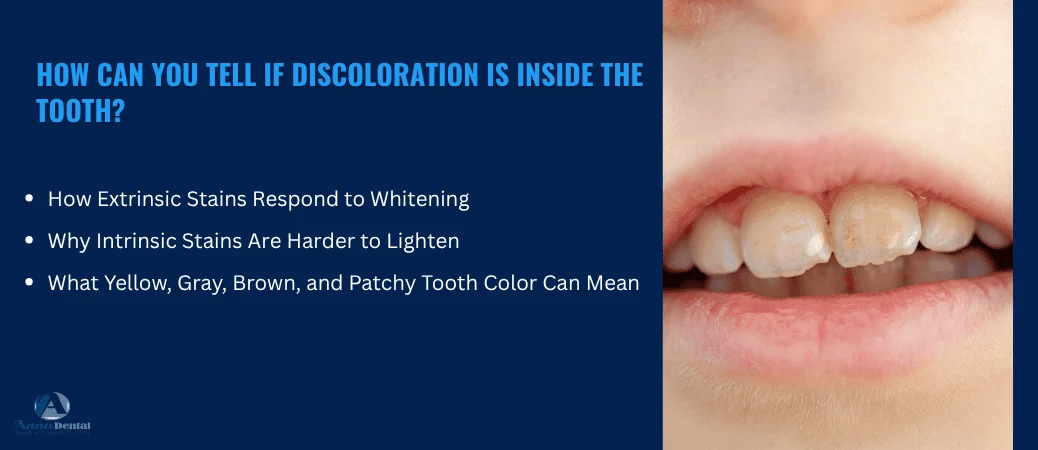
Whitening works best on surface stains and has a harder time with discoloration that sits inside the tooth. Knowing which type you have explains a lot about why your results have been limited.
How Extrinsic Stains Respond to Whitening
Surface stains, also called extrinsic stains, sit on top of the enamel and come from things like coffee, tea, wine, or tobacco.
These respond well to whitening because peroxide can reach and break down the stain molecules sitting on the enamel surface.
Regular brushing alone usually will not remove them, which is why they build up over time.
Why Intrinsic Stains Are Harder to Lighten
Intrinsic stains form inside the tooth, in the dentin layer beneath the enamel, and are much harder to lighten.
These deeper stains can come from dental trauma, certain medications taken during childhood, or naturally yellow dentin showing through thin enamel.
Whitening gel can lighten intrinsic stains to some degree, but the change is usually slower and smaller than what surface stains show.
What Yellow, Gray, Brown, and Patchy Tooth Color Can Mean
Tooth color often hints at the cause. Here is what different shades tend to point to:
| Tooth Color | Likely Cause |
| Yellow | Surface stains or naturally yellow dentin showing through thin enamel |
| Gray | Old dental trauma, certain medications, or a dying nerve inside the tooth |
| Brown/white patches | Fluorosis from excess fluoride during tooth development |
| One dark tooth | Possible internal damage or a nerve issue needing evaluation |
A single dark tooth or one that looks noticeably grayer than the rest is worth mentioning to your dentist rather than whitening repeatedly on your own.
Could Buildup, Product Choice, or Daily Habits Be Holding You Back?
Plaque, tartar, and daily habits can block whitening gel from reaching enamel at all, which is a separate problem from stain type. Even the right product can underperform if it never makes full contact with the tooth surface.
How Plaque and Tartar Block Whitening Gel
Plaque and tartar buildup can interfere with even contact between whitening gel and the tooth surface.
A professional dental cleaning can remove this buildup and give your dentist a clearer view of the underlying tooth color before deciding whether whitening is appropriate.
Why Whitening Strips and Toothpaste May Produce Modest Changes
Over-the-counter whitening products like whitening strips and whitening toothpaste use lower concentrations of peroxide than professional whitening treatments.
Over-the-counter whitening products and professionally supervised whitening systems can differ in their formulations, application methods, and peroxide concentrations.
This is one reason results from whitening strips or toothpaste may differ from a whitening plan recommended by a dentist.
How Wear Time and Staining Habits Affect Results
Wear time matters as much as the product itself. Strips or trays that are removed early, used inconsistently, or applied to teeth that were not brushed first will not deliver the results printed on the box.
Ongoing exposure to coffee, tea, red wine, or tobacco stains can also cause color relapse within weeks of finishing treatment, even after a good initial result.
When Dental Work or Oral Health Needs Attention First
Crowns, veneers, fillings, and bonding will not change color with whitening, no matter how strong the gel is. This is one of the most misunderstood parts of teeth whitening, and it explains a lot of disappointing results.

Why Crowns, Veneers, Fillings, and Bonding Do Not Whiten
Dental restorations are made from materials that do not respond to peroxide the same way natural enamel does. For example, composite fillings will retain their existing shade while the surrounding natural teeth may become lighter after whitening.
Why Shade Matching Matters After Whitening
If whitening is part of your treatment plan, your dentist may recommend completing it before selecting the final shade for a visible porcelain crown, filling, or veneer.
This can help the new restoration blend with the shade of your natural teeth after whitening results have stabilized.
When a Single Dark Tooth Needs a Dental Evaluation
A single dark tooth can sometimes be associated with previous trauma or changes inside the tooth that ordinary whitening cannot address.
A dental evaluation can determine the cause and whether treatment such as a root canal may be appropriate before cosmetic options are considered.
What Anna Dental Tries Next for Stubborn Discoloration
At Anna Dental, Dr. Rachel Anderson can evaluate your teeth, existing dental work, and the type of discoloration present to determine why whitening results have been limited and which treatment options make sense to consider next.
Start With an Exam and Professional Cleaning
At Anna Dental, a dental evaluation can help determine why whitening results have been limited. If plaque or tartar buildup is contributing to the problem, a professional cleaning may be recommended before deciding whether additional whitening is appropriate.
When a Customized At-Home Whitening Plan May Help
If your teeth are healthy and the discoloration is mostly on the surface, a customized at-home teeth whitening kit from Anna Dental may be the next step.
Custom trays fit more precisely than store-bought strips, which helps gel reach every tooth surface evenly.
Desensitizing toothpaste with potassium nitrate can be added to the routine if sensitivity has been a problem in the past.
When In-Office Whitening Is a Better Fit
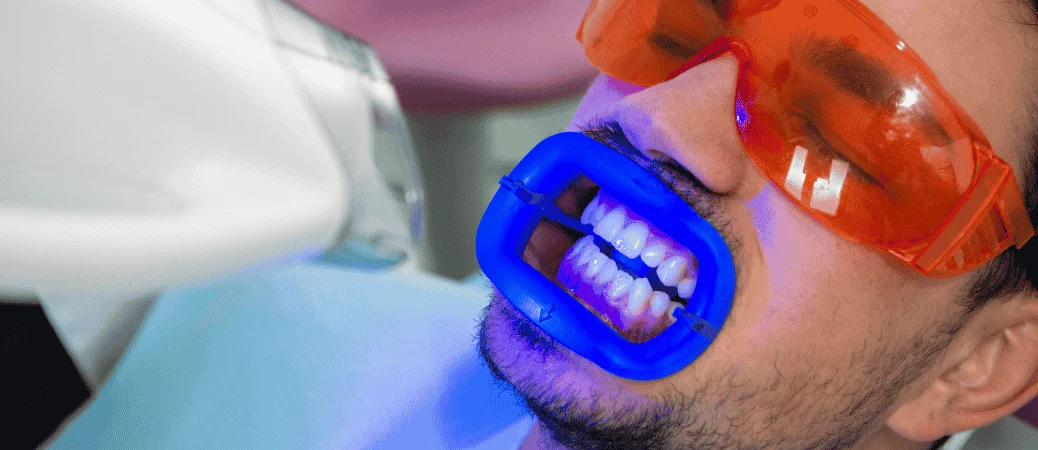
In-office whitening at Anna Dental uses professional-grade whitening gel at a higher strength than at-home products, which can help with stains that respond poorly to weaker treatments.
Because treatment is professionally supervised, the dental team can monitor sensitivity and adjust the whitening process based on how your teeth respond.
When Bonding, Veneers, or a Smile Makeover May Be More Predictable
When discoloration is intrinsic or involves visible old dental work, cosmetic dentistry options such as dental bonding or porcelain veneers may be considered when repeated whitening is unlikely to address the underlying color difference.
For patients with several concerns at once, Anna Dental may discuss a broader smile makeover approach that combines shade matching with restorative work for a consistent, natural-looking outcome.
The Right Treatment Begins With the Cause of the Color Change
Disappointing whitening results almost always trace back to a specific, identifiable cause. Tooth discoloration can come from surface stains, deeper color changes inside the tooth, buildup blocking the gel, or dental work that simply cannot change shade.
Professional teeth whitening works well once that cause is known, and addressing oral health first tends to make any whitening plan more effective.
Figuring out the reason behind your results is what turns a frustrating experience into a plan that actually works for your teeth.
Frequently Asked Questions
Why are my teeth not getting whiter with whitening strips?
Whitening strips use lower peroxide concentrations than professional treatments, so they work best on light surface stains.
If plaque is covering your enamel or your discoloration sits deeper in the tooth, strips may show little to no visible change.
Can plaque or tartar stop teeth whitening from working?
Yes, plaque and tartar sit on top of enamel and block whitening gel from reaching the tooth surface underneath. A professional cleaning before whitening removes this buildup and often improves results right away.
Why does one tooth look gray or darker after whitening?
A single gray or dark tooth can sometimes indicate a change inside the tooth, including effects from previous trauma. Because ordinary whitening may not address this type of discoloration, have the tooth evaluated before continuing to bleach it.
Will whitening change the color of crowns, veneers, or fillings?
No, crowns, veneers, and fillings are made of materials that do not respond to peroxide gel. Whitening only changes the shade of natural tooth enamel, which can sometimes make existing dental work look more noticeable by comparison.
How long should I avoid coffee, tea, and red wine after whitening?
Your dentist may recommend temporarily limiting strongly pigmented foods and drinks such as coffee, tea, and red wine after whitening. Follow the aftercare instructions provided with your specific whitening treatment to help maintain your results.
What should I do if professional teeth whitening does not work?
Schedule a dental evaluation to find out whether the cause is stain type, buildup, or a restoration that will not change color.
From there, your dentist can recommend a customized at-home plan, a different in-office approach, or a cosmetic option like bonding or veneers based on what is actually causing the discoloration.

