




Missing teeth can affect nearly every part of your daily life, from eating your favorite foods to feeling confident when you smile.
Dental implants offer a permanent tooth replacement solution that restores both function and appearance, leading to improvements in oral health, nutrition, speech, and self-esteem.
Unlike temporary options, implants work like natural teeth because they anchor directly into your jawbone.
When you lose teeth, the effects go beyond just gaps in your smile. You might struggle to chew certain foods, speak clearly, or feel comfortable in social situations.
Dental implants can enhance your quality of life by addressing these challenges and providing benefits that last for decades with proper care.
Understanding how dental implants work and what makes them different from other tooth replacement options can help you make an informed decision about your oral health.
This guide explores the ways implants can improve your everyday life and what you need to know about getting them.
Key Takeaways
- Dental implants restore your ability to eat, speak, and smile naturally while preventing bone loss in your jaw
- Implants provide a permanent solution that can last a lifetime with proper care and regular dental visits
- Getting dental implants can boost your confidence and allow you to enjoy activities without worrying about missing teeth
Explore how dental implants and quality of life improvements can transform your smile.
Restoring Chewing Power and Better Nutrition
Dental implants bring back your ability to eat comfortably and give your body the nutrients it needs.
Unlike removable dentures that can slip or cause discomfort, implants work like natural teeth to restore full chewing function and open up your diet again.
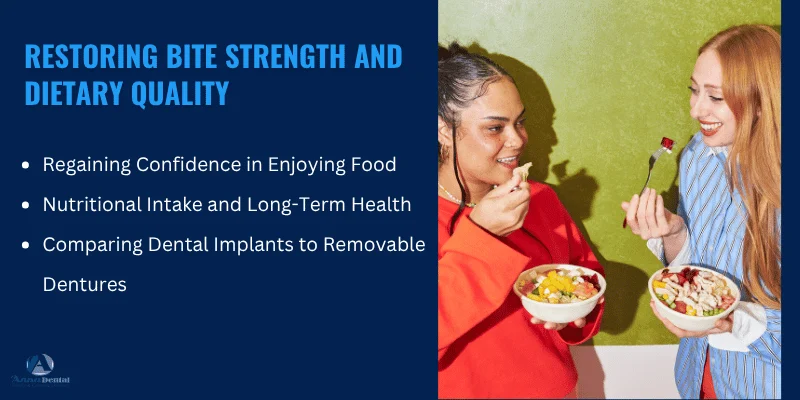
Regaining Confidence in Enjoying Food
Missing teeth force you to avoid foods you love. Steak, fresh apples, corn on the cob, and crunchy vegetables become off-limits when your teeth are failing or gone.
Dental implants let you bite and chew with confidence again. Studies show that patients experience improved chewing scores from 4.1 to 8.7 out of 10 after getting implants.
This happens because implants anchor directly into your jawbone, creating a stable foundation that does not shift when you eat.
You can enjoy meals without planning around what your teeth can handle. That means no more cutting everything into tiny pieces or sticking to soft foods only.
Your implants distribute chewing forces naturally across your jaw, just like real tooth roots do.
Nutritional Intake and Long-Term Health
Poor chewing ability limits what you can eat, which affects your overall health. When you avoid hard vegetables, lean proteins, and fiber-rich foods, your body misses out on essential vitamins and minerals.
Dental implants support better nutrition by letting you eat a balanced diet again. You can chew food properly, which helps your digestive system break down nutrients more effectively. Poorly chewed food puts extra strain on your stomach and intestines.
Better nutritional intake means more energy, stronger bones, and improved immune function. Your body gets the protein it needs to maintain muscle mass and the fiber required for healthy digestion.
Many patients report feeling healthier overall once they can eat normally again.
Comparing Dental Implants to Removable Dentures
Removable dentures sit on your gums and can move around when you chew. This creates sore spots and makes it harder to bite into firm foods. Many denture wearers need adhesives to keep them in place during meals.
Key differences:
| Feature | Dental Implants | Removable Dentures |
| Stability | Fixed in bone | Can slip or shift |
| Chewing power | Near-natural strength | Reduced by 50% or more |
| Diet restrictions | Minimal | Significant |
| Bone preservation | Prevents bone loss | Allows bone loss |
Implant-supported options restore chewing ability far more effectively than traditional dentures. Your implants do not require removal for cleaning, and they feel like your own teeth.
This makes eating out and social situations much easier since you do not worry about dentures slipping at the wrong moment.
Schedule your consultation in Anna, TX to see how dental implants can improve your quality of life.
Enhanced Speech and Clear Communication
Missing teeth affect how clearly you speak, creating gaps that disrupt airflow and tongue positioning during conversation.
Dental implants provide a stable foundation that restores your natural speech patterns and eliminates the embarrassment of dentures that slip while you talk.
Improving Speech Clarity
When you lose teeth, especially in the front of your mouth, certain sounds become difficult to pronounce. Words with “s,” “th,” “f,” and “v” require your tongue to rest against your teeth or near the roof of your mouth.
Dental implants restore natural tongue positioning, giving you the stable surface needed to form sounds correctly.
Your tongue can make proper contact with your teeth again, allowing precise enunciation of challenging sounds like “t,” “d,” “s,” and “z.”
The implants also help control airflow during speech. Missing teeth create gaps where air escapes unpredictably, causing muffled speech or a lisp.
By filling these spaces, implants ensure air moves smoothly and in a controlled manner when you speak.
Addressing Speech Issues from Missing Teeth
Your teeth play a bigger role in communication than you might realize. Without them, you may struggle with slurred pronunciation or unclear words that make conversations frustrating.
Dental implants work with speech improvement by restoring the natural structure and alignment of your teeth. This gives your jaw proper support and helps your lips move correctly during speech.
The benefits go beyond just better pronunciation. When your speech improves, your confidence grows too. You can speak freely without worrying about being misunderstood or having to repeat yourself.
Reducing Embarrassment from Slipping Dentures
Removable dentures often shift or click while you talk, creating awkward moments in conversations. This unpredictability makes you hesitant to speak up in social situations or work meetings.
Dental implants improve speech and chewing because they don’t slip or move like dentures do. They’re permanently anchored in your jawbone, providing stability that lets you speak with full confidence.
You won’t need to worry about your teeth moving mid-sentence or having to use adhesives that wear off throughout the day. This permanent solution means you can focus on what you’re saying rather than how you’re saying it.
Protecting Jawbone and Oral Health
Dental implants do more than replace missing teeth. They actively preserve your jawbone density and protect against common oral health problems that occur after tooth loss.
Preventing Bone Loss with Dental Implants
When you lose a tooth, your jawbone begins to break down in that area. This happens because the bone needs pressure from chewing to stay healthy and strong. Without a tooth root, the bone starts to shrink.
Dental implants prevent bone loss by replacing the missing tooth root with a titanium post. The implant post goes into your jawbone and provides the stimulation your bone needs to maintain its density.
This process stops the deterioration that normally happens after tooth loss.
Traditional dentures and bridges sit on top of your gums. They don’t stop bone loss because they can’t stimulate the jawbone the way natural teeth do. Only dental implants can prevent this problem.
Supporting Jawbone Health
The key to how dental implants work is osseointegration. This is when the titanium implant fuses with your jawbone over several months. The bond becomes permanent and creates a stable foundation.
During osseointegration, your bone cells actually grow around the implant post. This integration makes the implant as strong as a natural tooth root.
Once complete, you can bite and chew normally without worrying about the implant shifting.
Maintaining jawbone volume through implants also helps your facial structure. When bone loss occurs, your face can develop a sunken appearance that makes you look older.
Implants preserve your natural face shape by keeping your jawbone intact.
Reducing Risk of Gum Disease
Missing teeth create gaps where food and bacteria can collect. These spaces are hard to clean properly, which increases your risk of gum disease and other infections.
Dental implants fill these gaps and restore a complete smile. This makes brushing and flossing easier because you don’t have hard-to-reach areas where plaque builds up. Better cleaning means better oral health overall.
Unlike bridges that require grinding down healthy neighboring teeth, implants stand alone. This protects your remaining natural teeth and reduces your risk of future dental problems.
Preserving your natural teeth is important for long-term dental health.
The smooth surface of the implant crown also prevents bacteria from accumulating the way it does around some other dental restorations. This further reduces inflammation and keeps your gums healthier.
Aesthetic Benefits and Self-Confidence
Dental implants provide natural-looking results that blend seamlessly with your existing teeth, helping you feel better about your appearance and interactions with others.

Enhancing Facial Appearance
When you choose dental implants to replace missing teeth, you get a solution that looks just like your natural teeth. The crown attached to the implant matches the color, shape, and size of your surrounding teeth.
This means no one will be able to tell the difference between your implant and your real teeth.
Unlike dentures that can slip or look artificial, dental implants stay firmly in place. You won’t have to deal with visible metal clasps or gaps that draw unwanted attention.
Your smile will look complete and natural in photos, meetings, and everyday conversations.
The aesthetic and functional benefits work together to give you a smile you can feel proud of. Each implant is custom-made for your mouth, which ensures the best possible appearance.
Restoring Confidence in Social Situations
Missing teeth can make you feel self-conscious when you eat, laugh, or speak in front of others. Dental implants eliminate these worries by filling the gaps in your smile. You can enjoy meals at restaurants without fear of embarrassment.
When you no longer have to worry about gaps in your smile, you’ll feel more comfortable in social settings and professional environments. You can smile freely during job interviews, first dates, or family gatherings.
Many people find they become more outgoing and willing to engage with others after getting implants.
Your renewed confidence affects how you present yourself at work and in personal relationships. You’ll feel less anxious about close conversations or being in photographs.
Maintaining Youthful Facial Structure
One of the major benefits of dental implants is how they preserve your facial appearance over time. When you lose a tooth, the jawbone in that area starts to shrink because it no longer gets stimulation from the tooth root.
This bone loss can make your face look sunken or older than your actual age.
Dental implants act like natural tooth roots and stimulate your jawbone. This prevents bone loss and helps maintain your facial structure. Your cheeks won’t cave in, and your lips will have proper support.
This tooth replacement option keeps your face looking fuller and more youthful for years to come. Traditional dentures don’t provide this benefit because they sit on top of your gums without stimulating the bone underneath.
Types of Dental Implants and Treatment Options
Modern dentistry offers several types of dental implants designed to meet different needs and situations. The right choice depends on your jawbone health, how many teeth you’re replacing, and your overall oral health.
Endosteal Implants and Osseointegration
Endosteal implants are the most common type of dental implant used today. Your dentist places these small titanium posts directly into your jawbone during the dental implant procedure.
The implant post acts as an artificial tooth root. After placement, your jawbone needs time to fuse with the implant through a process called osseointegration. This healing phase typically takes three to nine months.
During osseointegration, your bone grows around the implant to create a strong, stable foundation. This process is what makes dental implants so durable and long-lasting.
Once healing is complete, your dentist attaches a connector piece called an abutment, followed by your new crown.
Endosteal implants work well if you have healthy jawbone density. They can replace single teeth or support bridges for multiple missing teeth.
All-on-4 and Advanced Solutions
All-on-4 dental implants offer a solution if you’re missing most or all of your teeth. This technique uses just four strategically placed implants to support a full arch of replacement teeth.
The design takes advantage of stronger areas in your jaw. Two implants go in the front of your mouth at a straight angle. The back two implants are placed at an angle to avoid areas with less bone density.
Benefits of All-on-4 include:
- Fewer implants needed compared to traditional methods
- Often eliminates the need for bone grafting
- Faster treatment timeline
- Immediate temporary teeth in many cases
- Lower overall cost than individual implants
This approach works especially well for people with some bone loss who want a full set of fixed teeth.
Considering Bone Grafting for Implant Success
Some people need bone grafting before getting implants. This procedure adds bone material to your jaw to create enough volume and density for successful implant placement.
You might need bone grafting if you’ve had missing teeth for a long time. When teeth are gone, the jawbone naturally shrinks because it no longer gets stimulation from tooth roots.
The grafting material can come from your own body, a donor source, or synthetic materials. Your jaw needs several months to heal and integrate the new bone before implant placement.
Common situations requiring bone grafts:
- Long-term tooth loss
- Gum disease that damaged bone
- Previous tooth extractions
- Naturally thin jawbone
While bone grafting adds time to your treatment, it significantly improves your chances of long-term implant success.
Long-Term Durability and Care Tips
Dental implants can last many years when you take proper care of them and maintain good oral hygiene habits. Working with the right dental specialist and following simple daily routines helps protect your investment.
Everyday Comfort and Ease of Maintenance
One of the best things about dental implants is how easy they are to care for in your daily routine. You don’t need special cleaning solutions or complicated tools.
Unlike dentures that require removal and soaking, implants stay in your mouth just like natural teeth.
Your morning and evening routines remain simple and straightforward. You won’t deal with adhesives, cleaning tablets, or extra steps that add time to your day.
This simplicity means you’re more likely to stick with your care routine over the long term.
The comfort level stays consistent as well. Since the implant post integrates with your jawbone, you won’t experience the shifting or rubbing that sometimes happens with other tooth replacement options.
You can eat, speak, and smile without worrying about your teeth moving or feeling uncomfortable.
Importance of Oral Hygiene: Brush and Floss
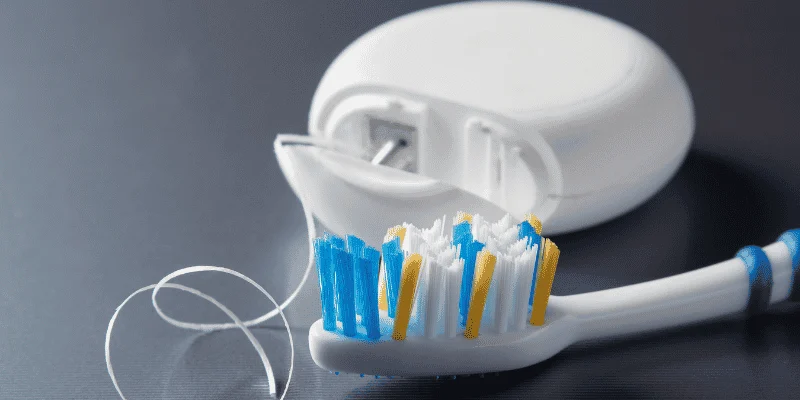
Taking care of your dental implants requires the same basic habits you use for natural teeth. You need to brush twice daily with a soft-bristled toothbrush and floss every day around your implants.
Plaque and bacteria can build up around implants just like they do on regular teeth. This buildup can lead to inflammation in the gum tissue surrounding your implant, which affects long-term durability.
Regular brushing and flossing protects the supporting tissues that keep your implant stable.
You should also visit your dentist for professional teeth cleanings and checkups. These appointments let your dental team check for any early signs of problems. They can clean areas that are hard to reach at home and make sure your implant stays healthy.
Avoid smoking if possible, as it can reduce blood flow to your gums and affect healing. Using gentle, low-abrasive toothpaste helps protect both your implant crown and natural teeth from unnecessary wear.
Choosing a Dental Specialist for Implant Services
Finding the right dental specialist makes a real difference in your implant success. Look for professionals who have specific training and experience in implant services, such as periodontists or oral surgeons who focus on this type of work.
Ask about their success rates and how many implant procedures they perform each year.
A specialist who regularly places implants will be more familiar with different situations and how to handle complications if they arise. They should also use current technology and techniques.
Your dental specialist should provide ongoing care, not just the initial placement. Regular monitoring allows them to spot potential issues early and adjust your treatment plan as needed.
They can answer your questions about caring for your specific type of implant restoration.
Check if they work with a team approach, coordinating with other dental professionals when necessary. This ensures you get comprehensive care that addresses all aspects of your oral health, not just the implant itself.
Frequently Asked Questions
Dental implants offer permanent tooth replacement that works like natural teeth, helping you eat better, speak clearly, and maintain your jawbone health over time.
What benefits can dental implants offer compared with dentures or bridges?
Dental implants provide a permanent solution that doesn’t slip or move around in your mouth like dentures can. They don’t require you to alter your healthy neighboring teeth, which is necessary when getting a traditional bridge.
Dental implants restore your ability to chew and help preserve the health of surrounding bone and gums. Unlike dentures that may need replacement every 5 to 10 years, implants can last for decades with proper care.
You won’t need to use adhesives or worry about your teeth falling out during meals or conversations.
How can dental implants help me chew and eat more comfortably?
Implants function just like your natural tooth roots, giving you the same biting force and stability. You can eat crunchy vegetables, tough meats, and sticky foods without worry.
The implant becomes part of your jawbone through a process where the bone grows around it and holds it firmly in place. This means you won’t experience the pain or discomfort that sometimes comes with loose dentures rubbing against your gums.
You can enjoy all your favorite foods again without cutting them into tiny pieces or avoiding certain textures.
Will dental implants change how I speak or affect my confidence when talking?
Missing teeth can cause you to slur certain words or produce whistling sounds when you talk. Dental implants fill these gaps and let you speak clearly and naturally.
Unlike dentures that can slip and cause mumbling or clicking noises, implants stay fixed in place. Dental implants can improve both personal and professional interactions by giving you the confidence to speak without worrying about your teeth.
You’ll notice improved pronunciation and won’t need to think twice before laughing or talking in social situations.
Can dental implants help prevent bone loss or changes in my facial appearance?
When you lose a tooth, the jawbone in that area starts to break down because it no longer gets stimulation from chewing. Dental implants help keep the jawbone from shrinking due to bone loss.
The implant acts like a natural tooth root and stimulates the bone when you bite and chew. This prevents the sunken facial appearance that often develops after losing multiple teeth.
Your face maintains its natural shape and you avoid the aged look that bone loss can create.
How long does the dental implant process take from start to finish?
The healing process for the implant body may take several months or longer, during which time you typically have a temporary tooth in place. The exact timeline depends on your overall health and how quickly your bone heals.
Your dentist first places the implant into your jawbone surgically. The bone then needs time to grow around the implant and hold it securely. After healing is complete, your dentist attaches the final tooth replacement.
Some people can complete the process in three to six months, while others may need up to a year.
What kind of care and daily cleaning do dental implants need to stay healthy?
You clean dental implants the same way you care for natural teeth through brushing twice daily and flossing. Regularly cleaning the implant and surrounding teeth is very important for long-term success of the implant.
You should schedule regular dental checkups so your dentist can monitor the implant and surrounding gums.
Good oral hygiene prevents infection in the bone and gums that support your implant. If your implant ever feels loose or causes pain, contact your dentist right away.

