


Missing teeth can make you feel self-conscious about your smile, affecting how you interact with others and view yourself.
When you avoid smiling in photos or feel uncomfortable speaking in social situations, these daily struggles can take a real toll on your mental well-being.
Dental implants restore both the function and appearance of natural teeth, helping you regain the confidence to smile freely and engage fully in your personal and professional life.
Unlike temporary solutions, dental implants provide a permanent way to replace missing teeth. They look natural, feel secure, and allow you to eat, speak, and laugh without worry.
The transformation goes beyond just your smile, it can positively impact your self-esteem and how you present yourself to the world.
Understanding how dental implants work and their effects on confidence can help you decide if they’re the right choice for your needs.
This article explores the connection between dental implants and self-confidence, what to expect during the process, and how this treatment can improve your quality of life.
Key Takeaways
- Dental implants provide a permanent solution that restores your natural smile and helps you feel confident in social settings
- The implant process involves placing a secure foundation in your jawbone that supports a custom-designed replacement tooth
- Beyond improving appearance, dental implants enhance your ability to eat comfortably and speak clearly while protecting your oral health
Why Missing Teeth Affect Self-Confidence
When you lose teeth, the effects go far beyond your mouth. Missing teeth can change how you see yourself and how comfortable you feel around others, while also creating physical problems that make daily activities harder.
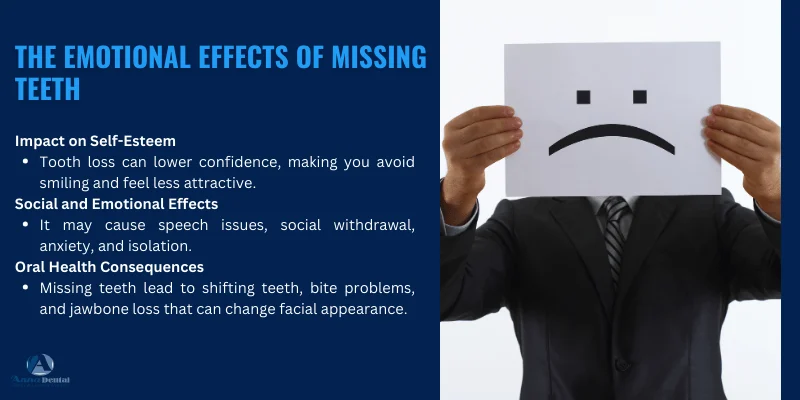
Impact of Tooth Loss on Self-Esteem
Losing teeth often leads to a big drop in self-confidence that affects how you view yourself. You might find yourself avoiding smiling in photos or covering your mouth when you laugh.
These gaps in your smile can make you feel embarrassed about your appearance.
Your self-image takes a hit when you can’t show a full smile. Many people report feeling less attractive after losing teeth. This affects more than just vanity.
When you don’t feel good about how you look, it impacts your entire outlook on life.
The psychological weight of tooth loss shows up in unexpected ways. You might skip job interviews or dates because you worry about what others will think.
Some people even stop looking in mirrors because seeing their smile causes distress.
This constant worry about your appearance can drain your mental energy and affect your daily mood.
Social and Emotional Challenges
Missing teeth can profoundly affect social interactions and create barriers in your relationships. You might avoid social gatherings, restaurants, or public speaking because you feel self-conscious about the gaps in your smile.
Speech becomes harder when you lose teeth. You may mumble or struggle to pronounce certain words clearly. This makes conversations stressful and can lead you to withdraw from social situations entirely.
The fear of judgment keeps many people isolated. You might turn down invitations to parties or family events. Some people develop social anxiety specifically tied to their dental problems.
This isolation can lead to loneliness and affect your mental health over time.
Research shows that people with tooth loss often experience higher rates of depression and anxiety.
Oral Health Consequences
Your oral health suffers in multiple ways after tooth loss. The remaining teeth start to shift into empty spaces, causing your bite to become misaligned. This creates problems when you try to chew food properly.
Your jawbone begins to deteriorate when teeth are missing. Without tooth roots to stimulate the bone, it slowly shrinks away. This process changes the shape of your face over time, making you look older than you are.
Common oral health problems from missing teeth include:
- Difficulty chewing certain foods
- Increased risk of gum disease
- Jaw pain and discomfort
- Additional tooth loss
- Digestive issues from not chewing food well
The teeth next to gaps become weaker and more likely to develop cavities. Your gums also become more prone to infection in areas where teeth are missing.
These ongoing oral health issues create a cycle that affects both your physical comfort and your confidence.
Visit our Anna, TX dental office to see if implants are right for your smile and self-esteem goals.
How Dental Implants Restore Confidence
Dental implants work to rebuild your confidence by giving you a smile that looks and feels natural while letting you eat, speak, and laugh without worry.
These tooth replacement options provide lasting benefits that go beyond just filling gaps in your smile.
A Natural-Looking Smile

When you choose dental implants to replace missing teeth, you get results that blend in with your natural teeth. The implant crown is custom-made to match the color, shape, and size of your surrounding teeth.
Nobody will be able to tell which teeth are implants and which are your original teeth.
Unlike dentures that can slip or look fake, dental implants stay firmly in place. They sit at the same level as your other teeth and don’t have any visible metal clips or adhesives.
When you smile, laugh, or talk, you can feel confident that your teeth look completely natural.
The psychological impact of dental implants is significant because they restore not just your teeth but also your willingness to smile. Many people with missing teeth avoid smiling in photos or social situations.
With implants, you can smile freely without feeling self-conscious.
Speaking, Eating, and Living Without Worry
Dental implants let you speak clearly without the whistling or slurred sounds that can happen with dentures. The implants don’t move around in your mouth, so your tongue and lips work normally when you talk.
You won’t need to worry about your words coming out wrong during important conversations or presentations.
Eating becomes enjoyable again with dental implants. You can bite into apples, chew steak, and eat corn on the cob without pain or fear of your teeth shifting.
The implants function like natural tooth roots, giving you strong bite strength for all types of food.
Your daily life improves when you don’t have to think about your teeth constantly. Dental implants facilitate a balanced diet and clear communication, which leads to better overall health.
You can focus on enjoying meals with friends and family instead of worrying about what you can or cannot eat.
Long-Term Benefits of Dental Implants
Dental implants can last 20 years or longer with proper care, making them a permanent solution for missing teeth.
You brush and floss them just like your natural teeth, without any special cleaning routines or overnight soaking. This simplicity helps you maintain good oral hygiene without extra effort.
The benefits of dental implants extend to your jawbone health. When you lose a tooth, the bone in that area starts to shrink over time. Implants stimulate the jawbone like natural tooth roots do, preventing bone loss and keeping your facial structure intact.
Your investment in dental implants pays off over time. While they cost more upfront than other tooth replacement options, you won’t need to replace them every few years like dentures or bridges.
They also help protect your remaining natural teeth by not requiring any grinding down of healthy teeth for support.
Restoring confidence through dental implants happens gradually as you experience these long-term benefits.
You’ll notice improvements in your social life, professional interactions, and overall quality of life as you stop hiding your smile and start living without restrictions.
Book a confidence-restoring implant evaluation with a dental professional.
The Dental Implant Process Explained
Getting dental implants involves multiple stages that take several months to complete. The dental implant process includes careful planning, surgical placement, healing time, and final restoration.
Implant Consultation and Evaluation
Your journey starts with an implant consultation where your dentist or oral surgeon examines your mouth and reviews your medical history. They’ll take X-rays or CT scans to check if you have enough jawbone to support an implant.
During this visit, your dentist will ask about your smoking habits and health conditions like diabetes.
These factors affect your success rate. If you smoke or have poorly controlled diabetes, the success rate can decrease as much as 50 percent.
Your oral surgeon will also explain whether you need any tooth extractions first. If you do, you’ll typically wait about three months for your jawbone to heal before moving forward. This healing period is important for long-term success.
Implant Placement and Osseointegration
The implant placement surgery takes about 30 minutes per implant. You can choose local anesthesia or complete sedation for the procedure. Your surgeon creates a small opening in your jawbone and carefully places the titanium post.
After surgery, you’ll take antibiotics to prevent infection and use over-the-counter pain relievers for any discomfort. The real work happens during osseointegration, when your jawbone grows around and fuses with the implant.
This bone healing requires time, usually about three months. During this period, the implant becomes a stable foundation for your new tooth.
You can’t rush this stage because the bone needs to heal tightly around the implant.
Abutment and Crown Attachment
Once osseointegration is complete, your general dentist attaches the abutment to the implant post. The abutment is a connector piece that extends out from your gums.
Your dentist takes impressions of your teeth to create a custom crown that matches your natural teeth. The crown screws or cements onto the abutment and looks like a real tooth.
Your dentist makes final adjustments to ensure your bite feels comfortable.
Dental implants are designed to last a lifetime with proper care. You brush and floss them just like natural teeth and visit your dentist regularly for checkups.
Enhancing Quality of Life With Dental Implants
Dental implants provide practical improvements that extend beyond appearance, affecting how you interact with others and perform everyday tasks.
These benefits of dental implants touch multiple areas of your daily life, from social comfort to basic physical functions.
Confidence in Social Situations
Missing teeth can make you feel self-conscious during conversations, meals with friends, or professional meetings. You might cover your mouth when you laugh or avoid smiling in photos.
Dental implants eliminate these worries by giving you a complete, natural-looking smile that looks and feels like your original teeth.
With dental implants, you can speak clearly without worrying about slipping dentures or gaps affecting your pronunciation.
You’ll feel comfortable eating in restaurants without concerns about food getting stuck or partial dentures moving.
Research shows that patient satisfaction scores improved significantly from 3.5 to 8.2 out of 10 after receiving dental implants, with particular improvements in comfort and function.
Your self-confidence grows when you know your smile appears natural and complete. This confidence helps you engage more freely in social activities, job interviews, and personal relationships.
Restoring Facial Structure and Function
When you lose teeth, your jawbone begins to shrink because it no longer receives stimulation from tooth roots. This bone loss can change your face shape, making you look older than you are.
Your cheeks may appear sunken, and your lips might lose support.
Dental implants act like natural tooth roots by fusing with your jawbone. This process maintains bone density and preserves your facial structure. The implants prevent the sagging appearance that often comes with tooth loss.
Your ability to chew improves dramatically with implants compared to traditional dentures. You can eat crunchy vegetables, tough meats, and your favorite foods without pain or difficulty.
This restoration of normal eating habits supports better nutrition and overall health.
Positive Effects on Daily Activities
Studies measuring quality of life found that dental implant placement significantly reduces limitations in daily activities.
Physical pain scores dropped from 6.0 to 2.8, and psychological discomfort decreased from 4.8 to 2.1 on standard health scales.
You won’t need to remove your teeth for cleaning or worry about adhesives failing at inconvenient times.
Implants stay in place permanently, letting you brush and floss like you would natural teeth. This simplicity removes the daily hassle and embarrassment that removable dentures can cause.
Your sleep quality may improve since implants don’t require removal at night. You’ll wake up ready to start your day without needing to insert dental appliances first.
Are Dental Implants Right for You?
Not everyone qualifies for dental implants, and your overall health and jawbone condition play major roles in determining if you’re a good candidate.
Several factors affect success rates, and some people may need extra procedures before getting implants.
Ideal Candidates for Dental Implants

You’re likely a good candidate for dental implants if you’ve lost one or more teeth due to injury, cavities, or gum disease. Adults who have completed jaw growth, typically around age 18, can receive implants.
Getting dental implants works best when you have adequate bone density in your jaw. Your oral surgeon will evaluate your jawbone structure using a CT scan to ensure it can support the implant post.
A success rate of about 95 percent applies to patients without certain risk factors.
Your overall health matters when considering implants. People who maintain good oral hygiene and have healthy gums make ideal candidates.
You should have realistic expectations about the process, which takes several months from start to finish.
Bone Grafting and Preparation
If your jawbone lacks sufficient density or volume, you may need bone grafting before getting dental implants. This procedure adds bone material to strengthen your jaw and create a stable foundation for the implant.
An oral surgeon performs bone grafting by placing natural or synthetic bone material into areas where your jawbone needs reinforcement.
The grafted bone then fuses with your existing bone over several months. This healing period extends your overall treatment timeline but increases the chances of implant success.
After tooth extraction, you’ll typically wait about three months for your jawbone to heal before implant placement. During this time, your bone regenerates and prepares to accept the implant post.
Potential Limitations and Considerations
Certain health conditions and habits can reduce implant success rates significantly. Smoking or vaping decreases success rates by as much as 50 percent because these habits impair healing and bone health.
Poorly controlled diabetes also affects your body’s ability to heal properly after surgery.
Previous radiation therapy to your head and neck can impact bone density and healing capacity. These factors don’t always rule out implants entirely, but your oral surgeon needs to evaluate your individual situation.
Children and teens cannot receive dental implants until their jawbones finish developing. Some medications, like certain osteoporosis drugs, may also affect implant placement and healing.
You’ll need to discuss your complete medical history with your dentist to determine if the timing is right for you.
Frequently Asked Questions
Dental implants restore both function and appearance while offering long-term durability that surpasses other tooth replacement options.
Understanding the treatment process, candidacy requirements, and practical benefits helps you make confident decisions about your smile.
How can dental implants improve my smile and appearance?
Dental implants are custom-designed to match the color, shape, and size of your natural teeth. They blend seamlessly with your existing smile.
Unlike removable options, implants stay firmly in place. This means you won’t experience shifting or movement when you talk or smile.
Dental implants help restore facial structure by preventing bone loss in your jaw. When you lose teeth, your jawbone can shrink over time, which may cause your face to look sunken or aged.
The implant post replaces your missing tooth root and stimulates the bone just like a natural tooth would. This keeps your facial contours looking full and youthful.
What are the benefits of choosing dental implants over dentures or bridges?
Implants anchor directly to your jawbone, which provides stability that dentures and bridges cannot match. You won’t need to worry about your teeth slipping during meals or conversations.
Bridges require grinding down healthy adjacent teeth to serve as supports. Implants stand independently without affecting your other teeth.
Compared to dentures, dental implants typically provide superior stability and natural feel. Dentures rest on your gums and may move or require adhesives to stay in place.
Implants also allow you to eat a wider variety of foods. Hard or sticky foods that might dislodge dentures are usually manageable with implants.
How long do dental implants last, and are they a durable solution for missing teeth?
Dental implants can last decades with proper care and maintenance. Many patients keep their implants for the rest of their lives.
The titanium post fuses with your jawbone through a process called osseointegration. This creates a strong foundation that withstands normal chewing forces.
Your daily hygiene habits play a major role in implant longevity. Brushing twice daily, flossing, and attending regular dental checkups help protect your investment.
The durability of dental implants depends on bone health and proper placement. Working with an experienced specialist increases your chances of long-term success.
Can dental implants help in improving speech and comfort compared to traditional dentures?
Dental implants stay fixed in your jaw, which means they don’t move when you speak. This stability helps you pronounce words more clearly.
Traditional dentures can slip or click during conversation. This movement sometimes causes you to mumble or feel self-conscious about how you sound.
Implants are anchored in the jaw, providing stability that supports clearer speech. You won’t need to worry about adjusting your dentures mid-conversation.
Comfort improves because implants don’t create sore spots on your gums. Dentures can rub against soft tissue and cause irritation, especially during the first few months of wear.
What is the process involved in getting dental implants, and how many visits does it usually take?
The implant process starts with a consultation where your dentist evaluates your oral health and takes digital images. This planning stage helps determine the best placement for your implants.
During the first surgical visit, the titanium post is placed into your jawbone. This procedure is typically done under local anesthesia as an outpatient treatment.
Your jawbone needs time to heal and integrate with the implant. This healing period usually takes several weeks to a few months.
Once integration is complete, you return for placement of the abutment and custom crown. The dental implant process typically includes consultation, implant placement, a healing phase, and final crown restoration.
Most patients need three to five visits total. Your specific timeline depends on your bone health and whether you need any preparatory procedures.
Are dental implants a suitable option for everyone, and what factors determine candidacy for the procedure?
Most adults with missing teeth qualify for dental implants, but certain factors affect your candidacy. Your gums need to be healthy, and you must have adequate jawbone to support the implant.
Good candidates typically have healthy gums, sufficient bone volume, and commitment to long-term oral care. If you have active gum disease, it needs treatment before implant placement.
Your general health matters too. Conditions like uncontrolled diabetes or heavy smoking can affect healing and implant success.
If your jawbone has deteriorated, bone grafting can often restore the support you need. This preparatory procedure builds up the bone before implant placement.
A thorough evaluation with a dental specialist helps determine your options. Even if you don’t initially qualify, preparatory treatments may make implants possible for you.

